Khaberni - Since late September, several Moroccan cities have been witnessing an unprecedented wave of protests led by youths calling themselves GenZ 212, referring to Moroccan Gen Z. This movement, which started in the digital world through platforms like TikTok, Instagram, and Discord, turned into calls to take to the streets demanding fundamental reforms in healthcare and education, and more transparency in public affairs management.
The protesters, mostly young people, raised striking slogans including: We want hospitals not stadiums, directly expressing their anger over the amount of investment the government is pumping into sports infrastructure in preparation for the 2030 World Cup, compared to the sharp decline in health and educational services. These slogans reveal different priorities between the authorities and the new generation, and awareness growing on the value of social justice and resource distribution.
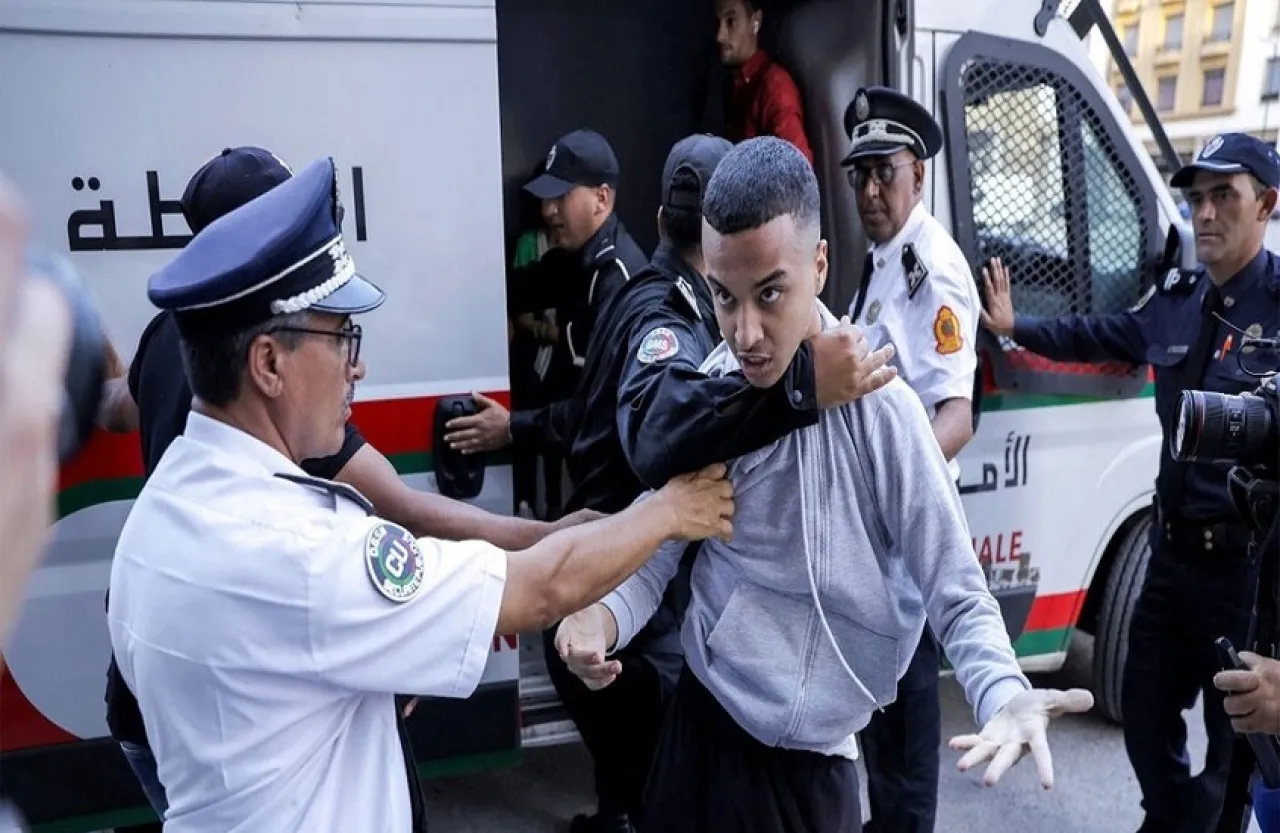
The Moroccan authorities quickly responded by surrounding main squares and preventing gatherings in major cities like Rabat, Casablanca, Marrakech, and Tangier. Media and human rights reports documented the arrest of dozens of protesters, some while attempting to speak to the media.
This response, which sought the help of the army by the 'makhzen' (traditional power structure), reflects the traditional nature of Moroccan authority in dealing with social movements, relying on security crackdown and arrests rather than dialogue and openness.
Observers believe that these protests lack traditional leadership. There are no political parties behind them, no unions or traditional organizations to frame them. Instead, it is a spontaneous movement led by a generation entrenched in the digital space, possessing new organizational tools that are difficult to monitor or infiltrate. This explains the authority’s fear of this small wave turning into a quickly expanding snowball, benefiting from social networks that ensure instant spread of information and slogans.
An analysis of the context reveals that these widespread protests are not just an instant reaction, but an expression of accumulated frustrations: persistent unemployment, a lack of fairness in wealth distribution, a decline in public services, and increasing marginalization of the youth. Moroccan Gen Z no longer sees itself represented in traditional politics or media, hence they have crafted their own tools to express their rejection.
Today, the Moroccan authority faces a tough equation: continuing with security measures that may temporarily succeed in dispersing crowds but could exacerbate the frustration and lose the remaining trust of the youth. Whereas opening up to genuine dialogue, coupled with tangible reforms in healthcare, education, and corruption fighting, might reduce the momentum of the movement and restore some trust, yet for many, the solution hinges on changing the ailing monarchical regime.
The danger of this wave increases as it expands day by day, making observers see it as an indicator that could shake the throne of King Mohammed VI and hasten scenarios of regime change, given the 'makhzen's insistence on a security grip in dealing with peaceful protests.
Followers of the current scene in the kingdom affirm that what is happening today in Morocco is an alarm bell indicating that a new generation of citizens has entered the arena of political and social action, outside official channels, armed with digital intelligence and a collective spirit that transcends the traditional boundaries of organization. As much as this movement poses challenges to the political system, it also opens an opportunity to reframe the relationship between the state and the youth on more just and transparent bases.