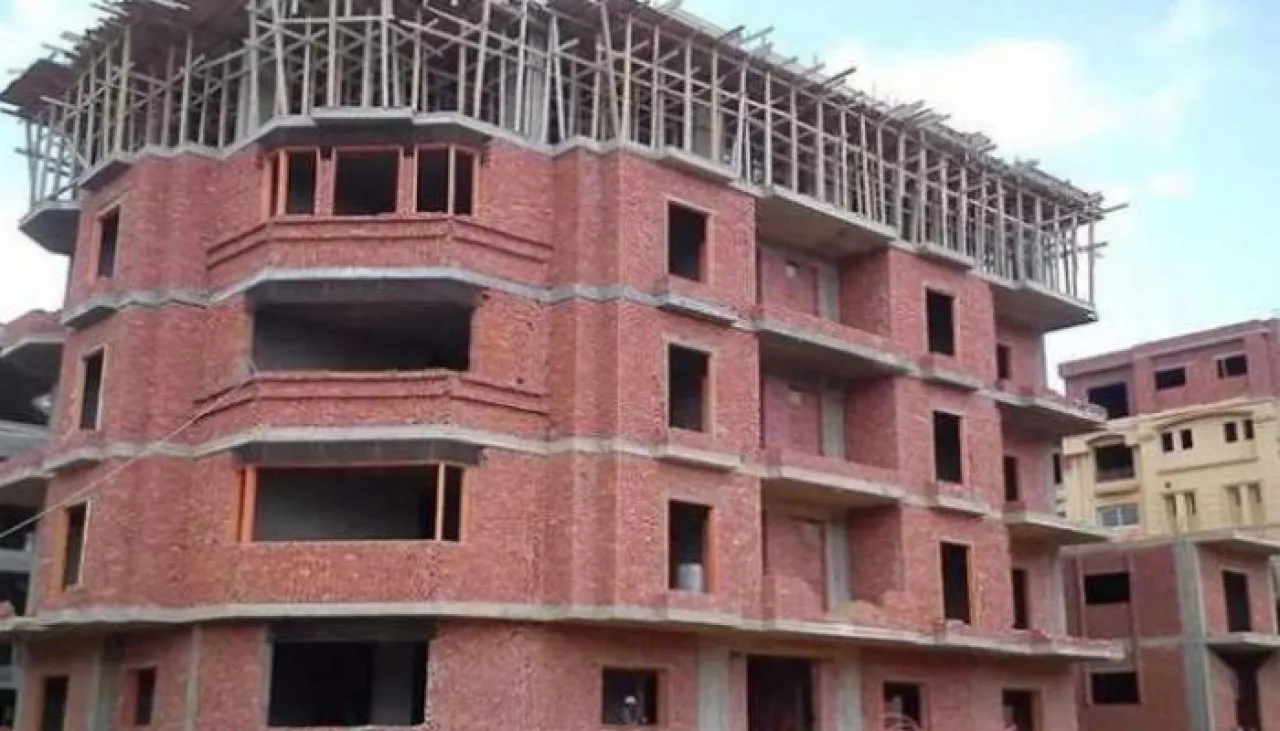
Khaberni - The Egyptian government has given property owners with violations a new opportunity to legalize their status, after it agreed to extend the deadline for submitting reconciliation applications in building violations for an additional 6 months, turning a deadline that was supposed to end in November into an opportunity that extends until May 2027.
The Egyptian Cabinet, during its meeting on Wednesday chaired by Dr. Mostafa Madbouly, approved a draft decision of the Prime Minister to extend the prescribed period for submitting reconciliation applications in certain building violations to the competent administrative authorities for an additional 6 months starting from 5 November 2026.
With the new extension period calculated, the deadline for submitting applications extends until 5 May 2027, providing citizens with additional time to submit new applications or complete the procedures and documents for files already submitted.
The decision comes just before the current deadline ends, as the Prime Minister's Decree No. 1098 of 2026 had extended the submission period by six months starting from 5 May until 5 November 2026.
"MNT Halal" launched in the Egyptian stock exchange.. share price, opportunities, and risks
Why did the government extend the reconciliation period?
According to the Cabinet, the decision aims to provide stakeholders who were unable to complete the reconciliation procedures during the previous period with an additional opportunity to fulfill the required documents and procedures.
It also aims to achieve the fundamental purpose of the reconciliation law, which is to create a legal pathway to legalize the status of some illegal buildings instead of continuing their unresolved legal status.
The decision holds special importance as there are files that have not yet completed their paperwork or are still under examination and review by the competent administrative authorities.
What is the new deadline for reconciliation in building violations?
The new additional period begins on 5 November 2026 and lasts for 6 months, thereby extending until 5 May 2027, meaning that the previous deadline of 5 November is no longer the end of the application period after the government's approval of the new extension.
Does the decision include new reconciliation applications?
The wording of the Cabinet's decision pertains to extending "the prescribed period for submitting reconciliation applications," thus continuing to accept applications during the additional period, in accordance with the cases allowed by the law and the regulating conditions.
It also provides additional time for owners of existing files to complete necessary documents and procedures.
During the previous period, citizens were able to submit new applications, in addition to completing documents related to applications already submitted.
What is the law regulating reconciliation?
The procedures are subject to the provisions of Law No. 187 of 2023 concerning reconciliation in certain building violations and legalizing their status, and its executive regulation issued by the Prime Minister's Decree No. 1121 of 2024.
The purpose of the law is to legalize the status of specific violations under technical and legal conditions, and not to automatically legitimize all types of building violations.
Despite the extension, there are cases where the law prohibits reconciliation.
These include:
Works that compromise the structural safety of the building.
Building on lands subject to the Antiquities Protection Law.
Some violations on lands governed by the rules for protecting the Nile River and waterways.
Changing the use of areas designated for parking "garages" in violation of legal controls.
Thus, extending the submission period does not change the nature of the violations that may or may not be reconciled, but rather just extends the time available to citizens.
Where can the reconciliation application be submitted?
Reconciliation applications are handled by the competent administrative body and technological centers affiliated with governorates, centers, cities, and districts, depending on the property location.
The Ministry of Local Development indicates that citizens can approach the competent local unit to learn about the reconciliation terms and the documents required for each case.
What happens after submitting the application?
The reconciliation file does not conclude upon merely registering the application; it is subject to scrutiny, document review, and required inspections, and the competent committee may request additional papers or data before making a final decision.
The Ministry of Local Development previously emphasized the importance of expediting the review of applications and responses from the concerned authorities, so that the response time in some procedures does not exceed 30 days.
Therefore, the new deadline gives file owners an important opportunity to rectify any lacking documents instead of waiting until the last days.
Is paying the earnest for reconciliation alone sufficient?
It is important to note that paying the earnest for reconciliation does not by itself conclude the procedures or consider the violation legally resolved.
The application undergoes several stages, including submission of the file, obtaining a confirmation of its submission, then scrutiny, document fulfillment, and finally the decision on the application, and after approval, financial and legal obligations are completed depending on the status of each file.
Thus, the decision to extend represents a prolongation of the system's entry period and completion of procedures, not an exemption from legal requirements.
Why is the decision important for property owners?
The six-month period represents an opportunity for owners of buildings and units to which the law applies to rectify their legal status.
The government seeks through the reconciliation system to settle the status of a large mass of illegal buildings, preserving real estate wealth, and at the same time preventing continuing new violations outside the framework of the law.
The Ministry of Local Development had previously indicated that there were about 2.9 million applications submitted according to the previous reconciliation law No. 17 of 2019, concurrently with the work to conclude these files and receive applications according to the new law No. 187 of 2023.
Last chance or another extension?
The current decision adds a full six months to the previous deadline, but it does not necessarily mean that extension periods will continue in the future.
Thus, the owners of cases that the law permits to reconcile currently have a window extending from 5 November 2026 until 5 May 2027 to complete their procedures.
And most importantly, benefitting from the extension does not stop at merely submitting the application but requires following up on the file and completing the required documents and dealing with any remarks issued by the competent authorities until reaching a final decision regarding the reconciliation.