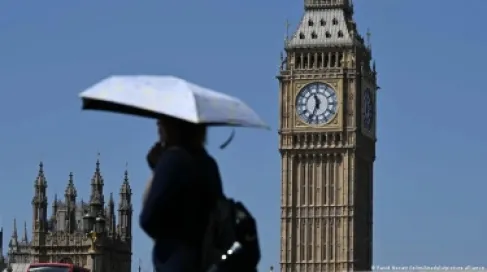
Khaberni - The heat is no longer just a climatic problem, but has become a health emergency. This is ratified by the World Health Organization in its latest diagnosis, observing a dangerous and unusual rise in temperatures, now posing a direct threat to human life and the means of living in both urban and non-urban communities.
Today, Europe finds itself at the center of this crisis, as recurring heatwaves have turned into a severe test for health systems, infrastructure, and everyday life, from schools and hospitals to public transport and outdoor work, according to Al Jazeera.
These waves reveal, according to experts, that the acceleration of climate change is no longer a future threat but a reality that forces governments to treat heat as a direct health hazard, not just a seasonal phenomenon.
What causes these persistent waves and what is their impact on communities? What do scientists fear, and what do World Health Organization experts advise?
What is the impact of heat stress?
The European region is warming faster than any other part of the world, with World Health Organization data indicating that in the past four years alone, heat has claimed more than 200,000 lives, while heat-related deaths have increased by 30% over the past twenty years.
The degree of impact from heat depends on physiological factors like age and health condition, as well as other factors related to heat exposure such as the nature of work and the social and economic conditions.
Generally, the body's inability to regulate its internal temperature and dispel accumulated heat under these conditions increases the risk of heat stress and heat strokes.
The effort that the body exerts to cool itself also puts additional strain on the heart and kidneys, which can exacerbate health risks associated with chronic diseases (such as cardiovascular diseases, mental disorders, respiratory diseases, and diabetes) and cause acute kidney injuries.
Laurie Parsons, a human geography expert at Royal Holloway – University of London, says: "Heat stress is currently the biggest environmental risk in the world, where nearly half a million people die annually from heat-related diseases, according to the World Health Organization."
This fact alone is enough to put people in a panic today, as the magnitude and nature of the health effects of heat depend on the timing, intensity, and duration of the heatwave, as well as the local population’s ability to adapt and the infrastructure and institutional capabilities to cope with prevailing climate conditions.
What causes a heatwave?
France emerged as a focal point in this crisis, recording on Tuesday its hottest day in history, according to provisional figures from the French meteorological agency Météo-France. The national average temperature reached 29.8 degrees Celsius, exceeding a record set in 2019, while one city exceeded 44 degrees Celsius.
Meteorological experts noted that these extreme temperatures were caused by a "heat dome," a large area of high atmospheric pressure that settled over Western Europe.
This phenomenon persists due to what is known as the "Omega Block," a weather pattern named after the Greek letter due to the similar shape it forms in the atmosphere.
Under normal conditions, the jet stream moves weather systems from west to east. However, in an "Omega Block" situation, this flow is disrupted, leading to a high-pressure system trapped between two low-pressure systems. This causes hot and stagnant air masses to remain over the same area for days or even weeks.
For instance, the British meteorological agency stated that the climate fluctuations during this wave placed Britain at the dividing line between a high-pressure system and a colder air mass to the northwest, creating a sharp contrast between hotter conditions in the south and east, and colder, moister conditions in the north.
What is the responsibility of infrastructure?
Scientists warn that Europe is particularly at risk as most of its residences and infrastructure were not designed to withstand long periods of extreme heat. Additionally, buildings in many northern countries were historically designed to retain heat rather than dissipate it.
Compounding the situation is the fact that only about 20% of European homes and facilities, including health institutions and schools, are equipped with air conditioning, a rate much lower than what is common in the United States and the Middle East, which designed urban areas and dwellings with air conditioning systems to cope with heat.
This is among the reasons why exposure to heat is generally closely linked to social and economic disparities and environmental vulnerability, as noticed by Laurie Parsons, from Royal Holloway University, that the impacts are not equally distributed.
He adds in his commentary on this point that low-income communities face much greater risks concerning heat stress and climate fragility, due to combined factors including poor home insulation and dependence on physically draining outdoor jobs.
What must be done?
Data clearly indicates that temperatures across Europe are rising at nearly twice the global average rate, increasing the likelihood of severe heatwaves and exacerbating their intensity in the future.
For this reason, the Director-General of the World Health Organization, Tedros Adhanom Ghebreyesus, states that delay is no longer an option. Leaders must prioritize investing in resilient healthcare systems capable of withstanding climate changes while accelerating climate action and reducing the causes of the climate crisis.
To protect the population, the World Health Organization urges authorities to cool cities, ensure access to water and shaded areas, protect the most vulnerable individuals, and prepare health systems and facilities for unusually high temperatures.