Khaberni - Bolivia has entered a new phase of political and security tension after President Rodrigo Paz announced a state of emergency across the country on Saturday evening for 90 days, justifying it to end "economic paralysis" following weeks of protests and roadblocks, with police beginning to remove obstacles using public works machinery.
More than 6 weeks ago (about 50 days), leftist groups, many of them allies of former leftist president Evo Morales, blocked major roads, stranding trucks and disrupting supplies of food, fuel, and medicine to many areas, including the capital city of La Paz.
Paz said, "After exhausting all avenues of dialogue, and reaching agreements with those who had legitimate demands, and identifying the parties that used violence in an attempt to destabilize Bolivia, we decided to declare a state of emergency across the country."
On Friday evening, the government signed an agreement with the country's main labor union, which announced the cessation of escalation measures and the lifting of pressure measures, but some sectors involved in the movement did not agree to the agreement, as groups of farmers, alongside coca farmers in the Chapare region, a stronghold of former president Evo Morales (2006-2019) in the middle of the country, continue their protest movement. What do we know about the political crisis in Bolivia.
What sparked the anger and protests in Bolivia?
The crisis initially erupted after Paz abruptly cut long-standing fuel subsidies in an attempt to reduce the deficit, amid an escalating dollar crisis and negotiations with the International Monetary Fund.
Farmers, factory workers, and miners gradually joined the movement, rejecting the reform proposals of the president, who belongs to the center-right and who ended his accession to power in November 20 years of socialist rule.
Despite subsequent steps taken to stabilize fuel prices and retract unpopular land reforms, protests intensified into a broader discontent, as unions demanded wage increases, an end to fuel and dollar shortages, and Paz's resignation.
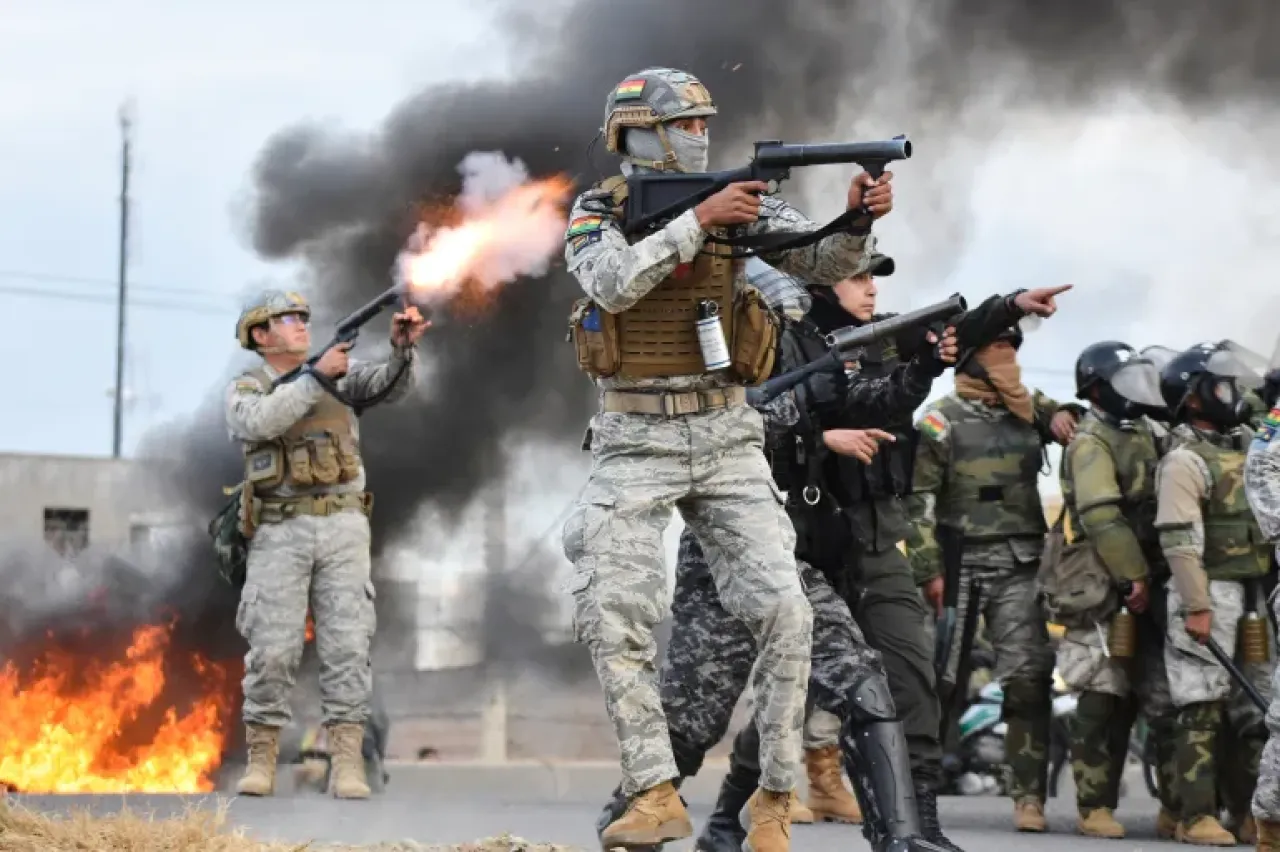
The demonstrations led to violent confrontations between protesters armed with sticks of dynamite and riot police, resulting in the arrest of at least 365 individuals and injuries to 37 others, according to authorities.
The Bolivian Ombudsman's Office and human rights organizations reported that at least 17 people died, most deaths related to a lack of medical care caused by transportation disruptions.
Who is behind the protests and what are the protesters demanding?
After the Bolivian president's decision to stop fuel subsidies, the country's main labor union, in early May, launched a protest movement denouncing the government's failure to address the economic crisis facing the country, noting that it was the worst in 40 years.
Farmers, factory workers, and miners gradually joined the movement, rejecting the reform proposals of the president, who belongs to the center-right and who ended his 20-year rule of socialism in November.
Groups of farmers, along with coca farmers in the Chapare region, a stronghold of former president Evo Morales (2006-2019) in the middle of the country, continue their protest movement.
Antonio Malko, the leader of one of the country's most prominent farmers' unions, told Unitel TV, "We decided to reinforce the barricades," adding, "Our indigenous brothers felt betrayed" by the labor union and its leader Mário Argollo.
Despite a decrease in the number of barricades, which exceeded a hundred at the peak of the protests, about 40 were still standing on Saturday morning, according to authorities.
The government continues to accuse former president Evo Morales of encouraging protests and roadblocks. However, Argollo emphasizes that Morales never led the movement.
On Saturday, Interior Minister Marco Antonio Oviedo raised speculations about a possible imminent law enforcement operation targeting Morales, saying in a statement to a Bolivian TV station that security forces "will carry out any necessary operation at the appropriate time," and that the former president must appear before the court.
What does the declaration of a state of emergency mean and what is the impact of the crisis on the country?
Paz said in a speech to the Bolivians that he had ordered the police and armed forces to "restore normal traffic flow, regain control of the roads, and ensure the safety of the population." He warned that anyone continuing to block roads or resorting to violence would face "the maximum penalty provided by law."
He justified his decision to declare a state of emergency for 90 days by referring to "a coup attempt led by drug-related terrorist networks."
Although the order takes effect immediately, the president must notify Congress of the state of emergency within 24 hours of issuing the decree, after which Congress has up to 72 hours to approve or reject the measure.
Defense Minister Ernesto Guastinian told reporters that by Saturday afternoon, the police and armed forces had removed several road barricades and life was beginning to return to normal.
He added that the government remains open to dialogue, while defending the emergency measures as necessary to restore citizens' rights and essential supplies.