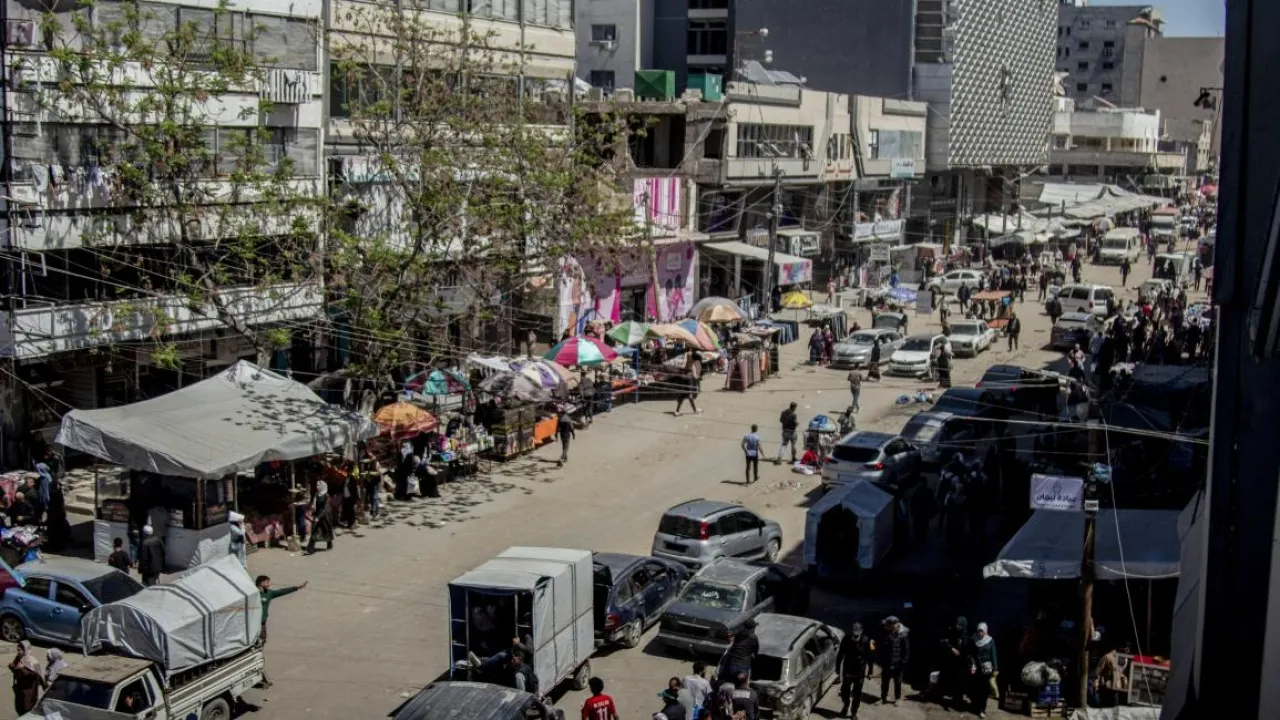
Khaberni - Gaza's markets are experiencing a worrying economic phenomenon characterized by declining confidence in the Jordanian Dinar, despite it being one of the main currencies circulated alongside the Israeli Shekel and the American Dollar, according to a report published by 'The New Arab' website.
This phenomenon is no longer just a natural fluctuation in exchange rates but has transformed into a widespread rejection of accepting the Dinar in daily commercial transactions. According to market observers, the reason is the exploitation of citizens' need to trade the Jordanian currency, imposing a large commission exceeding 30% on the exchange process, forcing traders and citizens to exchange their Dinars to meet their needs despite losing a large percentage of their money and savings.
Unjustified manipulation
Palestinian Rami Abdel Qader, who keeps his savings in Jordanian Dinar, says: "This is the savings of a lifetime, I gathered 12,000 dinars over many years thinking it was the security for my future, but today I am unable to use it."
Abdel Qader adds in a discussion with 'The New Arab': "Under the difficult economic conditions, I had to spend from these savings to cover my daily needs, but I was shocked by the refusal of most traders to accept the Dinar, as if it has become an undesirable currency," noting that after many attempts, he found an exchanger who agreed to convert the Dinar at a rate of 3.1 Shekels while the real rate is about 4.2 Shekels, which means a big loss, saying: "I felt that I was forced to sell my money for less than it's worth, which is a great injustice."
As for Palestinian Sameh Alian, who recently got married, he shares his experience: "I was planning to pay the dowry in Jordanian Dinar as usual, but I was surprised by the other party's refusal to accept this currency."
He adds, speaking to 'The New Arab': "I had to convert the amount to Shekels despite the significant loss, just to complete the marriage procedures, this matter was not anticipated previously, where the Dinar was the basis in such transactions," and he confirms that the problem is not limited to dowries only, but extends to other transactions, such as selling land, real estate, and gold, saying, "The Dinar is no longer accepted as before, which seriously changes market rules."
This behavior threatens citizens' savings and their future purchasing power, especially since the Jordanian Dinar has always been a safe haven in major transactions such as buying land and real estate, and paying dowries. With the continuation of this crisis, there is an urgent need to find rational solutions that restore balance to the market and protect citizens' rights. Historically, the Jordanian Dinar has held a strong position in the Palestinian markets due to its stability and link to the dollar, and was widely used in high-value transactions such as gold trading and real estate, in addition to being the preferred currency in determining marriage dowries.
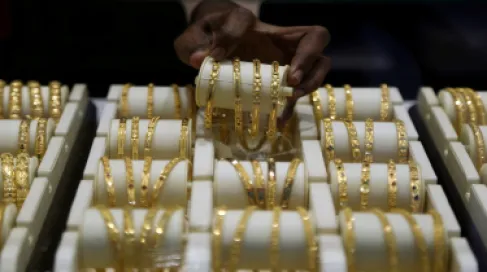
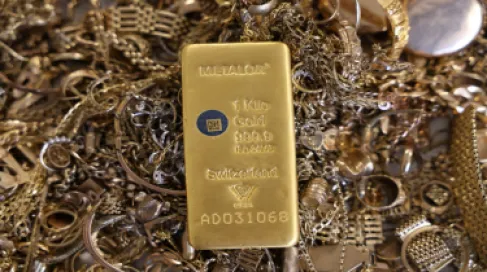
However, recent economic shifts, alongside a shortage of cash liquidity and declining purchasing power, have contributed to creating a disturbed monetary environment, as dealing with the Dinar has become risky for traders who prefer more widely traded currencies such as the Shekel, leading to a gradual reluctance to accept it. Electronic acceptance confirms Saed Wadi, a gold vendor in Sheikh Radwan market, that the confidence crisis with the Jordanian Dinar has reached the gold market, saying: "We gold traders do not refuse the Dinar in principle but we face a real problem in dealing with the paper currency circulated in the market, therefore we do not accept it in buying and selling transactions."
Wadi adds in a discussion with 'The New Arab': "If a customer wants to pay through the bank in Dinar, we calculate its value according to the bank rate, but the sale transaction occurs in cash in Shekel only because the local market is based on Shekel liquidity, which is more widely traded and stable in daily transactions."
He explains that the gold market accepts the Dinar through banking apps or electronic transfers because this method preserves the real currency value according to the official exchange rate, unlike the paper currency that is subject to significant manipulation in the market, indicating that the problem is not in the Dinar itself but in the way it is traded outside the banking system.
Market mechanism disorder
Despite these justifications, observers believe that what happens goes beyond mere "merchant whimsy" to the level of structural disorder in market mechanisms, where exchange rates are manipulated unjustifiably, especially in vital sectors traditionally reliant on the Dinar.
Economic affairs specialist Imad Labd believes that the Jordanian Dinar does not suffer from a real weakness, explaining that the Jordanian currency is linked to the dollar, and therefore its purchasing power is stable and secure and there is no economic justification for its decrease in the local market. Labd tells 'The New Arab': "What is happening is clear manipulation by some market participants who exploit citizens' need to convert Dinar to Shekel, imposing reduced exchange rates in an unreasonable manner."
He confirms that this behavior represents a form of exploitation, where something akin to a cashing commission is indirectly imposed, by reducing the value of the Dinar by between 30% and 35%, a percentage unjustified by any economic standard, and points out that when comparing this percentage with known cashing commissions, it almost matches, confirming those who control the currency market and cash liquidity are the same group practicing this exploitation, which necessitates immediate intervention to regulate the market and protect citizens.
In the absence of effective supervision, the citizen remains the weakest link, paying the price for practices that are not based on sound economic logic while observers confirm that the solutions start with reorganizing the currency exchange market, enhancing supervision, and imposing transparent mechanisms for determining exchange rates, ensuring justice and preserving rights.