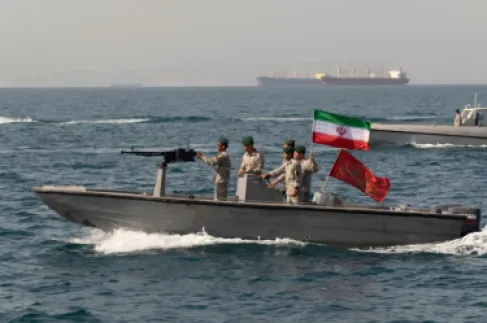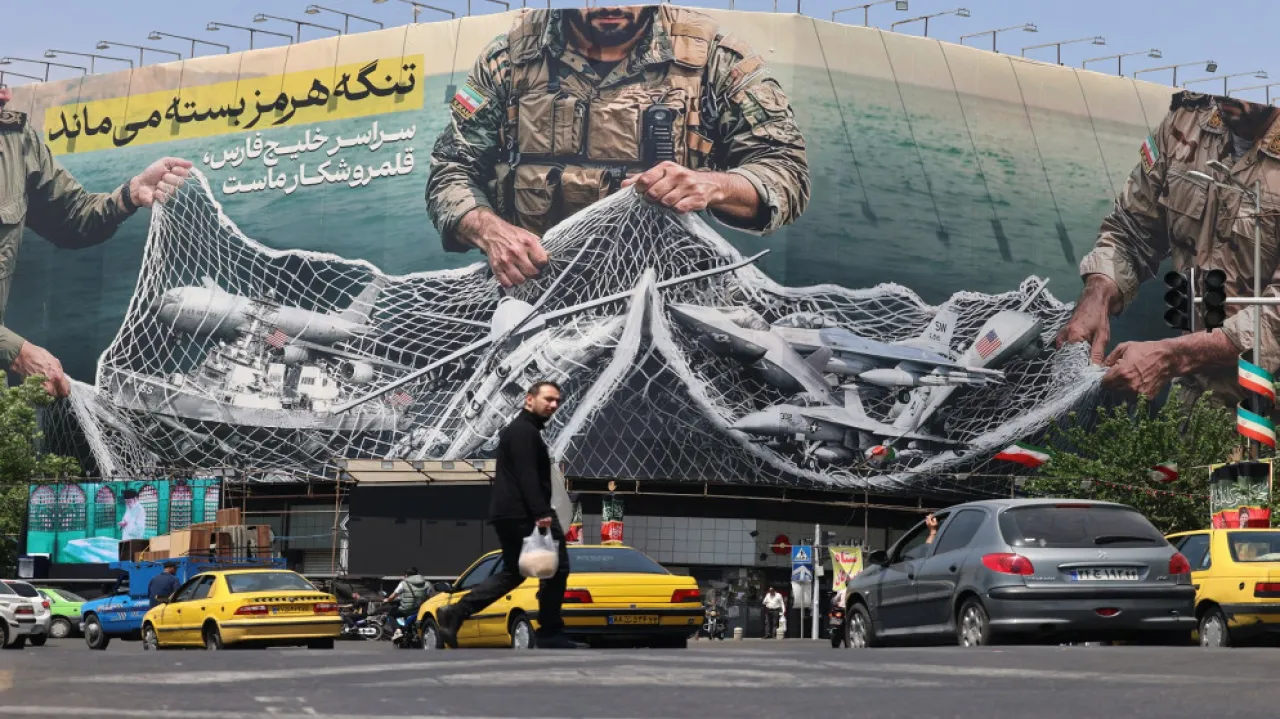
Khaberni - Iran said on Thursday that it would respond with "prolonged and painful strikes" on American sites if the United States resumes attacks, affirming its control over the Strait of Hormuz, complicating Washington's plans to form an international coalition to reopen the waterway.
About two months after the outbreak of war, the vital strait remains closed, disrupting 20% of the global oil and gas supplies. This has led to a rise in energy prices and increased fears of slipping into an economic recession.
Efforts to resolve the conflict have reached a deadlock, with a ceasefire in effect since April 8 while Tehran continues to keep the strait effectively closed in response to the American blockade on Iranian oil exports, which are a vital economic lifeline.
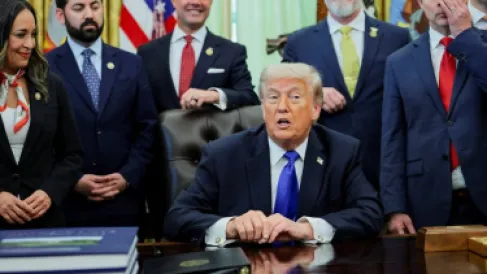
An American official stated that President Donald Trump will receive a briefing later on Thursday on the possibility of new military action against Iran to force it to negotiate to end the conflict.
These options have always been part of the United States’ plans, but the briefing, first reported by Axios late Wednesday, led to a significant increase in oil prices, with Brent crude reaching over $126 per barrel during the session before dropping to around $114.
The semi-official Mehr News Agency reported that the sound of air defenses was heard in some areas of the capital Tehran on Thursday evening, while the Tasnim News Agency reported that air defenses intercepted small drones and reconnaissance drones.
The UAE banned its citizens from traveling to Iran, Lebanon, and Iraq on Thursday, urging those currently in these countries to leave immediately and return home, citing regional developments.
Trump, in remarks to reporters on Thursday, reiterated his commitment not to allow Iran to possess nuclear weapons and that gasoline prices, a major concern for his Republican party in the November midterm congressional elections, would sharply decrease once the war ends.
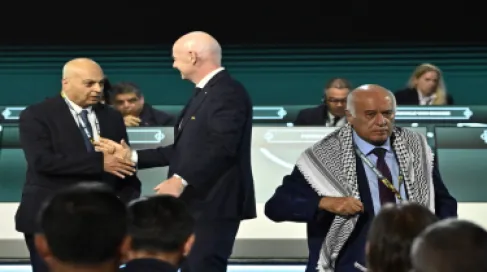
While Trump repeated his claims of Iran's severe human rights violations, he said he "doesn't mind" Iran participating in the upcoming World Cup in soccer in the United States.
Iran warns of "prolonged and painful strikes"
A senior official in the Iranian Revolutionary Guard said that any new American attack on Iran, even if limited, would result in "prolonged and painful strikes" on US sites in the region. Iranian media quoted Majid Mousavi, commander of the aerospace forces in the Iranian Revolutionary Guard, saying, "We've seen what happened to your bases in the region, and we will see the same thing happen to your warships."
Meanwhile, Iran's Supreme Leader Mojtaba Khamenei in a written message to the Iranians said that Tehran would eliminate "enemies' violations of the waterway" through new management of the strait, indicating Iran's intent to maintain control over it.
He added, "Foreigners who come from thousands of kilometers away... have no place there but at the bottom of its waters."
Brent crude prices have doubled since the war began on February 28, fueling inflation and raising fuel prices worldwide to levels that may have negative political impacts.
UN Secretary-General Antonio Guterres warned that if the disruption caused by the closure of the strait continues until mid-year, global growth will decrease, inflation will rise, and tens of millions of people will be pushed into severe poverty and hunger.
He told reporters in New York, "The longer this vital artery remains blocked, the more difficult it will be to mitigate the damage."
Trump faces a deadline expiring on Friday to end the war or provide justifications to Congress for its extension. Nevertheless, analysts and congressional aides expect Trump to inform Congress of his intention to extend the deadline for 30 days or simply ignore it.
Multiple Options
Iran has prevented the passage of all ships except its own through the Strait of Hormuz, and has also launched drones and missiles at Israel and U.S. bases and infrastructure and companies associated with the United States in Gulf countries.
Axios reported that another plan to be presented to Trump includes using ground forces to control part of the Strait of Hormuz to reopen it for commercial navigation. Officials reported that Trump is considering extending the American blockade on Iran or declaring unilateral victory.
In a hint that the United States also envisions a scenario for stopping hostilities, a cable from the State Department stated that the United States invites other countries to join a new international coalition named "Operation Maritime Freedom" which would enable ships to sail through the Strait of Hormuz.
The cable, which is scheduled to be communicated verbally to partner countries by the first of May, stated that "the Maritime Freedom Project coalition represents a critical first step in establishing a maritime security structure for the Middle East in the post-conflict phase."
France, Britain, and other countries conducted talks regarding contributing to such a coalition, but they stated that they would only be prepared to contribute to reopening the strait after hostilities cease.
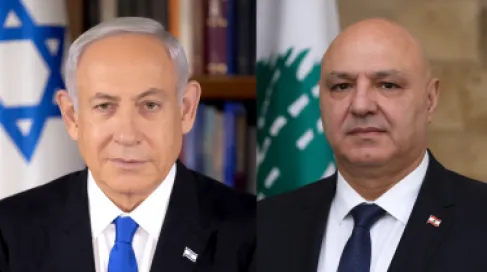
The Iranian Foreign Minister Abbas Araqchi and the Speaker of the Lebanese Parliament Nabih Berri had a phone conversation to discuss developments in Lebanon and the region, as well as negotiations in Islamabad.
Araqchi stated on his Telegram account that stopping Israeli attacks on Lebanon is part of the ceasefire agreement between Iran and the United States, and it will remain a central issue in any future process.
A Pakistani source stated on Wednesday that Pakistan, which plays a mediating role, tried to avoid escalation with an exchange of messages regarding a possible agreement.