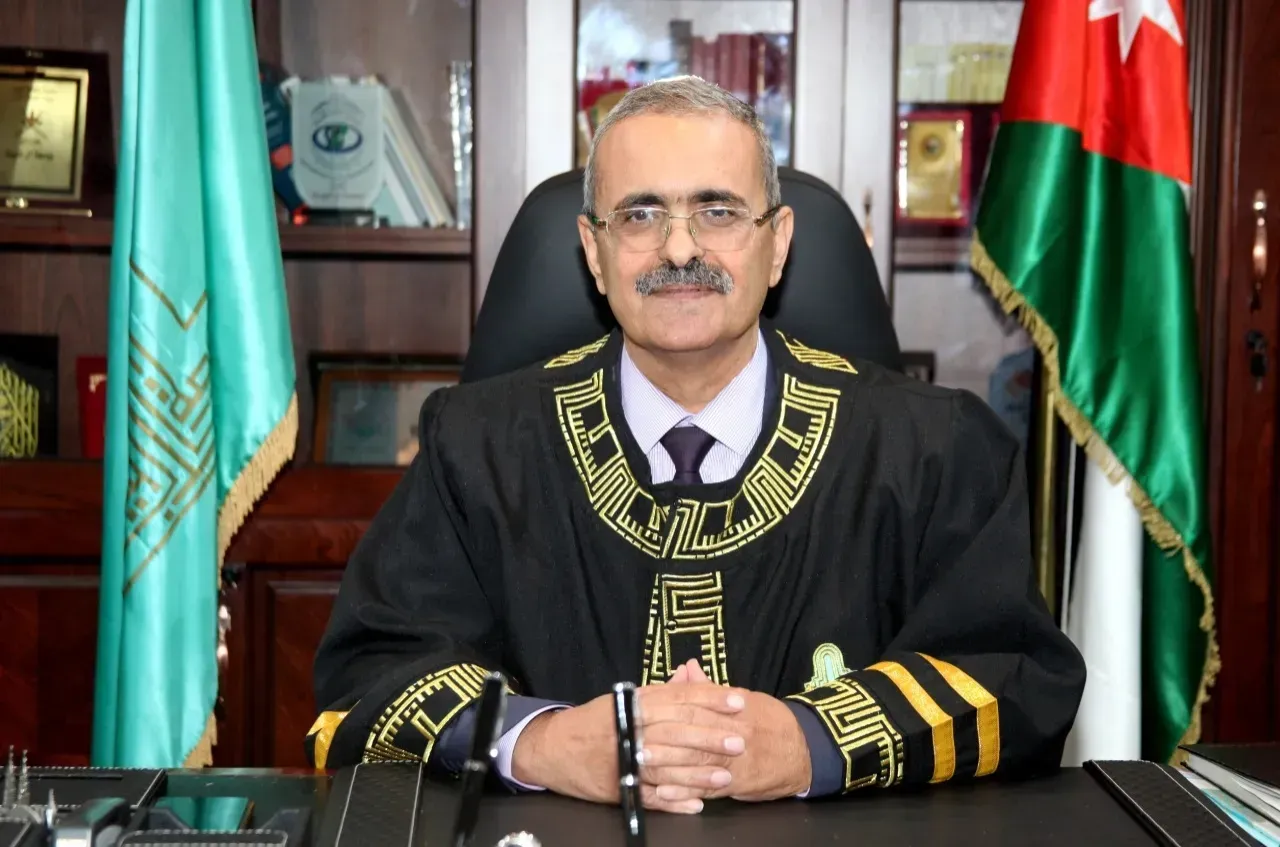
Samih Al-Maaytah's statement needed only one sentence to ignite a broad controversy in Jordan. The short phrase where he stated that “the Palestinian cause is the Palestinians' concern only” was enough to explode a heated debate, beyond the usual political interpretation, touching one of the most sensitive issues in the collective consciousness of Jordanians and Arabs.
From the very first moment, the words were not read as merely a casual opinion but as a signal that carried far more than its apparent meaning. Some received it with anxiety, as if it were an indirect announcement of a retreat in position, or at least a redefinition of a role long considered constant. In the Arab consciousness, the Palestinian issue has never been a local affair but a central concern that has formed part of the political and cultural identity of the region for decades.
But on the other side of the discussion, there were those who saw the picture very differently. For them, the statement was not a deviation from the norm but a direct affirmation of an old Jordanian stance based on a simple but decisive idea: the solution must come from within Palestine, not from outside. From this perspective, limiting the issue to the Palestinians does not mean abandoning it but rejecting its transformation into a burden to be redistributed to neighboring countries, including Jordan at the forefront.
This is exactly where the crux of the controversy that ignited the debate lies. The problem was not only in the meaning but in the phrasing. The words were sharp and direct, without interpretative margins, at a time when political language could no longer bear simplification. To some, a single phrase seemed to shorten a long history of commitment, while others saw it as an explicit expression of deep sovereign concern that recurs in Jordanian discourse whenever the scenarios of “alternative homeland” are raised.
Interestingly, this controversy was not just a disagreement over a statement but reflected a deeper conflict over how to define the role: Should the Palestinian issue remain a collective Arab concern, or should it be redefined within more realistic boundaries, focusing on its direct stakeholders? This question, which seemed theoretical for years, has suddenly come to the forefront with unprecedented severity.
In the background of the scene, there are increasing regional complexities and obvious political pressures, making every word spoken on this matter loaded with implications larger than their size. It has become impossible to separate statements from their context, as well as the underlying fears, whether they relate to the future of the political solution or the redistribution of roles in the region.
In the end, Al-Maaytah's statement was not just a linguistic slip nor a fleeting position but a moment that revealed the fragility of the balance between language and politics in one of the most complex issues. Between those who saw in it a retreat, and those who considered it fortification, it remains certain that the brief sentence he uttered reopened a large discussion… a discussion that seems unlikely to close soon.