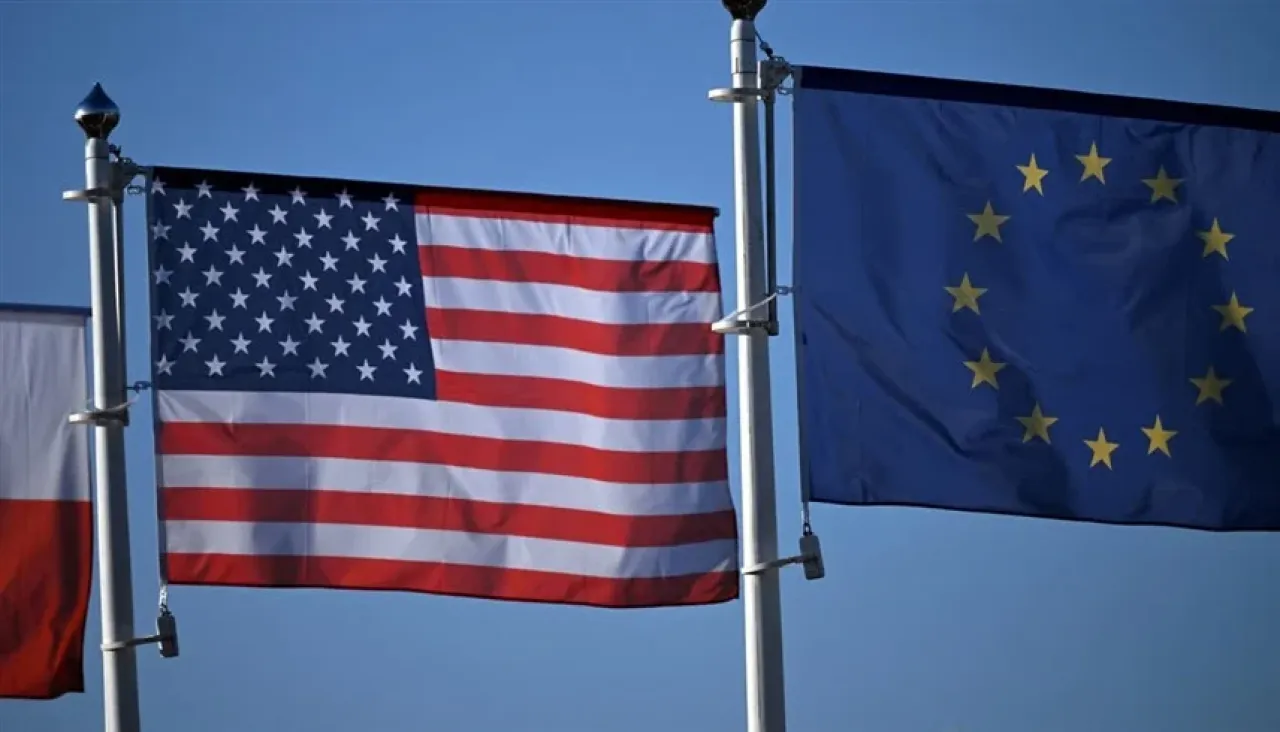
Khaberni - An analysis in the "Financial Times" reveals that the relationship between the United States and Europe is entering an unprecedented stage of tension and doubt, opening up escalating debates about the future of the Western alliance established post-World War II, which has been one of the most stable alliances in the international system for decades.
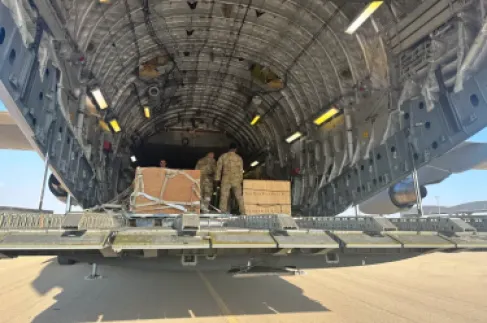
The writer Gideon Rachman mentions in the analysis that the American military presence in Europe, extended since the late 1940s, is no longer guaranteed continuity as before. From bases such as Lakenheath in the UK and Ramstein in Germany, to over 40 bases housing about 85,000 American soldiers, this presence has been the cornerstone of European security for decades.
However, the writer sees that this structure is no longer immune to political shifts in both Washington and Europe.
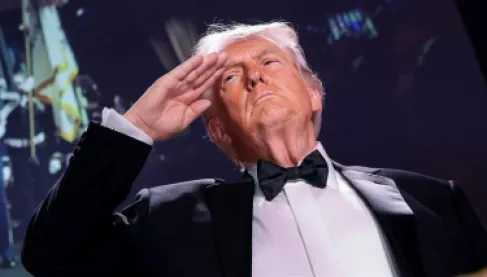
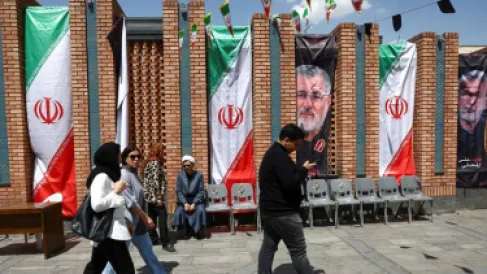
The analysis places the war in Iran as one of the most significant recent points of fracture, as European countries have expressed reservations or rejection of using their territories and bases for American military operations, angering U.S. President Donald Trump, who has described the Europeans as "cowards" and criticized NATO, calling it a "paper tiger".
U.S. Secretary of State Marco Rubio also pointed to questions within the American administration about the usefulness of continuing the bases in Europe if they are not allowed to be used "when needed".
According to the analysis, the crisis is no longer just military, but has become political and strategic in nature. Europeans believe that Washington embarked on a war in Iran without sufficient coordination with allies, while the American administration accuses them of failing to shoulder joint security burdens. This discrepancy, according to Rachman, reflects a rapid erosion of mutual trust that was foundational to the "Atlantic alliance".
The writer adds that the tensions did not stop with the war in Iran, but were preceded by a series of disputes including the imposition of American custom duties on European countries, and political threats concerning sensitive European geographies such as Greenland and the Falkland Islands. These developments have led public opinion in several European countries such as Spain, France, Germany, and Italy to regard the United States as a "threat" rather than a "close ally", according to recent polls.
The article notes that this shift in public and political mood in Europe is accompanied by a rise in more independent rhetoric about Washington, as some European leaders, even in traditionally U.S.-aligned countries like Germany and Poland, start reassessing their security dependence on Washington.
Despite this escalation, Rachman asserts that the idea of a "complete split" or a "political divorce" between Europe and the United States is still unrealistic in the near term. According to the analysis, the European continent still heavily relies on American military capabilities, particularly in areas of air defense, intelligence, strategic transportation, and the unified military command of NATO, which are capabilities difficult to quickly replace.
He also points to the escalating Russian threat in Ukraine, and European leaders' warnings of the potential spread of the conflict to NATO territories, making the continuation of the American security umbrella a vital necessity, even amid the growing political disagreements. In this context, NATO Secretary General Mark Rutte mentioned that Europe is still unable to defend itself without full American support.
The article describes the current relationship as akin to an "unhappy marriage," where both parties realize that a separation would be too costly, yet at the same time, it no longer rests on the previous harmony. Washington, despite its escalating rhetoric, has not actually moved towards closing its bases in Europe, while European capitals avoid taking steps that might be interpreted as a break with the United States.
Rachman indicates that what is happening is not an immediate collapse of the Atlantic alliance, but rather a gradual erosion in trust and strategic consensus, where political and symbolic disagreements accumulate in a way that makes the relationship more fragile over time.