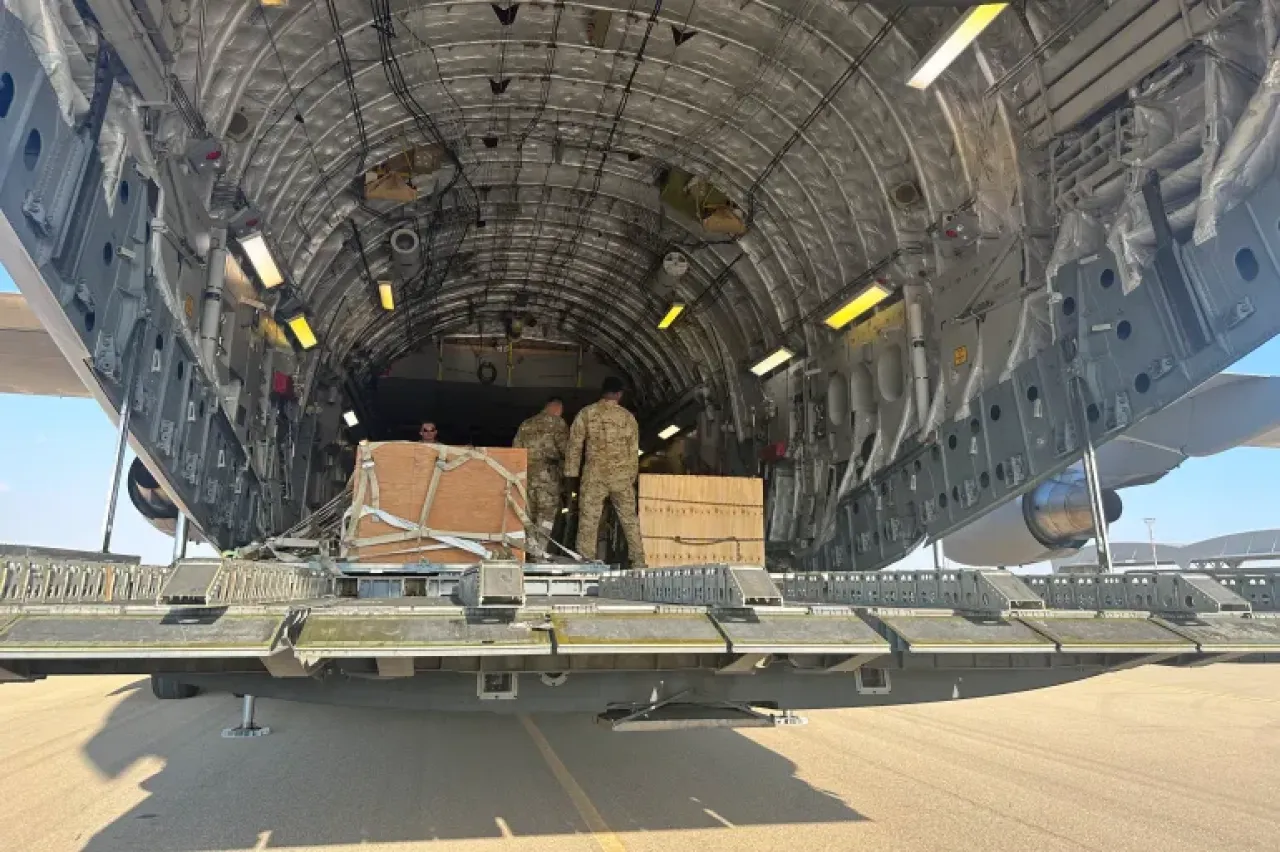
Khaberni - In a striking shift in the nature of the military relationship between Washington and Tel Aviv, and amid a fragile regional truce, the "Jerusalem Post" reported on forthcoming talks that could lead to a gradual phasing out of U.S. military aid to Israel in favor of transitioning to a joint defense partnership.
The newspaper stated that these critical talks are likely to commence soon during the upcoming May, focusing on the gradual termination of U.S. military aid to Israel in exchange for targeted funding toward a joint defense partnership instead.
These talks, occurring in a tense regional situation amidst stalled negotiations between Washington and Tehran which may reignite President Donald Trump's promise to strike Iran again, will shape the future of the partnership with Israel for a decade or more.
While the traditional goal of U.S. aid to Tel Aviv was to ensure the flow of support in terms of equipment and weapons to maintain its supremacy in the region, the newspaper points to a shift in the nature of this support, from direct funding to a sharing of burdens in defense projects.
What are the main topics of the anticipated talks?
According to the newspaper, one of the main negotiation topics regarding the future of U.S.-Israeli military cooperation is setting a timetable and defining the areas of cooperation in joint military and technological projects during the transition from support to partnership.
The newspaper quoted Israeli officials saying that laser air defense systems and new defense systems against threats such as hypersonic missiles and artificial intelligence might all be part of the joint projects list to be funded by both sides.
The newspaper indicated that U.S. and Israeli officials had previously discussed the possibility of developing joint projects involving quantum computing, space technologies with offensive, defensive, and intelligence uses, as well as robotics technology.
Who will participate in the negotiations?
The "Jerusalem Post" revealed that these negotiations will not only be technical but will involve top decision-makers from both countries. From the Israeli side, prominent officials from defense, politics, and finance will participate, including the Director-General of the Ministry of Defense Amir Baram, and the Ambassador to Washington Michael Leiter, along with representatives from the military and the National Security Council.
On the American side, the delegation will include high-level figures, such as Secretary of State Marco Rubio, and his adviser Michael Needham, along with the U.S. Ambassador to Israel Mike Huckabee, according to what the newspaper "Calcalist" reported.
What is the context of the anticipated talks?
These talks occur in a fragile regional context, consisting of an unstable truce with Iran, despite Pakistani mediation that has not yet led to a settlement. This coincides with a fragile ceasefire in Lebanon, amid ongoing breaches and Israeli attacks in the south, and intermittent responses from Hezbollah, increasing the intensity of military attrition and putting pressure on Israel's weapons stockpile.
The anticipated talks also come amid escalating pressures from Democrats within the U.S. Senate to halt or disrupt passing arms deals directed to Israel. In this context, the "Jerusalem Post" reported that 40 out of 47 Democratic senators in the council recently voted in favor of obstructing a number of arms sale deals to Israel.
This occurred after a decision by former U.S. President Joe Biden in May 2024 to partially freeze arms sales to Israel in protest against the Israeli military's invasion of Rafah.
This follows opposition from the vast majority of Democrats to the joint war between Israel and the United States against Iran, which began on February 28 without official approval from Congress.
Rejection of continued U.S. military support directed to Israel also enjoys growing support within the Republican Party, which now also calls for reconsidering the amount of these aids or reducing them, according to the newspaper.
Impacts on the Israeli front?
Observers believe that any transition from a model of direct military aid to a defense partnership based on joint financing and shared technologies could impose complex strategic challenges on Israel, including restructuring its conventional dependency on U.S. support.
The Israeli front, according to the newspaper, is witnessing wide discussions on whether adequate financial resources are available to compensate for any potential decline in the size of U.S. military aid.
Some officials and experts fear, according to the newspaper, that this reduction, if adopted, could create a significant financial and military gap that may affect the pace of upgrading the defense system and Israel's ability to fund its arsenal.
It still remains unclear, according to the newspaper, how Israel, for instance, would maintain its regional air superiority if a future U.S. administration refuses to continue selling F-35 jets to it.
In general, the Israeli defense budget increased after the operation Flood of the Al-Aqsa on October 7, 2023, to 144 billion shekels (about 40 billion U.S. dollars), having risen by tens of billions since the beginning of 2026.
Israeli Prime Minister Benjamin Netanyahu announced a plan to add about 35 billion shekels annually (about 10 billion dollars) to the defense budget, with a particular focus on enhancing Israel's ability to produce various munitions and achieving greater military independence.
The last memorandum of understanding for U.S.-Israeli military cooperation was signed in 2016 during the transition period of U.S. President Barack Obama, which provided Israel with 38 billion dollars over 10 years.