Khaberni - The Speaker of the House of Representatives, Mazen Al-Qadi, emphasized that the political modernization process, which received direct guidance and support from His Majesty King Abdullah II, serves as a lever for empowering youth and enhancing their participation in decision-making, believing that they are the backbone of the present and the hope of the future; as the Jordanian youth stand at the threshold of a new phase, a phase characterized by participation and achievement.
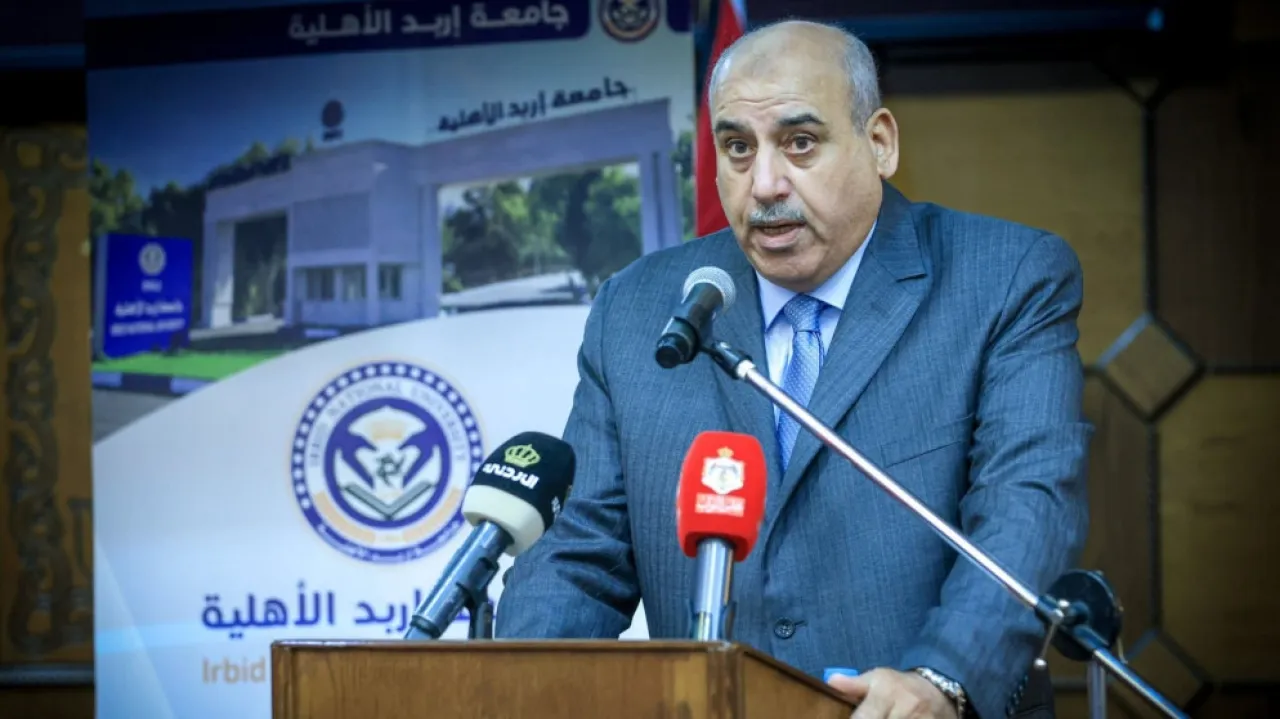
According to a statement from the council on Tuesday, Al-Qadi’s remarks came while he was sponsoring the conference “Renewal of Educational Practices in the Light of Recent Educational Changes” at Irbid National University.
The Speaker of the House, addressed that HRH Crown Prince Hussein bin Abdullah places great emphasis on the youth, making sure to support their energies, listen to their aspirations, and provide an enabling environment for their creativity, believing that investing in them is an investment in the nation's future.
He said that the conference's theme reflects a deep awareness of the stage we are going through and the challenges and promising opportunities it imposes at the same time; education is the bridge that nations cross from their current state to their future. In Jordan, based on the royal visions, we realize that education, especially higher education, has become a cornerstone in building a competitive and sustainable knowledge-based economy regionally and globally, and King Abdullah II has given this sector his utmost attention, believing in the importance of human development.
He added: "The world has witnessed an unprecedented revolution in the fields of technology and artificial intelligence in recent years, which has reshaped the features of the educational process and required higher education institutions to reconsider their philosophies, curricula, and methodologies. It is no longer sufficient to graduate students with theoretical knowledge alone, but it becomes essential to prepare a generation that possesses the tools for critical thinking and the spirit of innovation and adaptability, for knowledge without application is like a tree without fruit."
He continued: "We affirm the importance of integrating higher education outputs with labor market needs, which contributes to narrowing the skills gap, enhancing employment opportunities, and supporting sustainable development pathways. This requires updating academic programs, modernizing curricula, integrating applied education and practical training, in addition to building effective partnerships between universities and both public and private sectors."