Khaberni - A report in "The Atlantic" revealed that U.S. Vice President JD Vance expressed in closed meetings his doubts about how the Pentagon depicts the war in Iran.
According to senior administration officials who spoke to the newspaper, Vance questioned the accuracy of the information provided by the Pentagon regarding the progress of the war. He also expressed concerns about the availability of certain missile systems during his discussions with President Donald Trump.
Some of Vance's close associates believe that War Secretary Pete Hegseth's description of the war was "overly positive" to the extent that it was misleading, according to them.
Reports indicate that U.S. forces launched more than 850 Tomahawk missiles during the first four weeks of strikes on Iran, and one source described the remaining number of missiles in the Middle East as "dangerously low."
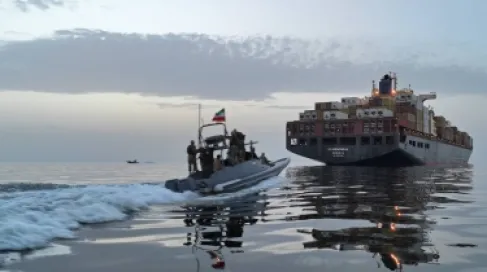
Officials familiar with intelligence assessments said that the Pentagon leaders’ positive depictions "provide an incomplete picture at best," noting that Iran still retains two-thirds of its air force, most of its missile-launching capability, and most of its fast boats that can plant mines and disrupt navigation in the Strait of Hormuz.
Officials warn that the severe decline in ammunition reserves could have serious consequences, as the U.S. forces will need to draw from these same stocks to defend Taiwan against China, South Korea against North Korea, and Europe against Russia.
Estimates suggest that the U.S. stockpile of long-range missiles could be depleted in just three weeks in the event of a major conflict, according to previous analyses.
In contrast, both War Secretary Pete Hegseth and General Dan Keen, the Chairman of the Joint Chiefs of Staff, publicly stated that American weapon stocks are substantial, describing the damage inflicted on the Iranian forces after eight weeks of fighting as significant.
Hegseth previously stated in a press briefing that "the Iranian Air Force was wiped out, and its missile program was functionally destroyed."
Meanwhile, President Trump echoed many of Hegseth and Keen's positive statements, declaring that the damage inflicted by U.S. forces represented a "victory," and that the U.S. stockpiles of key weapons are "almost unlimited," praising Hegseth as doing "a great job."
In stark contrast to these statements, Iran is reactivating more rocket launchers every day, and according to people familiar with the assessments, about half of them became available again after the initial ceasefire.
Advisors believe Hegseth’s optimistic portrayal and sometimes antagonistic approach with the press—where Pentagon press briefings are scheduled at 8 AM when it’s known that Trump watches "Fox News"—seems designed to tell the president what he wants to hear. One former official said: "Pete's TV experience has really made him adept at knowing how to talk to Trump."