Khaberni - Nissan, the Japanese company, bets on China as a key market and a center for development and export in its plan to return to growth, after years of global sales pressures, especially in China, the United States, and Japan.
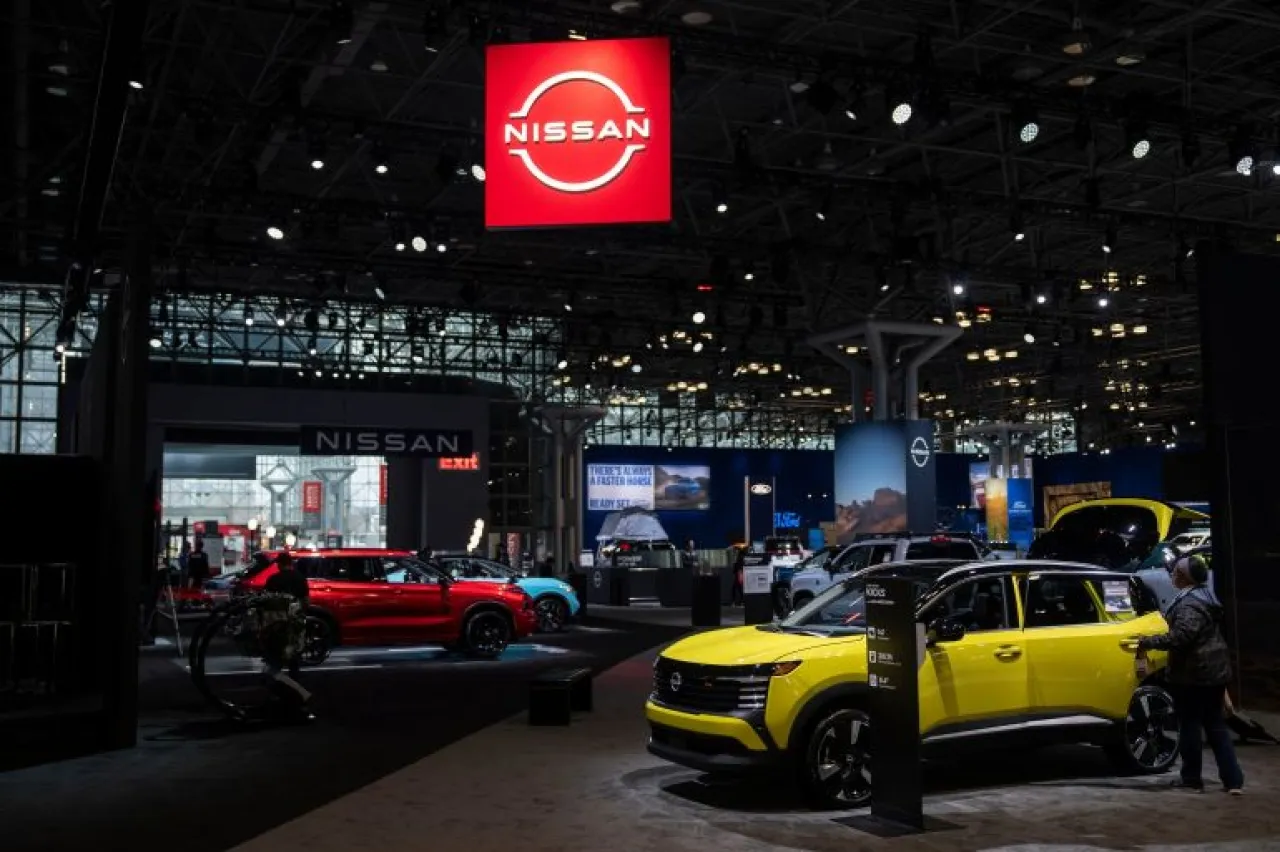
The company revealed at the Beijing Auto Show 2026 two new concepts of multi-purpose sports vehicles powered by new energy technologies, in a move it said reflects the acceleration of product rollout in China and the country's role as one of its main markets and a global hub for innovation and export.
According to what it announced, Nissan targets selling one million cars annually in China by the fiscal year 2030, with exports from Chinese factories becoming a fundamental part of its global strategy, in a clear shift from treating China as just a local market to using it as a base for supplying other markets with vehicles.
According to Bloomberg, the company plans to export hundreds of thousands of cars made in China to foreign markets, at a time when it tries to regain momentum after losing market share in China to local companies specializing in electric and hybrid cars.
China First
Nissan's CEO Ivan Espinosa said that China is not only an extremely competitive local market but also a source of innovation that helps the company create new value and experiences for customers in China and global markets, adding that China is "central" in translating this approach into safer and more user-friendly products.
At the Beijing show, the company introduced the Urban SUV PHEV and the Terrano PHEV, and plans to unveil the production versions of these within a year, while also planning to introduce three additional models of new energy vehicles in China during the same period.
This represents a shift in Nissan's pace within the world's largest car market, as the company aims to match the pace of Chinese competitors who have shortened the development cycle of electric and hybrid vehicles, linking competition to quick updating of designs, software, and price reductions.
Nissan looks at models such as the electric N7 and the hybrid plug-in Frontier Pro, and the N6 and NX8 as the core of a new offensive in China since 2025, combining its global quality standards with the speed of local development and advanced Chinese technologies.
Export Base
In Nissan's new plan, China is no longer just a market for testing products but a hub for exporting, as the company plans to export the N7 to Latin America and ASEAN countries, and plans to export the "Frontier Pro" to Latin America, ASEAN, and the Middle East, while targeting to send the NX8 and the production version of the Terrano hybrid to selected global markets.
Nissan announced in December 2025 that its joint venture in China, "Zhengzhou Nissan", would launch the Frontier Pro and the rechargeable Frontier Pro, indicating that they are the first two pickup trucks designed, developed, and manufactured in China for global export.
The company says that the rechargeable Frontier Pro is the first hybrid pickup truck from Nissan and that the 2025 version unveiled at the Shanghai exhibition provides an electric range of up to 135 kilometers, while the N7 provides a range of up to 635 kilometers, with plans to export both models later.
This track gives Nissan an opportunity to utilize the cost of development and production in China to enhance its competitiveness in emerging markets, particularly in Asia, Latin America, and the Middle East, where demand for electric and hybrid cars is growing but price sensitivity remains high.
Fierce Competition
Nissan's bets come in a highly dynamic market, as data from the China Association of Automobile Manufacturers shows that sales of new energy vehicles in the country rose by 34.9% during the first 9 months of 2025 to about 11.23 million units, accounting for 46.1% of total car sales in China.
China's exports of new energy vehicles also increased by 89.4% during the same period to 1.76 million units, indicating that Chinese companies are moving from domestic dominance to increased export pressure on global companies.
Journalistic estimates and data indicate that the Chinese consumer is now leaning more towards cheaper and faster-updating local brands, as Associated Press reported that the demand for foreign luxury cars in China is declining as consumers turn to Chinese brands that are less expensive and more attractive in terms of technologies and comfort.
The agency mentioned that the share of Chinese brands in passenger car sales reached nearly 70% in the first 11 months of 2025, while the share of Japanese brands was about 10%, highlighting the size of the challenge that Nissan and other Japanese companies face in the Chinese market.
Rescue Plan
China is at the heart of the "Re:Nissan" plan that the company announced to rejuvenate performance and restore profitability, as Nissan says the plan targets achieving positive operating profit in the automotive sector and positive cash flows by the fiscal year 2026, through cost reduction, redefining product and market strategies, and enhancing partnerships.
In its long-term vision announced in April 2026, the company said it would make Japan, the United States, and China lead markets to support global volume and competitiveness, as well as reduce its global portfolio from 56 to 45 models, and increase drivetrain options for each model.
Nissan faces broad financial and operational pressures, as it announced a reduction of about 15% of its global workforce, or about 20,000 employees, and a reduction in the number of its factories from 17 to 10 within the recovery plan, after losses and declining sales in China and other countries, according to Associated Press.