Khaberni - Youth from the local community in the city of Rusaifa presented 13 proposals to improve the reality of waste management there, notably the preparation of a local environmental plan consistent with the national plan regarding this issue, enhancing monitoring and accountability, and clearly defining the responsibilities of relevant entities.
These proposals, which are part of a local assessment of waste management in the city, highlighted the importance of stimulating partnerships with the private sector and investors in recycling and energy projects from waste, and increasing the allocations of the Ministry of Environment for Rusaifa to face the problem of limited funding for this purpose, according to Al-Ghad.
Among the proposals, supported by Athar Association, Civil Peace Service Forum, and Rusaifa Municipality, is the empowerment of Rusaifa Governorate Council by involving it in the preparation of a local environmental plan consistent with the national plan, and raising technical and financial recommendations to the relevant ministries and the House of Representatives.
It is also necessary to improve the local environmental database, provide transparent periodic reports on recycling rates, and the efficiency of waste collection in Rusaifa to measure actual progress, as stated in the assessment.
Waste Sector Dilemmas
The waste management sector in Jordan is among the most complex environmental sectors, due to the diversity of waste types and sources. In the meantime, the city of Rusaifa is one of the prominent examples reflecting this challenge, as it suffers from population density and an infrastructure with limited capacity to respond to growing environmental needs.
The assessment results reveal that individuals' and the private sector's behaviors play a crucial role in the success or failure of waste management. Irresponsible handling of waste, both in terms of improper disposal or lack of adherence to environmental standards, exacerbates pollution problems and hampers the efforts of authorities in implementing plans.
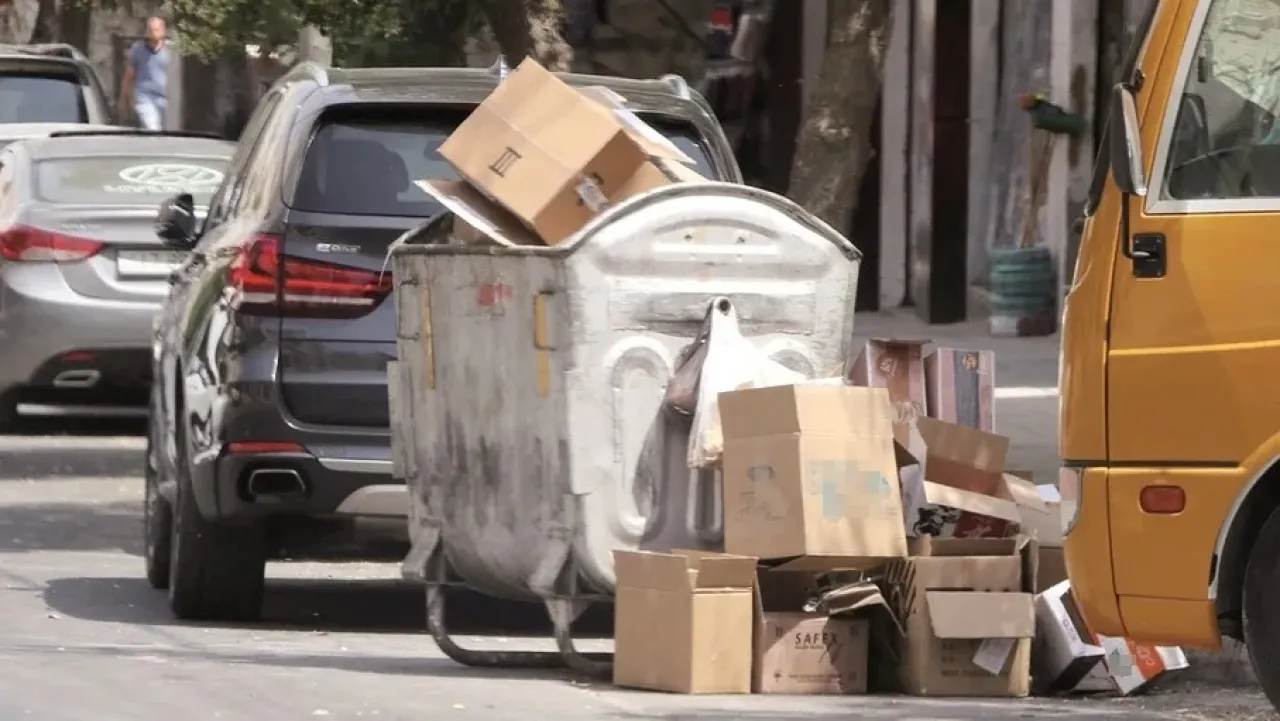
Notably, one of these behaviors is the littering of waste in public places, where the city of Rusaifa suffers from the widespread phenomenon of random dumping of waste on streets and public squares, particularly near markets and schools.
Additionally, the scarcity of containers and their poor distribution are among the main reasons, as residents are forced to dispose of waste next to the full ones. In some populistic neighborhoods, residents or workers resort to burning garbage as a way to dispose of it, as mentioned in the assessment itself.
Despite Rusaifa Municipality collecting approximately 350 tons of waste daily, there is a lack of adherence by residents to the designated waste disposal times, and there is a widespread practice of throwing food remnants and cigarette butts from vehicles.
Based on dialogue sessions with the Rusaifa Municipality Council, Rusaifa Governorate Council, and several MPs from the city, a set of core reasons contributing to the weak implementation of plans and regulations was identified, one of the most prominent is the limited allocations from the Ministry of Environment.
As stated in the assessment, other reasons include the low priority of environmental issues in national policies, focusing the government on more urgent political and economic issues such as security, education, health, and others.
Also, the absence of economic feasibility studies for environmental benefit is another reason, reflecting the weak linkage of the environment to economic development and a lack in the use of economic proof that shows the relationship between environmental protection and sustainable development, leading to a perception that investing in the environment is costly.
Additional Challenges
Waste management in Rusaifa faces additional challenges on the local level, where the weak implementation of legal frameworks and legislation regarding this matter affects the efficiency of waste collection, transport, and disposal, leading to increased environmental and health problems in the district.
Among the prominent laws and legislations in Jordan are the National Strategy for Solid Waste Management, the Framework Law for Environmental Protection for Waste Management, and the Solid Non-Hazardous Waste Management System.
According to statements from the Solid Waste Management Directorate in the Ministry of Local Administration within the assessment, they confirm that the achievement rate in the National Strategy does not exceed 30% over ten years, whereas the official recycling rate of waste is only 1%.
However, recycling by the informal private sector in the Kingdom ranges between 10% and 12% of solid materials, according to the same statements.
The National Plan for Waste Management for the years 2022 to 2026 is the most recent plan launched by the Ministry of Environment, which includes, most notably, the establishment of a national digital system, funded by the European Union and Germany, connecting ten dumpsites and transfer facilities to the system.
Among the outputs are also the Green Growth Plan, which contains 14 subsidiary goals in this regard, enhancing the infrastructure and raising awareness by expanding the range of containers, sorting of waste, and supporting the participation of the informal private sector in recycling.
Despite the plan not explicitly referring to the distribution of inspection and monitoring responsibilities, it is observed that it is shared among several concerned entities, each with a defined role to ensure adherence to policies and environmental standards, according to the assessment.