Khaberni - The four candidates to succeed UN Secretary-General Antonio Guterres are appearing this week before representatives of the member states at the United Nations to answer their questions and present their own programs, in a step preceding the selection of who will lead the international organization for the next 5 years, with the possibility of renewal.
Chilean Michelle Bachelet, Argentine Rafael Grossi, Costa Rican Rebeca Grynspan, and Senegalese Macky Sall will each respond to the questions of the 193 member states and representatives of civil society for 3 hours on Tuesday and Wednesday.
This is the second time that the United Nations organizes this "great oral exam," after it was introduced in 2016 for more transparency.
Several countries are calling for a woman to lead the United Nations for the first time, while Latin America claims the position under the tradition of geographical rotation that is not always adhered to.
However, the members of the Security Council, especially the five permanent members who have veto rights (the United States, China, Russia, the United Kingdom, and France), usually decide the future of the candidates.
U.S. Ambassador Mike Waltz stated that the upcoming UN Secretary-General must align with "American values and interests."
The four official candidates to lead the United Nations starting January 1, 2027, emphasize the need to rebuild trust in an organization that has experienced many disruptions, facing an imminent financial crisis.
Michelle Bachelet
Bachelet (74 years old) is a socialist who was tortured for opposing the regime of Augusto Pinochet and was the first woman to serve as the president of Chile (2006-2010 and 2014-2018), making her a prominent political figure on the international stage.
Her tenure as the United Nations High Commissioner for Human Rights (2016-2022), which is a sensitive position, stirred some discontent.
She faced sharp criticism from China, following the publication of a report condemning the suffering of the Uyghur minority.
Bachelet stated in her letter presenting her "vision" as the UN Secretary-General that she is "convinced" her experience has "prepared her to face" this era where the international system suffers from "challenges unprecedented in magnitude, urgency, and complexity."
Her candidacy is supported by Mexico and Brazil. However, her home country, Chile, withdrew its support after the inauguration of the new right-wing president José Antonio Kast.
Rafael Grossi
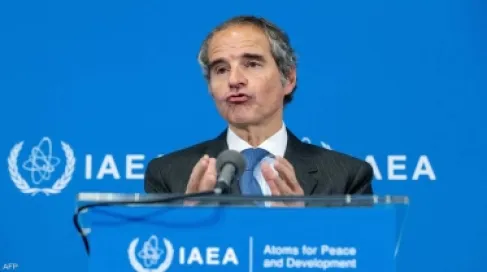
Professional diplomat Rafael Grossi (65 years old) emerged into the limelight when he took over as the director of the International Atomic Energy Agency in 2019.
This position led him to deal with the Iranian nuclear program and the risks associated with the Zaporizhzhia nuclear power plant occupied by Russia in Ukraine, both highly sensitive issues involving several of the permanent members of the Security Council.
In his nomination letter, he called for a "return to the founding principles of the United Nations aimed at saving humanity from the scourge of war."
His message is supported by the administration of U.S. President Donald Trump, while other countries emphasize the importance of coexistence based on the three pillars of the United Nations: peace, human rights, and development.
Rebeca Grynspan
The former vice president of Costa Rica, not widely known, heads the United Nations Conference on Trade and Development (UNCTAD).
In this capacity, she negotiated the "Black Sea Initiative" with Moscow and Kyiv in 2022 to facilitate the export of Ukrainian grains after the Russian attack.
Based on her personal history, being the daughter of Jewish parents who survived the Holocaust before immigrating to Costa Rica, she affirms her commitment to the United Nations Charter, established in the aftermath of World War II.
Macky Sall
Macky Sall (64 years old) is the only candidate not from Latin America.
The former president of Senegal (2012-2024) emphasizes in his "vision" the intrinsic relationship between peace and development, stating that the former cannot be "sustainable" when the latter is undermined by "poverty, inequality, exclusion, and climate vulnerability."
Burundi, holding the rotating presidency of the African Union, has nominated him for the position of UN Secretary-General.
However, he is not supported by the regional bloc, as 20 out of 55 member countries opposed him, and he does not enjoy the support of his country.
The current Senegalese government accuses him of bloody suppression of violent political demonstrations, resulting in the deaths of dozens between 2021 and 2024.