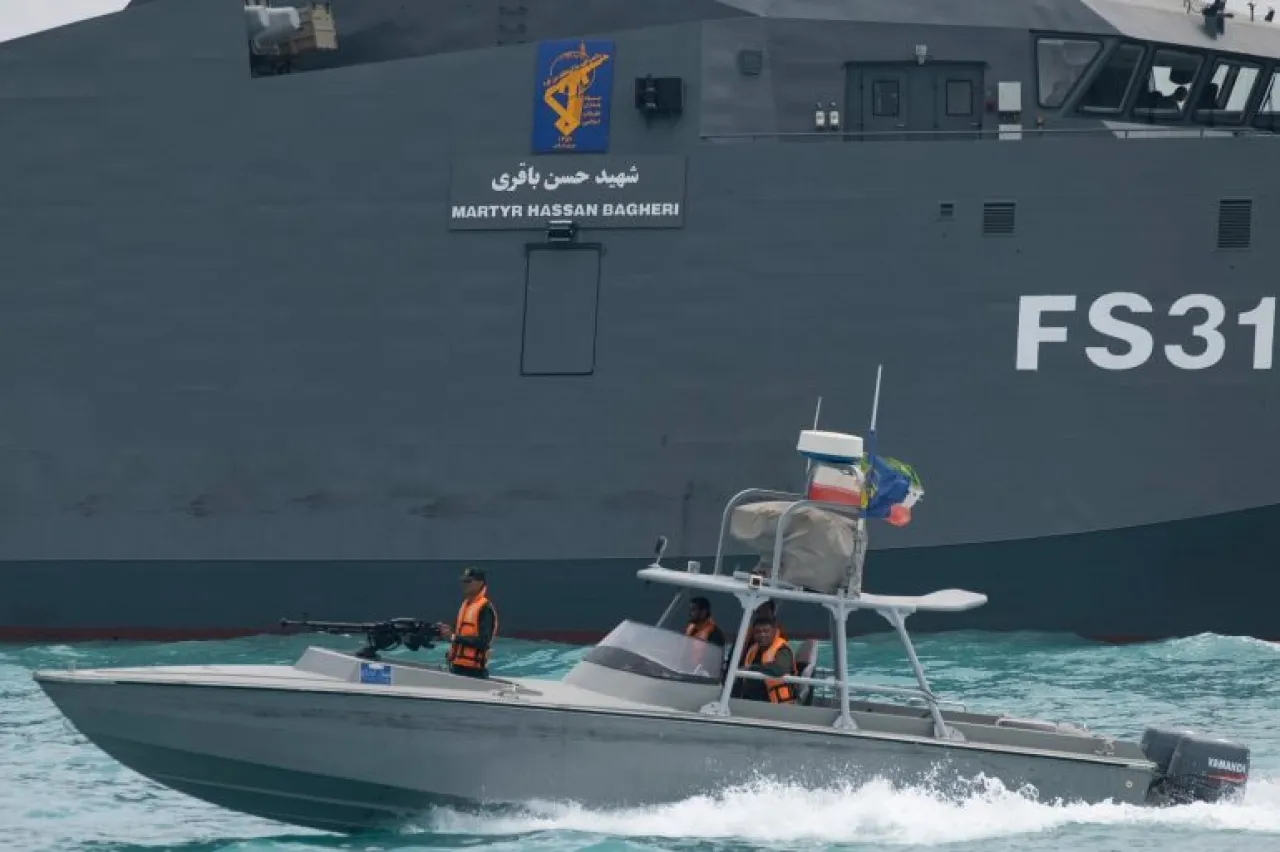
Khaberni - The Iranian Revolutionary Guard has warned ships not to move from their locations, confirming that violating ships will be targeted, while a senior Iranian official said that Tehran will prioritize ships that pay fees to cross the Strait of Hormuz.
The Revolutionary Guard said in a statement: "We warn all ships not to move from their locations in the Persian Gulf and the Sea of Oman, warning that approaching the Strait of Hormuz will be considered collaboration with the enemy, and the violating ships will be targeted."
It added: "All ships should only follow the news from the official reference of our naval forces, and Trump's statements about the Strait of Hormuz are worthless."
It mentioned that on Friday, the passage of non-military ships through the Strait of Hormuz was allowed, "but the enemy violated the ceasefire conditions."
Warnings to Washington
A leader in the Navy of the Iranian Revolutionary Guard threatened to target any ship that does not have a permit to pass through the Strait of Hormuz and ignores the warnings.
The leader warned Washington that any move against Iranian ships "will face a firm response."
He said: "If Trump was sincere in destroying our naval forces, why doesn't he send his ships to open the Strait of Hormuz?"
In this context, the Speaker of the Iranian Parliament, Mohammad Bagher Ghalibaf, stated that his country dealt firmly with America's attempt to remove mines in the Strait of Hormuz.
He added: "I told the American delegation in Islamabad that if the minesweeper advances, we will target it, and they asked for a time-out to order its return, and they did so."
He said: "We announce to our people that the Strait of Hormuz is under our control."
Meanwhile, Iranian television reported that the Strait of Hormuz is under complete Iranian control and passage through it without permission is prohibited.
Priority for those who paid the fees
In this context, the American network "CNN" quoted an Iranian official stating that priority will be given to ships that quickly respond to the new transit procedures in the Strait of Hormuz and pay for security, safety, and environmental services, while the consideration for the transit of ships that do not pay the fees will be postponed.
The statement comes at a time when Iran has once again tightened its control today, Saturday, over the vital waterway for energy transportation, indicating a shift from earlier signs today that traffic could be resumed.
Tehran explained that this step was taken in response to the continued American blockade of Iranian ports, which it described as a violation of the ceasefire agreement, while the Supreme Leader of Iran, Mojtaba Khamenei, stated that the Iranian navy is ready to inflict "new bitter defeats" on its enemies.
Reuters agency quoted sources in maritime security and shipping saying that some commercial ships received radio messages from the Iranian navy that no ships are allowed to pass through the waterway.
The sources also reported that at least two ships, flying the Indian flag, reported being fired upon and injured in their attempt to cross the Strait of Hormuz today, Saturday.
India later stated that it had summoned the Iranian ambassador in New Delhi and expressed deep concern about the shooting incident in the Strait.
Washington warns of extortion
Earlier, maritime navigation tracking devices showed a convoy of 8 tankers crossing the passage in the first major movement of ships since the outbreak of the American-Israeli war on Iran 7 weeks ago.
Tehran's hardline messages cast more uncertainty on the conflict in Iran, increasing the risk of continued disruption of oil and gas shipments across the strait while Washington considers extending the fragile ceasefire.
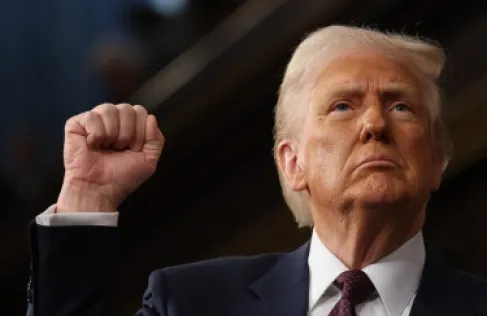
U.S. President Donald Trump said the United States is having "very good talks" with Iran, but Tehran wants to close the strait again. He emphasized that Iran cannot blackmail the United States.
Hours earlier, Trump hinted at "some good news" about Iran, refusing to go into details, but he also said that fighting may resume unless a peace agreement is reached by Wednesday when the two-week ceasefire ends.