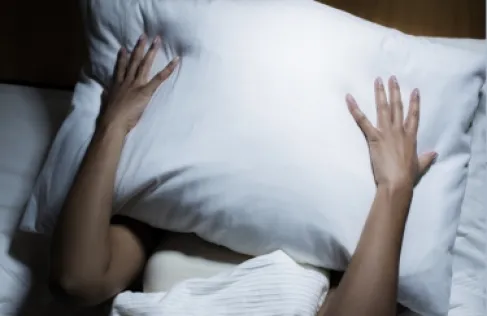
Khaberni - New research suggests that avoiding the use of a pillow may help in preventing the development of "glaucoma," a disease that affects the eye, damages the optic nerve, and can lead to vision loss or blindness.
Glaucoma can occur due to increased eye pressure, thinning of the optic nerve, or fluid buildup, according to the Glaucoma Research Foundation.
A study published in the British Journal of Ophthalmology showed that eye pressure was higher for glaucoma patients who slept on two pillows compared to sleeping on a flat surface. Blood flow to the eye was also reduced in the position of sleeping on two elevated pillows.
Researchers indicated that this could occur as a result of the neck bending forward, leading to vein compression. They concluded that glaucoma patients might benefit from avoiding sleeping positions that place the neck in this position.
Dr. William Lu, the medical director at "Dream Health," described these findings as "interesting and important".
The expert, based in San Francisco for "Fox News" network, said: "It highlights how something as simple as sleep posture can affect eye pressure in people with glaucoma."
A study suggests that some common medications to aid sleep could interfere with your rest quietly.
"However, this is still early research, and it does not mean that pillows are inherently harmful - it is more about how they are used and the degree of elevation."
Expert William noted that most people do not need to give up pillows, but they should avoid "extreme positions," such as sleeping with the head sharply raised or with the neck bent at an uncomfortable angle.
According to Lu, sleeping without a pillow can help promote a more neutral neck position for some people, especially those who sleep on their backs.
He said: "This can reduce the pressure on the cervical spine, may improve comfort or reduce morning stiffness. In some cases, it may also reduce pressure points caused by overly thick or unsupportive pillows."
He added that giving up a pillow is not ideal for those who sleep on their side, who often need a pillow to keep the head aligned with the spine.
He said: "Without a pillow, the neck may tilt downwards causing strain over time. For others, not using a pillow could exacerbate snoring or airway posture, and people with neck or shoulder issues may actually feel worse without proper support."
For those who suffer from glaucoma or are at greater risk, the expert advises: "Small adjustments in the sleeping arrangement can be a simple yet meaningful way to support overall health."
In a separate interview, Dr. Saima Taher, a certified specialist in sleep disorders in New York City, said that these findings are consistent with previous research that shows "how you elevate your head during sleep is important."
She said: "Elevating the head of the bed itself can reduce eye pressure, but using multiple pillows may not have the same effect – it might have opposite results in some cases."
Taher confirmed that there is "some evidence" showing health benefits of sleeping without a pillow.
Those suffering from glaucoma or at risk should avoid sleeping face down with pressure on the eyes, and be cautious when using very high or stacked pillows, as sleeping on the side can expose the lower eye to higher pressure.