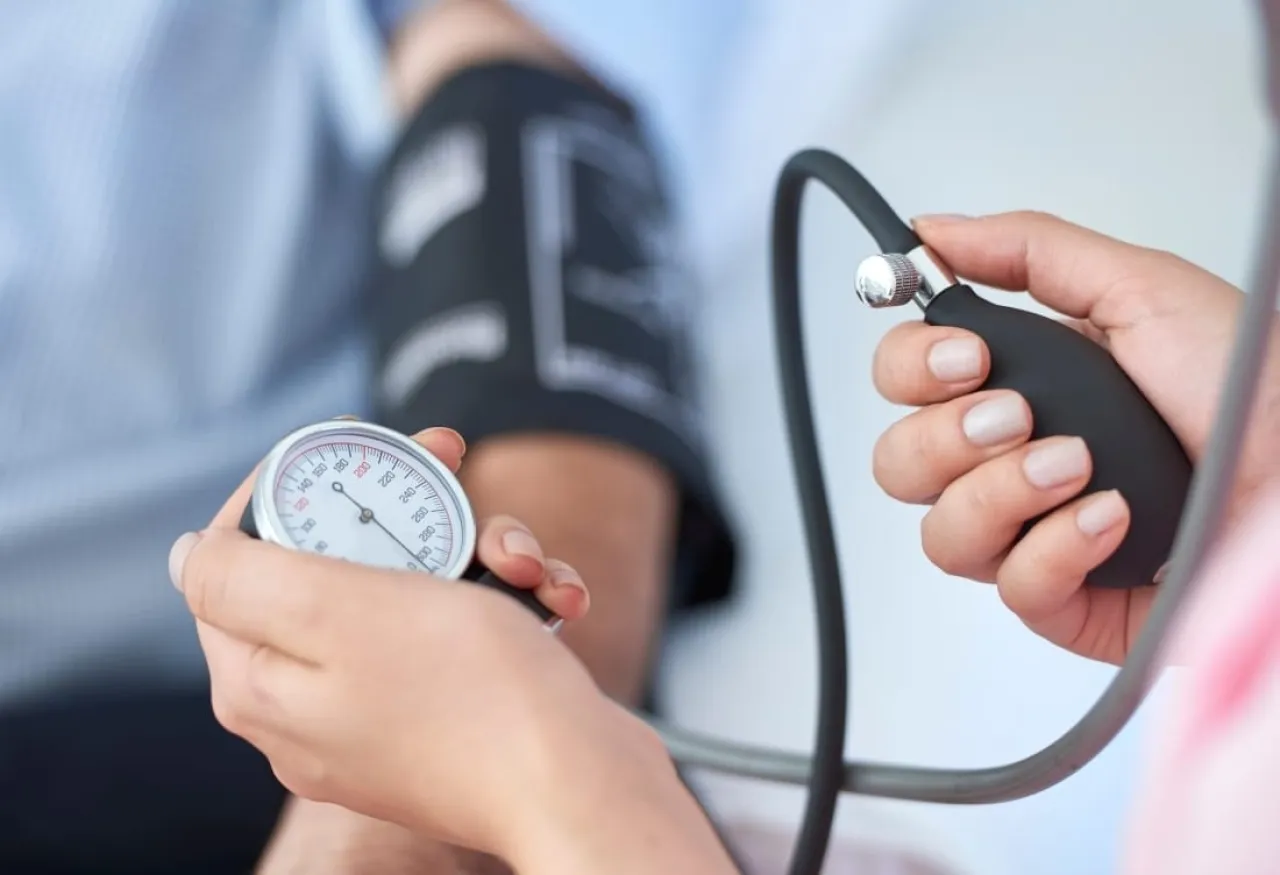
Khaberni - A recent study has shown that the waist-to-height ratio (WHtR) may be more accurate than the Body Mass Index (BMI) in predicting the risk of high blood pressure, which opens the door to adopting simpler and more effective measurement methods in early medical screenings.
According to researchers from Finland and the United States, relying on the WHtR index may help identify individuals who are more susceptible to high blood pressure, compared to the traditional index that has been used for decades to assess overweight and obesity.
Epidemiologist Mahideri Ali confirms that this index provides "a more accurate estimate of fat mass and its direct relationship with blood pressure risks," noting that it has shown a consistent correlation across different age groups and backgrounds.
The study was based on analyzing data of more than 19,000 participants from adults and teenagers, and the results showed that individuals with a high waist-to-height ratio were 91% more likely to suffer from high blood pressure, and 161% more prone to developing hypertension, compared to people with normal ratios.
In contrast, the Body Mass Index showed a weaker association with the risks, as it failed to accurately explain some cases associated with high blood pressure.
The researchers believe that this is because the BMI index does not differentiate between fat and muscle mass, which may reduce its accuracy in assessing health risks.
The results suggest that measuring waist circumference relative to height could be an easy and low-cost tool, which could be used in preliminary screenings for early detection of cardiovascular diseases and high blood pressure risks, allowing for early therapeutic intervention.