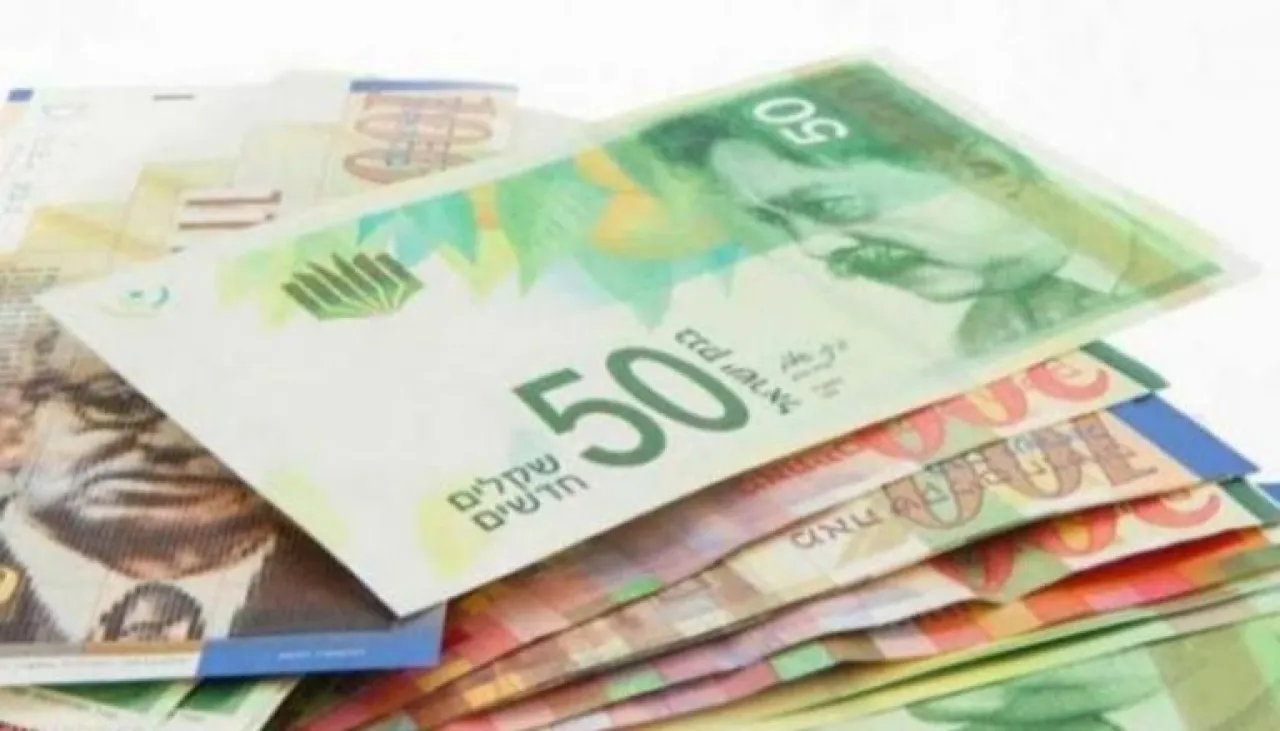
Khaberni - In a financial precedent that is the first in three decades, the US dollar has recorded a historic decline against the Israeli shekel amidst rapid economic and geopolitical shifts.
The Israeli Broadcasting Corporation said: "For the first time since October 1995, the dollar was traded on Wednesday below the level of 3 shekels."
It added that "the dollar's weakness is a global trend and not limited to Israel, as the value of the American currency is declining in various markets, while the shekel is experiencing a notable rise, influenced by the war in Iran and geopolitical developments over the past three years."
The Israeli economic newspaper "Calcalist" explained that the dollar has continued to decline recently, noting that last April it was traded around the level of 3.7 shekel, meaning a decline of about 16% since then, which is the largest decline against the shekel since the global mortgage crisis in 2008.
On the other hand, the newspaper "Yedioth Ahronoth" said that this decline comes amid broader geopolitical tensions between the United States and Iran, alongside continuous flows of foreign currencies into Israel, where large amounts of incoming dollars are converted into shekels — especially through investments in advanced technology and industry — boosting the strength of the local currency.
What next after the shekel's rise?
The newspaper indicates that the increase in the value of the shekel has a dual impact on the Israeli economy.
On the positive side, it leads to reduced travel costs abroad and lowers the prices of imported goods, including many consumption products, and helps curb inflation.
According to calculations by the expert at "Metav Investment House," Dr. Alex Zabiyeginsky, maintaining an exchange rate at 3.7 shekel would have kept inflation around 3% instead of about 2% currently.
However, on the flip side, the rise of the shekel causes clear damage to the companies that earn their revenues in dollars and pay their expenses in local currency, including self-employed people dealing with American markets, exporters, and the advanced technology sector.
The newspaper clarifies that companies reliant on dollar revenues see an actual decline in their profits by about 16% due to exchange rate changes.
Strength of the currency
While the decrease in import prices partially alleviates losses, most companies affirm that this effect does not fully compensate for the revenue declines. Surveys by the Manufacturers Association reveal that 46% of companies perceive that the strength of the currency does not compensate losses at all, while 27% think it compensates only partially.
In the advanced technology sector, the impact seems more evident, with lesser reliance on imported raw materials.
According to data, there are currently no signs of a decline in Israeli exports, although there is an increase in production activities by companies abroad.
The Israeli Broadcasting Corporation stated: "Exporters, who spend in shekel and earn in dollars, are the most affected, as the value of their revenues declines when converted domestically. However, the beneficiaries include sectors like foreign demand and travel."
It added: "Despite calls from exporters for the Bank of Israel to intervene, the absence of indicators of severe inflation or widespread economic disruption makes intervention unlikely at the current stage."
Reasons for the strength of the shekel
The strength of the shekel despite wars and losses in the past three years raises broad questions in economic circles.
"Yedioth Ahronoth" explains that this shift reflects a continuous surplus of dollars entering the Israeli economy, driven by strong exports of technology and increased flows of foreign investment."
It added that foreign investments alone in the year 2025 amounted to about 39 billion dollars, compared to 25 billion dollars the previous year, which has increased the demand for the shekel and contributed to a noticeable rise in its value.