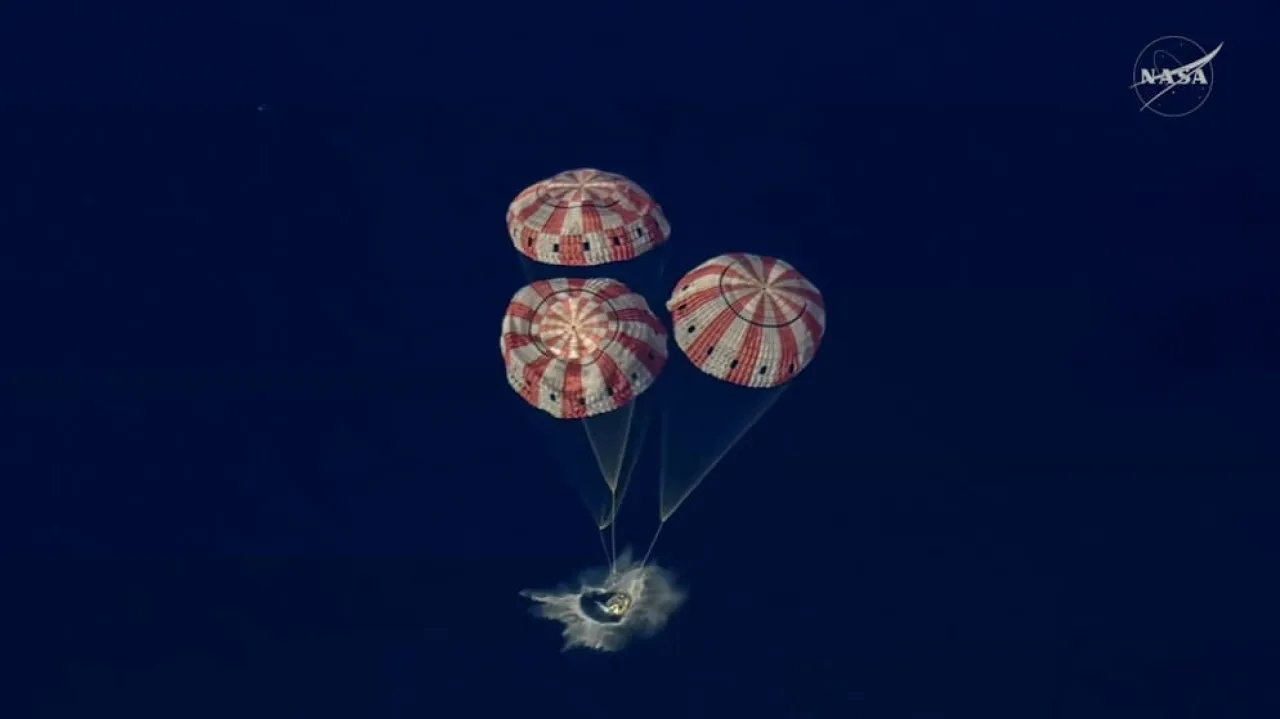
Khaberni - After a historic journey around the moon lasting 10 days, the crew of the "Artemis 2" mission safely returned to Earth, where NASA announced the successful landing of the capsule in the Pacific Ocean, completing one of the most prominent modern space missions.
However, despite the breathtaking scenes of the safe landing, an equally important phase now begins, where astronauts face a series of health challenges resulting from living in a zero-gravity environment, according to the New York Post.
As soon as they return, astronauts find it difficult to regain their balance, suffering from dizziness and nausea, along with a strange feeling of being unable to walk normally, a result of their bodies relying for several days on a weightless environment. These symptoms appear as the body attempts to "reset" itself to adapt again to Earth's gravity.
The effects do not stop there, as relatively short spaceflights lead to muscle weakness and gradual loss of mass, while bone density decreases due to the absence of the need to carry body weight. Vision disturbances may also occur due to changes in the distribution of fluids inside the body, in addition to sleep problems and potential effects on the immune system.
During the flight, the crew made efforts to mitigate these effects through a strict training program aboard the "Orion" spacecraft, which included daily exercises to maintain physical fitness. Nevertheless, the post-landing phase remains a real test of the body's ability to recover.
After being retrieved from the ocean, the astronauts were transferred to specialized medical centers before being sent to Houston for detailed examinations and rehabilitation programs.
Despite these challenges, experts affirm that the human body has an amazing ability to adapt; astronauts gradually begin to regain their balance and strength over weeks or months, in a recovery journey no less thrilling than their adventure in space.