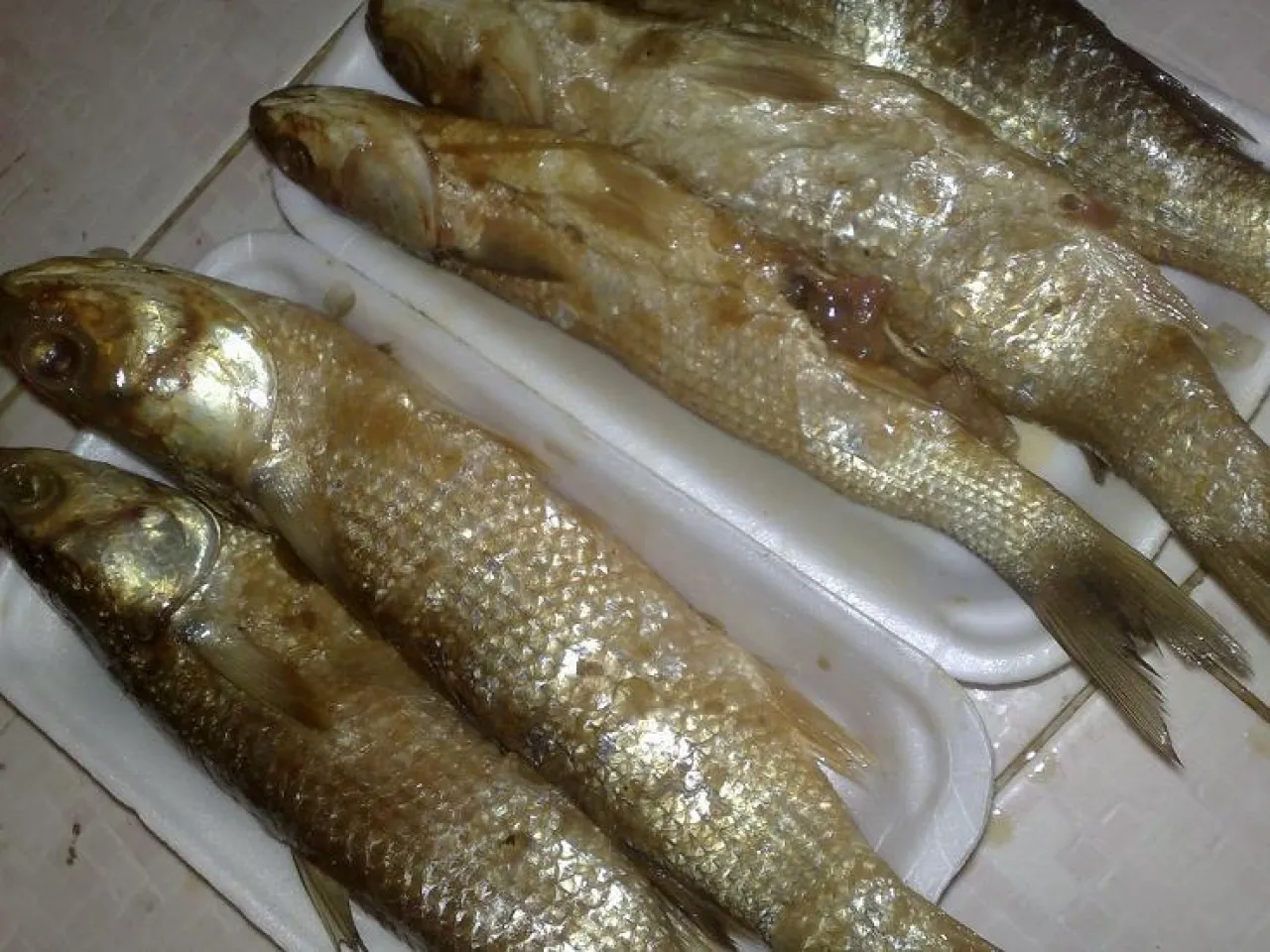
Khaberni - At this time of year, Egyptians revive their obsession with the dish "Feseekh" which becomes an icon on the table during spring festivals, especially Sham el-Nessim, accompanied by onions and bread in a cheerful atmosphere that goes back thousands of years, specifically since the dawn of Pharaonic civilization.
"Feseekh" refers to salted fish of the "mullets" type, fresh and large in size, meticulously washed with water especially the gills, then left in a strainer with the head facing downward for a few hours until it is completely dry from fluids.
The gills are stuffed with a dense mixture of coarse salt, hot pepper, and turmeric, then the fish is tightly wrapped in multiple layers of plastic bags with the air completely evacuated to prevent spoilage, and then stored in a dry, dark place for a period ranging from 10 to 20 days, depending on the weather, until its flesh becomes a tender texture resembling "butter".
The secret of the popular obsession
Since the dawn of history, ancient Egyptians celebrated the festival "Sham el-Nessim," which symbolizes rebirth and life through the meal "Feseekh," a social ritual that brings families together, where it is served with green onions, lemon, local bread, and tahini, in a unique culinary experience blending salty taste and heritage enjoyment.
Despite its pungent smell and public health warnings, the "fesekhani" shops experience huge crowds of customers; reflecting an inherited passion that defies time.
The origin of Feseekh dates back to the era of the third and fourth dynasties in ancient Egypt, around the year 2700 BC, where ancient Egyptians preserved fish and cheese by drying and salting to store them during the flooding periods of the Nile.
Pharaonic significance
The consumption of salted fish was associated with the festival "Shemu," currently Sham el-Nessim, which marked the beginning of the harvest season and the rebirth of life.
Salted fish was considered a symbol of growth and fertility, where it was offered as sacrifices to gods to ensure an abundance of crops. The idea that fish emerge alive from the Nile and then preserved to remain "edible" despite its death, embodies the concept of resurrection and immortality, according to ancient Egyptian beliefs.
The suspicions of others
The irony here is that the situation may differ for non-Egyptians who might feel suspicion or even "repulsion" from the meal considered by some just "rotten fish" long fermented in tightly sealed wooden barrels.
Non-Egyptians complain about the "pungent smell" of the meal "Feseekh," whereas Egyptians see it as a delicacy despite the severe health risks it may cause, such as nerve paralysis and heart muscle failure, if consumed when "spoiled" and not fresh.