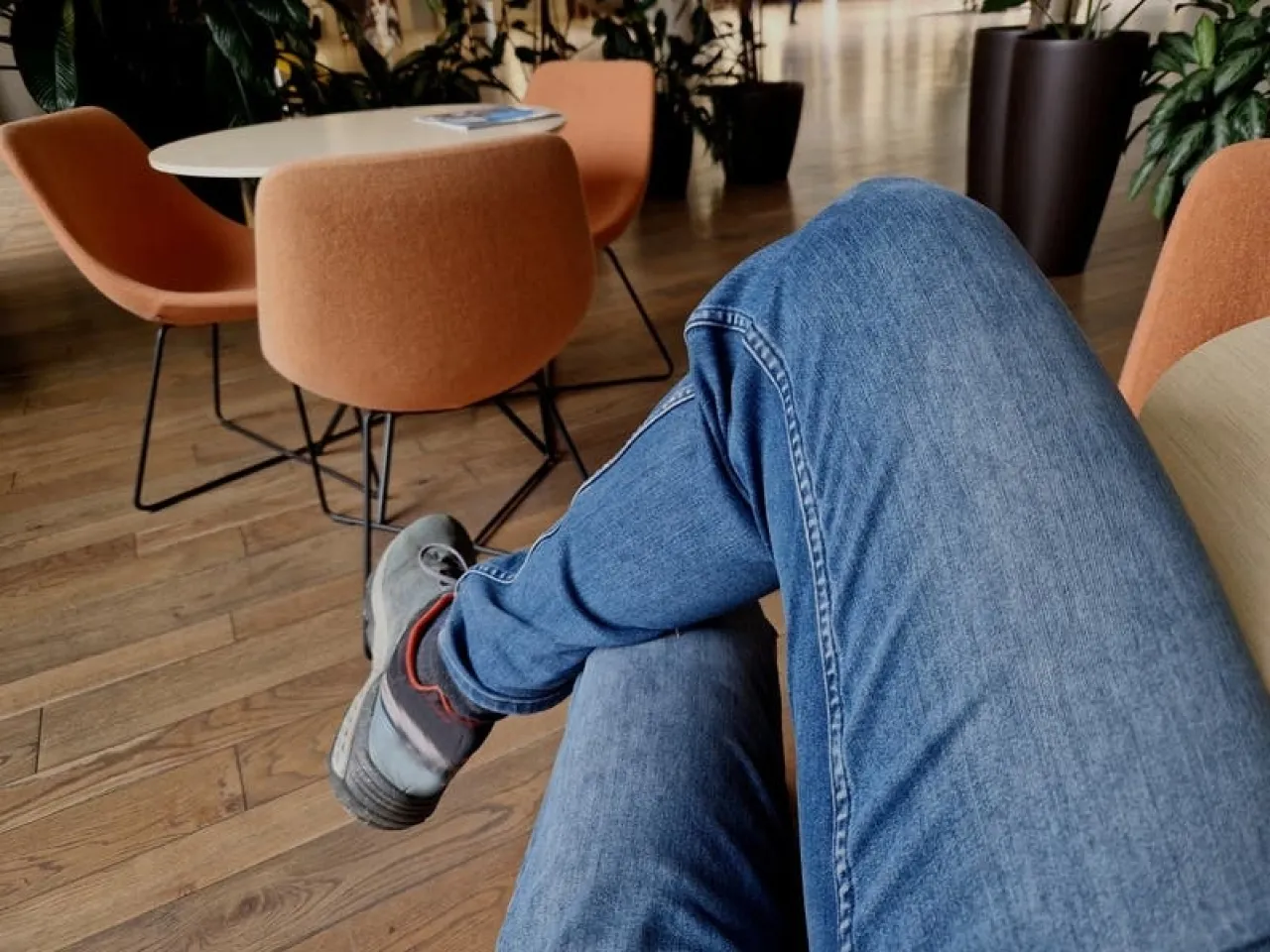
Khaberni - Most of us have been scolded at some point because of the way we sit. Among the familiar health warnings we've heard: "Don’t cross your legs, you’ll hurt your knees", "You’ll get varicose veins", "Sit properly", "Sit up straight".
But is really crossing one leg over the other harmful? There is no significant evidence that sitting with one leg over the other harms the back, strains the hips or knees, or causes varicose veins, according to Science Alert.
However, the bigger problem for many is staying in one position for a long time, feeling stiffness or pain, and then assuming that this sensation means there is a problem with the body.
Where did this idea come from?
Perhaps part of it arose from old concepts about body posture.
For a long time, sitting "properly" was seen as an indicator of discipline, self-control, and good manners. Once this type of thinking takes root, it is easy for social rules to seem like medical facts.
It is also easy and common to confuse discomfort with harm. Sitting cross-legged for a while may make you feel stiff or compressed or trigger the desire to move.
But this is usually a signal to change the position, not proof that you are unknowingly harming your body.
This aligns with modern concepts about body posture and pain, which have abandoned the idea of a single "ideal" posture.
What about the back?
Often, crossing one leg over the other is classified among "bad postures", as if it were causing a twist in the spine.
Yet, research has not found a single ideal sitting position that benefits everyone, or a daily sitting posture that causes certain harm.
In one study, physical therapists from various countries were asked to choose the "best sitting posture". Their answers varied greatly. Researchers concluded that beliefs about the ideal sitting posture are influenced by tradition and professional culture, in addition to scientific evidence.
Posture is still important, but your back is strong and flexible, prepared to accommodate a wide range of positions.
Usually, the biggest problem lies in staying in one position for a long time, whether sitting cross-legged, sitting completely upright, or bending over a laptop.
What about the hips and knees?
It is also rumored that placing one leg over the other strains the hips or knees. Again, there is no significant evidence to support this claim.
Hips and knees endure much greater forces when climbing stairs, rising from a chair, running, jumping, or carrying grocery purchases.
Sitting with one leg over the other might briefly change the angles of the joints, but this doesn't prove that it causes arthritis or permanent damage to them.
The research specifically focused on sitting with one leg over the other and its long-term effects on joints is limited, so the evidence is not conclusive.
However, the available evidence does not support the old warning. Medical guidelines on maintaining the health of the hips and knees focus on things like physical activity, muscle strength, healthy weight, and managing the overall load on the joints, rather than avoiding a typical sitting habit.
So, if placing one leg over the other is comfortable for you, there is no need to consider it dangerous. And if you feel discomfort or stiffness, just uncross your legs.
Does sitting with one leg over the other cause varicose veins?
No. Varicose veins occur when valves inside the veins do not work efficiently, allowing blood to accumulate and veins to swell.
The risk of developing them is more significantly associated with factors such as age, family history, pregnancy, obesity, and certain types of jobs, including standing for long periods.
While placing one leg over the other might temporarily alter blood flow during sitting, this does not constitute a direct cause of varicose veins.
The available evidence does not support considering sitting with one leg over the other as a cause of varicose veins.
Are there instances where it matters?
Sometimes, yes, but usually for specific medical reasons, and often only for a short time.
After some hip replacement surgeries, patients are traditionally advised to avoid placing one leg over the other while the tissues heal.
However, even in these cases, recent research suggests that some of these precautions may be overly cautious for many patients, and eliminating them did not lead to an increased risk of early joint dislocation in one trial.
There are also cases where a doctor might recommend avoiding a particular position for comfort or because it aggravates a sensitive area temporarily. This is completely different from saying that this posture is harmful to everyone.
Most of us are familiar with the temporary numbness or tingling that might occur after sitting in an uncomfortable position for a long time. But usually, this feeling goes away quickly once you move. Again, this is just a reminder to change position, not proof of damage.
What matters?
Variety in movement is more important than mastering a sitting posture.
Your body tends to respond better to options. Sit cross-legged if it's comfortable for you, then stretch your legs. Change your body position. Lean back. Stand. Walk around a bit.
Oftentimes, the healthiest sitting position is the one you don’t stay in for the next hour.
Move more, vary your posture, and trust that your body is likely less fragile than you think.