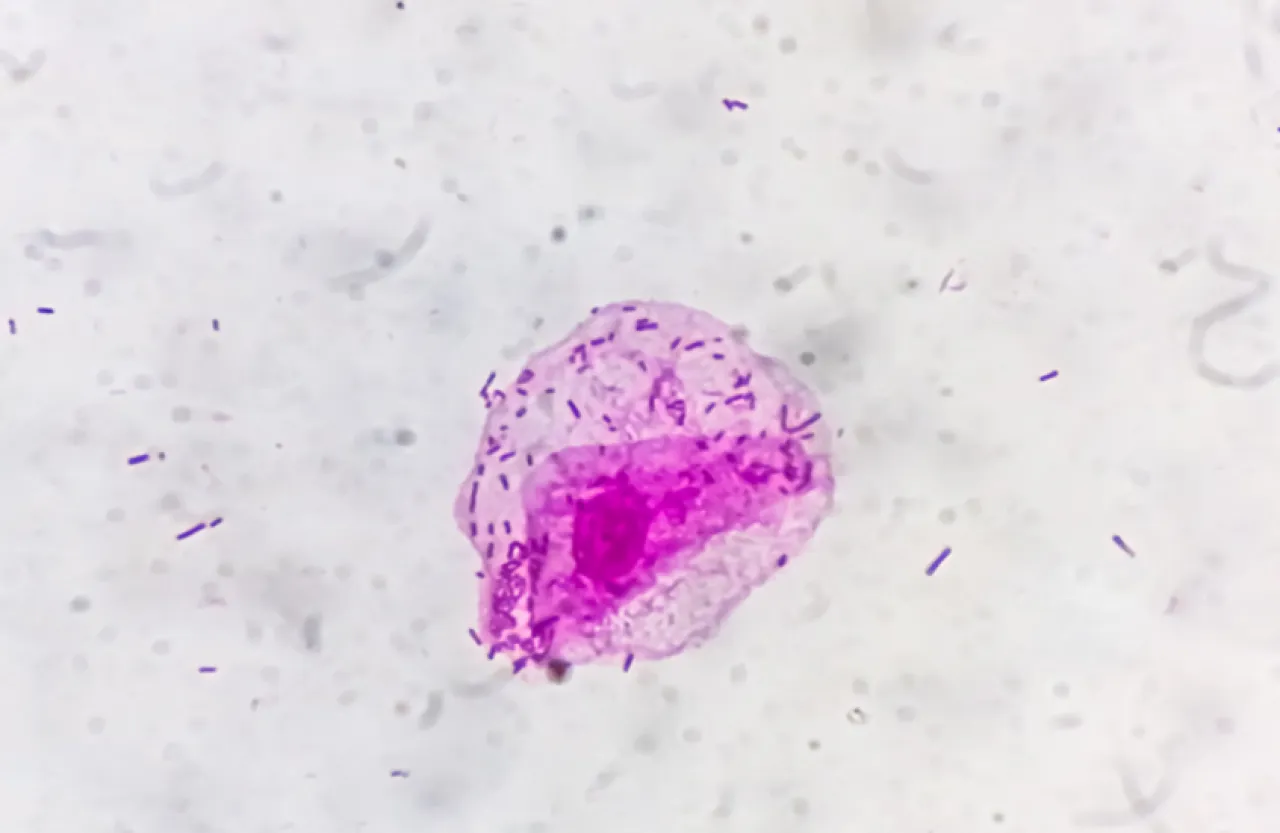
Khaberni - Health experts warn that a common condition affecting women, known as bacterial vaginosis (BV), may actually be more of a sexually transmitted infection than previously believed.
Bacterial vaginosis occurs when the natural balance of bacteria in the vagina is disrupted, often leading to discharge or a distinctive odor, while about half of the affected women show no symptoms. Although the symptoms are sometimes mild, BV may be associated with an increased risk of sexually transmitted diseases such as chlamydia, gonorrhea, and HIV, in addition to pregnancy complications such as miscarriage and premature birth, as well as facilitating an environment for the proliferation of human papillomavirus (HPV), which is responsible for most cases of cervical cancer.
Recent studies have shown that treating the male partner concurrently with treating the woman significantly improves outcomes, suggesting that the infection can be transmitted between partners, although men typically do not show symptoms.
Valentina Milanova, a public health and women's health expert, said: "The traditional argument against considering BV a sexually transmitted infection was based on the condition arising from an overgrowth of natural bacteria in the vagina, rather than an external cause, but new evidence makes it hard to defend this view."
Bacterial vaginosis is usually treated with antibiotics, however, about half of the women experience a relapse within six months. This is partly because men may carry the bacteria without showing symptoms, leading to reinfection if the partner is not treated.
Experts confirm that managing BV should be done like a sexually transmitted infection, by treating both partners to break the cycle of recurring infection. In countries such as the United States, Canada, and Australia, this method is followed within sexual health guidelines according to the directions of the World Health Organization, while the United Kingdom is still behind in this area.
Recent research suggests that restoring the beneficial bacteria in the vagina, by taking probiotics after antibiotics, may reduce the chances of relapses. This approach helps to restore the natural balance of the vaginal microbiome and make the environment less conducive to harmful bacteria.
Simple steps can also be taken to prevent or reduce the chances of recurrence, such as avoiding scented products, vaginal washes, and vaginal deodorants, sticking to water or mild soap.