Khaberni - The recent archaeological findings at Ras Qaryah Port in the Eastern region of Saudi Arabia have re-highlighted one of the oldest coastal centers that played a pivotal role in Gulf trade and maritime navigation, revealing consecutive historical layers of settlement extending from pre-Islam to the early Islamic periods.
The site serves as an important model for understanding the evolution of maritime activity in the eastern Arabian Peninsula, where studies have shown that a network of small ports was a fundamental cornerstone in trade movement, contributing to the connection between the interior and trading centers along the Gulf coasts.
A Historical Site Revealing Early Settlement
Researcher and historian Abdullah Al-Fayyad told "Alarabiya.net" that Ras Qaryah's significance stems from being among the earliest coastal sites to show clear evidence of continuous human activity and maritime operations in the Eastern region, noting that the site is located about 16 miles northwest of the historical Al Uqair Port.
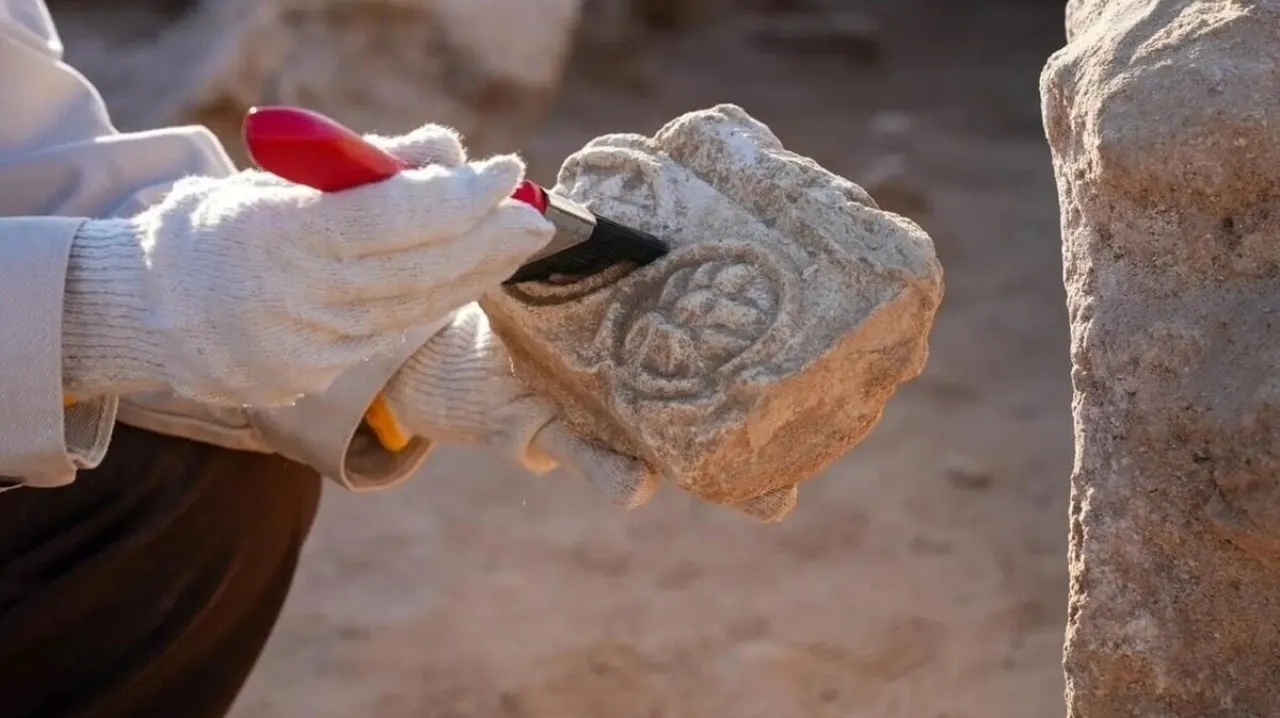
He explained that the survey and excavation work overseen by the Saudi Heritage Authority uncovered architectural units and various archaeological finds, including pottery, glassware, and Abbasid-era bronze pieces, as well as more than 141 glazed pieces and an Abbasid silver dirham, reflecting the existence of an active coastal community linked to maritime trade.
A Strategic Location on Navigation Routes
Al-Fayyad pointed out that the site enjoys a distinctive geographical location, situated on a protected marine tongue that allows traditional ships to dock safely and lies within the navigation routes in the Gulf, thus making it an important station for the exchange of goods and marine stopover services.
He added that the port witnessed various maritime activities including fishing, pearl gathering, and light goods trade, alongside boat repair and storage of incoming inland goods, with the presence of smaller, possibly seasonal or permanent residential settlements.
A Wide Trade Network Connecting the Gulf to the World
He elaborated that the site reflects the nature of the navigational network in the early Islamic ages, where trading routes connected Basra, Bahrain, the Gulf coasts, Oman, and the coasts of India, and the small ports like Ras Qaryah served as subsidiary stations for goods exchange and ships' provisioning.
The archaeological findings also revealed a community dependent on the sea as a primary livelihood source, residing in simple stone houses, and using imported pottery, indicating active international trade relationships.
Challenges Threatening the Archaeological Site
Regarding the challenges, Al-Fayyad mentioned that the site faces several factors, notably coastal erosion, urban pressure, limited published studies, and unsystematic tampering by some visitors, highlighting the need to enhance protection and documentation efforts.
He mentioned that among the proposed solutions are completing excavation works, implementing coastal protection plans, establishing an interpretive center for visitors, connecting the site to the historical ports trail in the Eastern region, and digital documentation and aerial surveys.
A Witness to the History of Navigation in the Gulf
Ras Qaryah Port represents a living historical record documenting the beginnings of navigation in the eastern Arabian Peninsula, reflecting the role of coastal communities in building an active maritime trade network across the Gulf.
The Saudi Heritage Authority has confirmed that the history of the port dates back to between the third and fifth centuries Hijri, enhancing its status as one of the significant markers of early settlement and trading activity in the region.