Khaberni - The Israeli Knesset session began a short while ago to vote on the prisoners' execution bill, which had been approved by the Knesset's National Security Committee.
The committee approved, on Tuesday, a bill that imposes the death penalty on anyone who "intentionally causes the death of a human being in an act classified as a terrorist act," emphasizing that it's not possible to grant a pardon or reduce the sentence later.
According to the text of the bill, the penalty is imposed mandatorily without the need for judicial consensus, and the death sentence must be carried out by hanging through the Israeli Prison Service within a period not exceeding 90 days from its issuance.
The purpose of the bill, as stated in it, is to "establish the death penalty for perpetrators of killings classified as terrorist acts," and this includes anyone who "intentionally causes the death of a human being with the intention of harming a citizen or resident of Israel or with the motive of denying the existence of the state," with the penalty being restricted to death or life imprisonment.
The bill includes a discrimination in its application mechanism between inside Israel and the occupied West Bank, as it stipulates adopting the death penalty as the main option in the West Bank, with the military court having exceptional authority to impose a life sentence in "special circumstances." It also grants what is known as the "Minister of Security" the authority to determine the judicial entity competent to prosecute the accused.
The bill also allows the Israeli Prime Minister the authority to request a delay in the execution of the death penalty in "special circumstances" for a period not exceeding 180 days, despite the basic implementation timeline of 90 days.
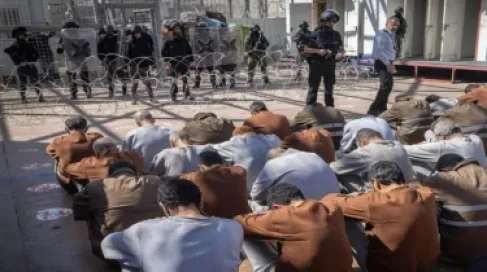
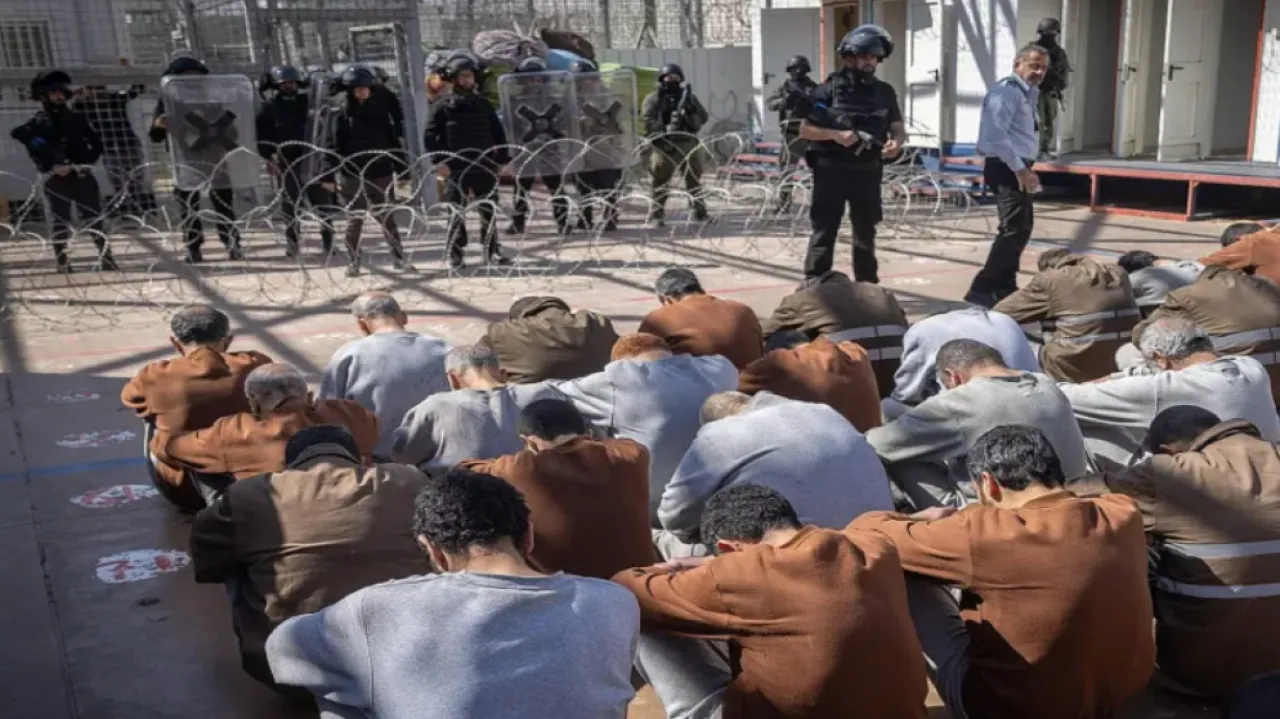
In this context, more than 9,300 Palestinians are held in Israeli prisons, including 350 children and 66 women, and according to Palestinian and Israeli human rights organizations, they suffer from torture, starvation, and medical neglect, leading to the deaths of dozens of them.
Several countries have expressed their rejection of the bill, warning of its implications and risks to human rights.
The prisoners' execution bill is not new; it has been proposed repeatedly over the past years, with the most recent in 2022 when the extremist minister Ben Gvir reintroduced it with a set of amendments, until it was approved by the Knesset in a preliminary reading in March 2023.