Khaberni - Two former ministers agreed on Sunday that Iran's current war is considered an "energy war", pointing out that there is targeting of the infrastructure of the energy sector.
The ministers confirmed in their talk for the program "Voice of the Kingdom" on Sunday that Jordan possesses a sufficient strategic stockpile of petroleum derivatives, thanks to having designated storage tanks for this purpose.
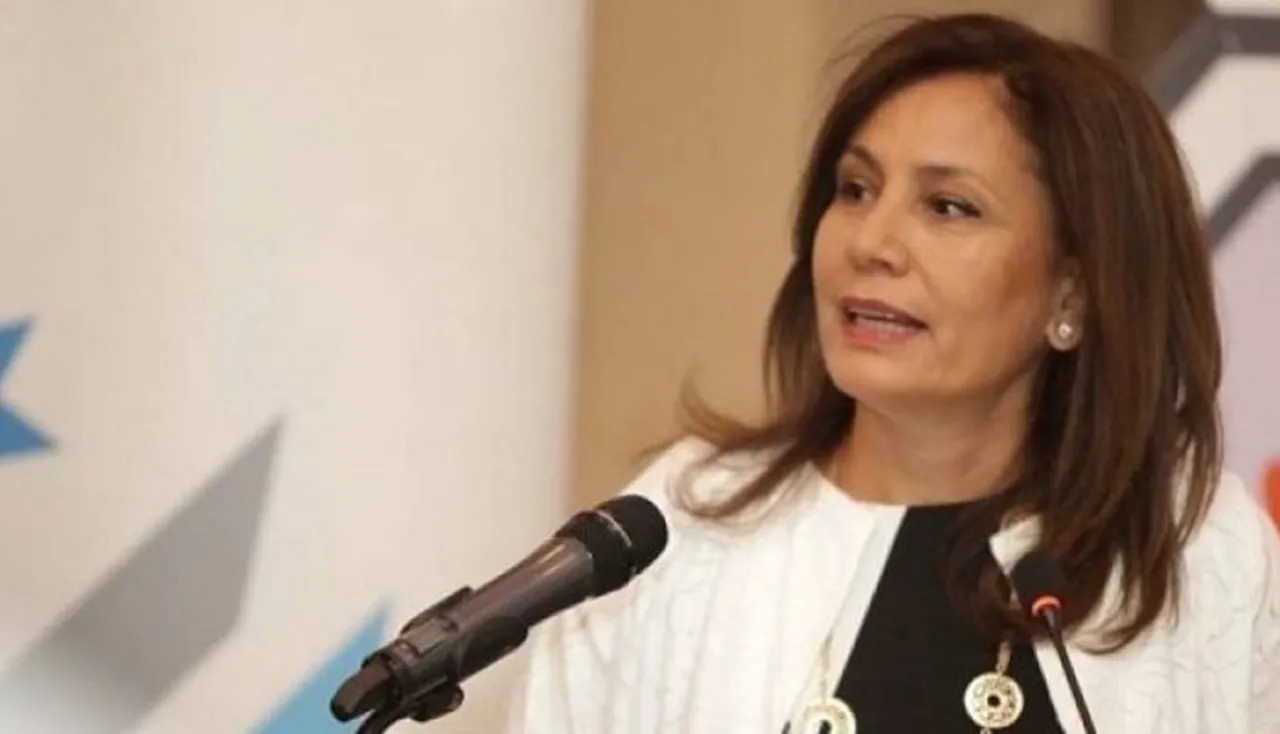
The former Minister of Energy and Mineral Resources, Hala Zawati, said that the world is currently witnessing what she described as a real "energy war", amid disturbances affecting supply chains, production, and storage, which directly reflects on the global rise in prices.
Zawati clarified that the ongoing conflict is no longer conventional, but now targets the infrastructure of the energy sector, including refineries, storage tanks, and shipping facilities, and not just vital transportation corridors like the Strait of Hormuz.
She explained that any disruption in oil production or refining, even with available crude oil, leads to price increases, due to the inability to meet global demand, in addition to damages that may affect storage facilities, which are a key element in the energy system.
She pointed out that the repercussions of the crisis are not limited to specific countries, but include the whole world where industrial and developing nations are equally affected by the rise in prices and the shortage of supplies, especially in light of the heavy reliance on oil and gas for heating and industry.
Zawati noted that closing or disrupting energy supplies, even for a short period, cannot be immediately compensated, explaining that restoring production and export levels takes time, even if the situation returns to normal.
Regarding Jordan, she asserted that the Kingdom has taken strategic measures over many years to enhance its energy security, highlighting the availability of a sufficient stockpile of oil derivatives, such as gasoline and diesel, sufficient for about two months or more, in addition to an aviation fuel stock that covers needs exceeding three months.
She emphasized that establishing these stockpiles was not an immediate response, but came as a result of long-term planning and years of effort, which gives Jordan a better capability to face crises compared to countries lacking a similar storage infrastructure.
Zawati explained that rising global energy prices will reflect on various countries, but managing this increase depends on well-thought-out government policies, which may include gradual increases to soften the impact.
She said that Jordan possesses alternative energy sources that can be tapped into, emphasizing the importance of understanding oil production chains and their role in determining energy prices locally and globally.
Zawati mentioned that energy today is divided into electricity and oil, pointing out that Jordan has reached an advanced level in providing fuel services to citizens, including gasoline, diesel, and aviation fuel.
She added that what reaches the fuel stations undergoes meticulous specifications to ensure compatibility with the refining processes, and that part of the imported oil comes from Iraq at less than 10% of the needs, while the larger portion relies on light oil from Saudi Arabia and nearby Gulf countries to reduce transportation costs.
She explained that the Jordanian Petroleum Refinery is capable of refining about one-third of the Kingdom's oil needs, while the remaining quantities depend on three licensed marketing companies, namely: (JoPetrol, Total, Al Manaseer), which handle the import of oil and its distribution to stores and then to consumption points.
As for fuel prices, Zawati noted that global oil prices have risen significantly, with Brent crude reaching $110-112 per barrel, compared to less than $70 before Iran's war.
She mentioned that the government has announced its intention to gradually raise prices so that part of it is absorbed by citizens in a calculated manner.
Zawati explained that the strategic fuel reserves act as a shield against any crises, and any country lacking these reserves will need years to build them, noting that Jordan has succeeded over the years in providing a safe stockpile of gasoline, diesel, and aviation fuel covering the Kingdom's needs for several months.
Zawati confirmed that Jordan has multiple alternatives to secure electricity, stressing the importance of understanding how electricity reaches homes and the associated costs.
Zawati explained in her talk that electricity is produced in various stations, including traditional ones that operate with gas or diesel, in addition to solar and wind power stations.
She noted that although renewable energy represents about 27% of the annual electricity production, its production is limited during periods when the sun is absent, and storing solar energy is costly and increases the cost of the electrical system.
Zawati confirmed that since 2011, Jordan has taken proactive measures to manage crises. In that year, the Kingdom experienced a complete stoppage of Egyptian gas supplies after a pipeline explosion, prompting the government to diversify energy sources, explaining that Jordan possesses several sources of gas, including Mediterranean gas, gas imported via ships to the Aqaba port, in addition to locally produced gas.
She pointed out that power generation stations in Jordan can operate on diesel in case of gas disruption, but the cost is very high compared to gas.
Zawati warned that the rising prices of gas and diesel globally increase the cost of producing electricity. For instance, the price of one million British thermal units rose from $10-12 last month to $20-22 currently, approximately doubling the cost, while diesel usage increases that by about 2.5 to 3 times compared to gas.
She called for the necessity of regulating electricity consumption by citizens under the current conditions, emphasizing that global challenges require collective preparedness and awareness.
Former Minister of Planning and International Cooperation, Wassem Al-Rabadi, considered that the current war in Iran is a global war because it has affected the entire world, but it is not like traditional wars.
Al-Rabadi said that this war is an energy war, hence the targeting of energy sites and refineries, noting that this war is asymmetrical, as Iran cannot militarily confront the United States, and has sought to raise the cost of the war globally.
He noted that governments in times of crisis work to balance between announcing and warning without creating panic in the streets, and that these governments absorb part of the losses on their budgets.
Al-Rabadi added that panic creates demand beyond the need, confirming the existence of a wheat stock sufficient for more than 10 months, along with sufficient energy stock and diversity in its forms, urging citizens to rationalize consumption and stay away from unwarranted panic.
Regarding the economic situation, Al-Rabadi explained that rising oil prices affect the deficit and thus the debt, which can be covered either by reducing capital expenditures or by increasing aid and loans.
Regarding the options available to the government to regulate consumption and spending, Al-Rabadi believed it is necessary to rationalize energy consumption, given the lack of clear indicators on when the war will end and the unclear objectives of the war.