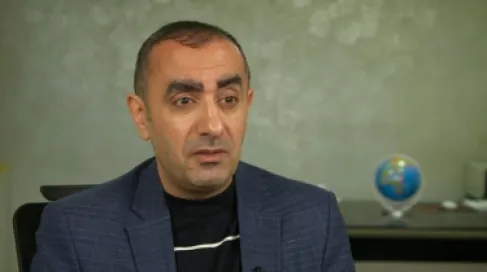
Khaberni - Dr. Mohammed Ali Al-Maaytah wrote:
Firstly: On the origin of the term and the danger of surrendering to it
No serious academic researcher can approach the phenomenon of fibromyalgia without first examining the structure of the term itself and critically interrogating it. The word Fibromyalgia is not the name of a disease with an established pathological physiological mechanism; instead, it is a purely descriptive linguistic construct derived from three roots:
∙ Fibro = fibrous tissues
∙ Myo = muscles
∙ Algia = pain
Its literal translation is simply “pain in fibers and muscles,” i.e., it describes symptoms rather than defining a disease. Here lies a methodological danger as described by Dr. Al-Maaytah. He scientifically discussed several points with global researchers and doctors:
The first: When the description is treated as a diagnosis, and when researchers err by replacing questioning with naming, and discovery with classification.
Medical practice, throughout its history, has been accustomed to naming conditions that are elusive to understanding; this practice is legitimate as a temporary organizational step to unify clinical descriptions and facilitate communication among therapists. However, a serious problem arises when this temporary name becomes a definitive closed judgment, drying up the springs of research and convincing both the clinical practitioner and the laboratory researcher alike that the task is complete once the name is written on the medical paper.
Secondly: The adoption of diagnostic criteria does not mean the completion of knowledge
Some doctors and researchers protest that the adoption of official diagnostic criteria by the American College of Rheumatology legitimizes fibromyalgia as an independent disease entity. This precise mix-up needs attention. The unification of diagnostic criteria is fundamentally a consensus-based procedure, not an independent empirical proof of a disease with a defined biological identity. Many conditions defined diagnostically at some stage have been radically reconsidered (or completely dismissed) as research tools advanced and broadened horizons.
Institutional reliance on a diagnostic criterion unfortunately indicates the maturity of a resigned regulatory procedure, not the maturity of scientific understanding. And the researcher who confuses the two exposes himself to a grave risk: the comfort of certainty too soon.
Thirdly: Central Sensitization - a functional explanation, not a root cause
In recent literature, fibromyalgia has been associated with the concept of Central Sensitization, i.e., a pathological amplification of pain signals within the central nervous system, so much so that this concept has become in the minds of many a sufficient and complete explanation. However, it truly is not.
Central Sensitization answers only one question: how does the patient feel this pain? But it avoids (or fails) to answer the deeper, more pressing questions:
Why did the nervous system originally deviate towards this amplification? And what triggered this deviation?
Viewing Central Sensitization as a final explanation is exactly like treating a fever as a final diagnosis, instead of asking about the infection, inflammation, or tumor that triggered it. The mechanism is not the cause, and treating the mechanism alone without searching for the cause is at best incomplete medicine, and at worst harmful.
Fourthly: The temporal course: a clinical indicator deserving scientific reflection
One of the most indicative clinical markers (and least present in academic discussions) is the temporal pattern of this condition. If fibromyalgia were an independent organic disease with a constant mechanism, it would follow a gradual, continuous pattern, as is the case with inflammatory or degenerative rheumatic diseases. However, careful clinical observation reveals a different pattern:
∙ Some patients suffer for weeks or months, then the symptoms notably recede.
∙ The disease does not continue in most cases in a permanent and resistant manner.
∙ A close relationship is observed between the improvement of symptoms and the disappearance of certain factors (whether psychological, hormonal, or environmental), although these factors are often not precisely defined.
This pattern does not resemble a disease phenomenon with its own internal life, but rather resembles a final common pathway for various, interrelated, and changing factors, among them as explained by Dr. Al-Maaytah:
∙ Sleep disorders and their structural disintegration
∙ Chronic psychological stress and its biological accumulation
∙ Accompanying or preceding anxiety and depression
∙ Hormonal imbalances (especially involving the thyroid and adrenal glands)
∙ Immune or metabolic disorders that may not appear in routine tests.
. Physical and psychological lethargy and laziness
And all these factors begin and end, escalate and subside, and symptoms reflect accordingly. So where does this certainty of an independent, stable disease entity come from?
Fifthly: The danger of stopping at the name when the beginning becomes the end
Here we reach the core of the issue, and it is at the same time the most dangerous aspect of this topic for both scientific progress and the patient.
When a patient is given the diagnosis “fibromyalgia” and sent home with pain relievers or symptom management protocols without searching for the causes (the tragedy is then complete). And Al-Maaytah confirmed that the deeper tragedy lies in the realm of scientific research itself: when research hypotheses are formulated on the assumption of an independent uniform disease, and experiments are designed to test treatments for symptoms rather than seeking to discover the causes.
The absence of systematic controlled trials aimed at investigating the biological, psychoneurotic root causes of this condition, rather than just managing its symptoms, represents a significant methodological gap in medical literature. More dangerously, the scarcity of systematic randomized controlled trials that arise from a genuine question: Are these cases really a homogeneous group? Or are they heterogeneous groups that share a clinical appearance but differ fundamentally in their causes, pathways, and mechanisms?
The answer to this question alone has the potential to redefine the scientific research map in this field entirely.
Dr. Al-Maaytah concluded by criticizing researchers and doctors: Why does the name become an end instead of a beginning?
The question remains most pressing and frankly most painful
: Why do researchers and doctors (of various specialties and academic degrees) accept that the name is the end of the road?
The answer is not far off: Sometimes it is an understandable knowledge economy in the context of the burdened clinic. And at other times, it is a legitimate psychological comfort when the doctor finds himself before a patient who complains while his tests are normal. However, this logic (as understandable as it is humanly) is academically, methodologically, and ethically unacceptable when it comes to scientific research.
The researcher who classifies patients under the “fibromyalgia” umbrella and then proceeds to test the effectiveness of a certain drug on this inhomogeneous group is fundamentally flawed methodologically, putting fundamentally different cases in the same basket, and later surprised by the conflicting results and poor reproducibility.
And the doctor who is satisfied with naming without pursuing a systematic neuropsychological hormonal laboratory protocol to find the causative factor in his particular patient does not provide radical medicine, but rather offers temporary palliation at the expense of potential healing.
Science begins where the name stops. And unless researchers and doctors realize this essential distinction and without conducting research (systematic controlled medical trials), fibromyalgia will remain a linguistic prison holding its patients and the truth that deserves to be discovered together.