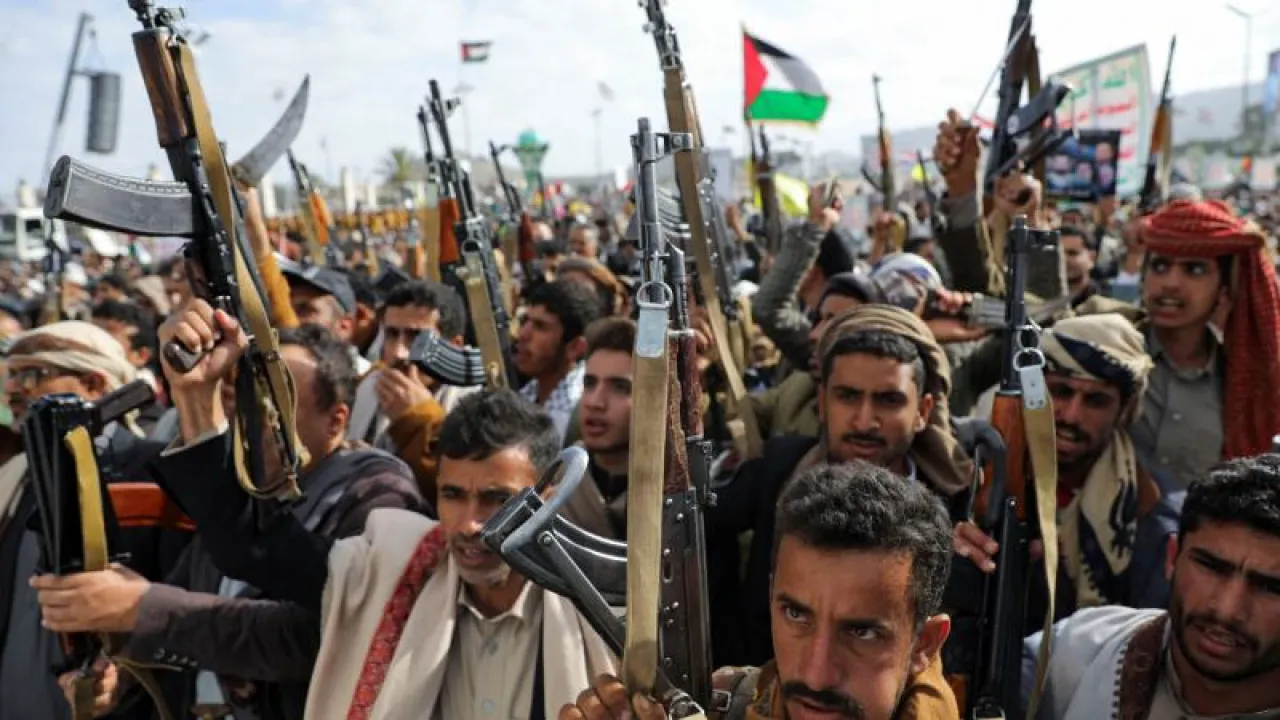
Khaberni - Three officials from the Ansar Allah group (the Houthis) said that the decision to engage in war alongside Iran against the United States and Israel "will be a purely independent Yemeni decision not dictated by Tehran," and in parallel, the Yemeni government reported that the supply lines between Tehran and the Houthi group are still operational without significant impact from the ongoing war conditions.
The Associated Press reported from these officials—who refused to reveal their identities—that the Houthis support Iran, although they have not yet participated in the war against the United States and Israel.
They pointed out that the Ansar Allah group has historical and religious ties with the Islamic Republic of Iran, emphasizing that "Iran is an ally to Yemen."
On the other hand, the Iranian "Press TV" channel—citing an informed source it did not name—reported that the Ansar Allah group has been on high alert since the outbreak of the war, confirming their readiness to intervene if necessary.
According to the same source, the group closely follows the developments on the ground and retains military capabilities that enable them to act at a time they see fit, within what they consider support for their allies' axis in the region.
The channel added—citing the same source—that Iran remains capable on its own of posing a real threat in the Bab al-Mandab Strait, should the need arise to control it to exert more pressure on its adversaries.
It reported from him that the Ansar Allah group has previously demonstrated its ability to disrupt navigation in this strategic passage and assert their presence in the Red Sea.
The Houthi attacks on ships during the war between Israel and Hamas had disrupted shipping movement in the Red Sea, which was traversing about a trillion dollars of goods annually before the outbreak of the war. The Houthis also launched rockets and drones towards Israel at that time.
Continuation of supply lines
In a related context, the Yemeni government—yesterday Wednesday—said that the supply lines between Tehran and the Houthi group are still operational without significant impact from the ongoing military pressures, mentioning the continued activity of smuggling networks linked to Iran at a high rate.
The Minister of Information Muammar al-Eryani—in a press statement on Wednesday—mentioned the seizure of a ship off the coast of Bab al-Mandab, which he said was carrying smuggled Iranian materials.
He explained that the operation aims to dry up the Iranian support sources for the Houthis and break the supply chains, and impose a new reality that resets the security system in Yemen.
He stated that "the Iranian project in the region is not only based on direct confrontation, but primarily relies on feeding its arms with logistical capabilities and dual-use materials, ensuring their continuing threat to regional and international security."
He considered that "the Bab al-Mandab Strait is no longer just a commercial passage, but has turned into a real test point for the international community's ability to confront security threats and stop its exploitation as a tool for extorting the world and threatening energy security and international supply chains."
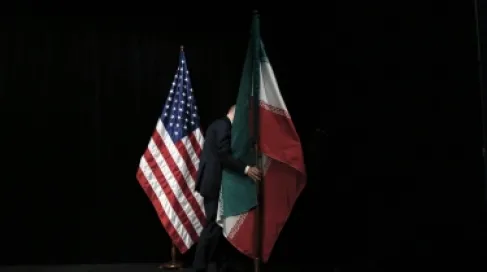
These developments come at a time when the region is experiencing a direct military confrontation that began on February 28th last, where Israel and the United States have launched a wide war on Iran that resulted in the killing of prominent officials including the Supreme Leader Ali Khamenei.
In return, Tehran responds by launching rockets and drones towards Israel, and targeting what it describes as American interests in several Arab countries, despite targeting civilian facilities in attacks that led to deaths and injuries.