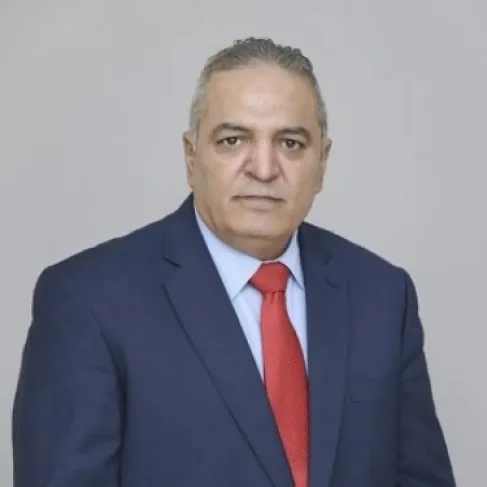
Khaberni - Osama Al-Qadi, advisor to the Syrian Ministry of Economy and Industry, confirmed on Wednesday the existence of a group of strategic projects under study, which aim to enhance the economic and geopolitical role of Syria and the Arab region.
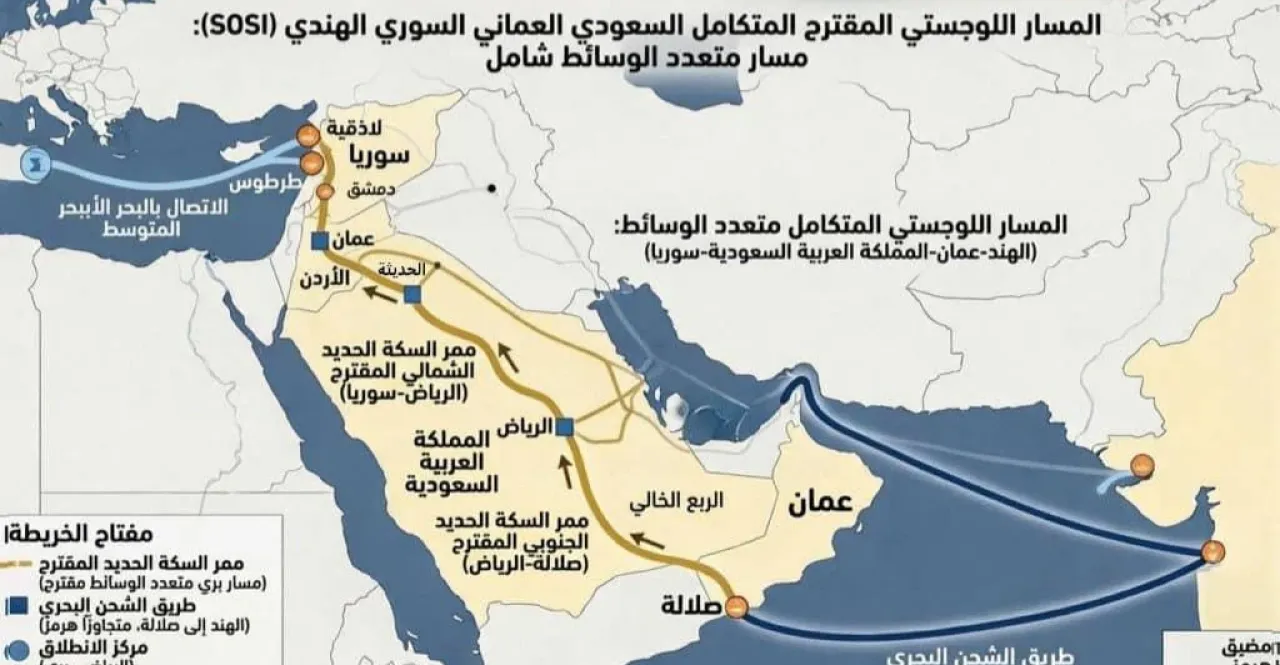
According to Syrian media, Al-Qadi stated that "Among the most prominent of these projects is the construction of a high-speed train line with speeds ranging from 200 to 300 km/hour, connecting Saudi Arabia to Syria via Jordan, taking advantage of the extension of the Saudi railway network to Al-Haditha."
He also emphasized the importance of modifying the route of the "Tapline" pipeline, which is 1664 kilometers long, so that oil can be transported from the Al-Qaisumah region in northeastern Saudi Arabia to the ports of Baniyas or Lattakia instead of Sidon, through a new line capable of pumping up to four million barrels per day.
According to Al-Qadi, the projects also include extending the Qatari gas line through Syria to Turkey and then to Europe, with the possibility of establishing an internal branch reaching one of the Syrian ports on the Mediterranean Sea, which requires the development of infrastructure for liquefied natural gas in the coastal areas, enhancing Syria's position as a main station for exporting gas to global markets.
Efforts are underway to rehabilitate the Kirkuk-Baniyas pipeline, and increase its capacity from 300,000 barrels per day to about one million barrels per day using modern pipelines, according to the Syrian official.
Al-Qadi believes that the implementation of these projects will contribute to reducing the dependence on the Strait of Hormuz, enhancing the energy security and trade for Arab countries, in addition to supporting the global economy with stable supplies of oil and gas.
He explained that investing in these five projects will significantly impact the geopolitical and economic map of the region for decades to come, calling for their inclusion among development priorities, especially in Gulf countries.
He also referred to the benefits that could accrue to Turkey, whether through the passage of Qatari gas or through connecting the "Saudi-Syrian" train line with the Turkish railway networks, and possibly reviving the Hejaz line after updating it to match modern speeds.
In related context, Al-Qadi proposed the idea of a "Fast Food Security Corridor" between Saudi Arabia and Syria, as a strategic project that aims to establish a high-speed rail line for the transportation of food products and goods with high efficiency.
This line starts from the city of Arar in northern Saudi Arabia towards Syrian cities, with a speed exceeding 200 km/hour, allowing the transportation of fresh goods within hours.
The project aims to address the vulnerability of supply chains that heavily depend on maritime transport through the Strait of Hormuz, through which about 20% of global oil trade passes, in addition to a significant portion of goods trade.
Al-Qadi pointed out that Syria, with its climatic diversity and agricultural production, can transform into a food supply base for Gulf countries, reducing the need for imports from distant regions, and the project contributes to revitalizing the Syrian agricultural economy through the creation of production areas designated for export, sorting and packaging centers, refrigeration warehouses, and modern transportation infrastructure.
He continued, saying that "the project may include the development of fast customs corridors relying on digital systems to facilitate the movement of goods, in addition to establishing distribution centers and refrigeration chains within Saudi Arabia, with the possibility of extending the network to the rest of the Gulf states."
Al-Qadi concluded his talk by referring to the possibility of integrating this project with the "Indian-European Economic Corridor," where the "Syrian-Saudi" route would be part of a global trade network extending from India via the Gulf to Europe, via Syria and its ports on the Mediterranean, restoring its historic role as a commercial hub on the Silk Road.