Khaberni - Indonesia, a major energy importing country, experiences one of the largest travel waves in the world during religious holidays, amid an oil price shock and fears of a supply shortage due to the Iranian war.
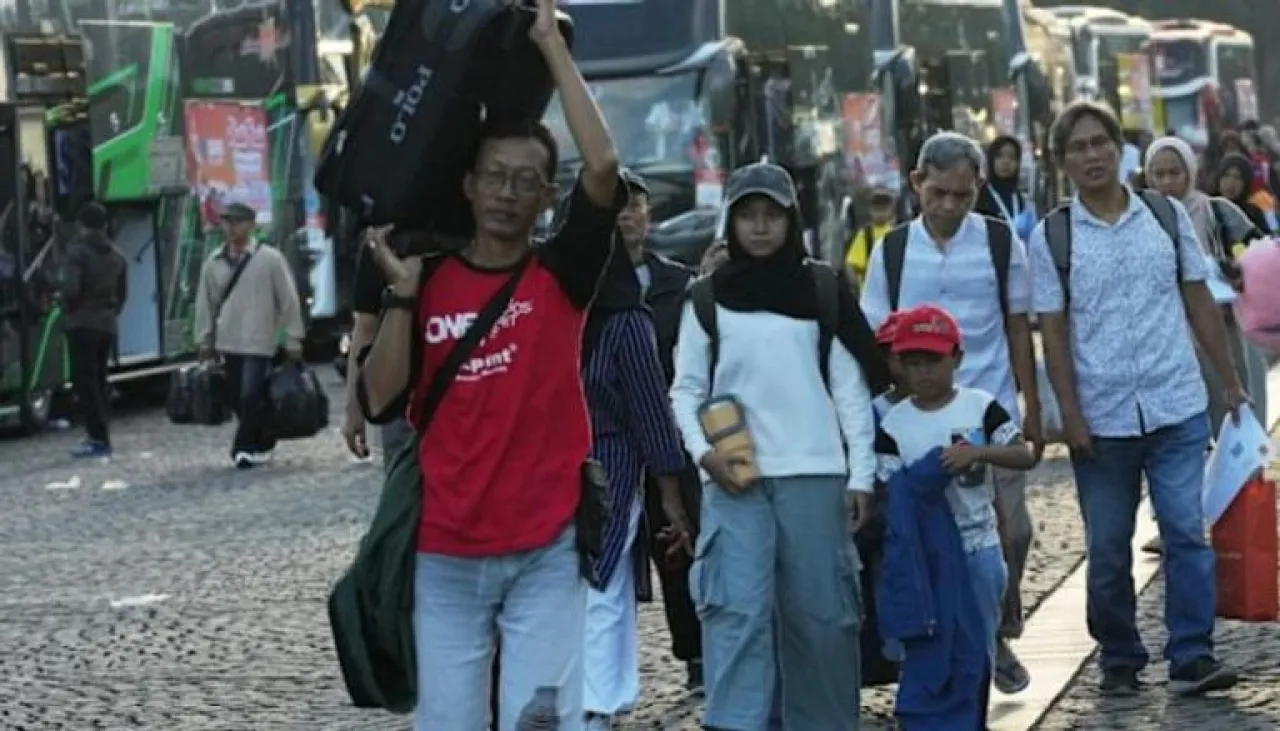
It is expected that more than 140 million people in the largest Islamic country in the world - nearly half of Indonesia's population - will travel by land, air, and sea to visit family and friends during the Eid al-Fitr holiday starting this Friday.
During this holiday, which usually lasts a week, Indonesians from the country's largest cities travel to small towns and villages across the archipelago.
However, this year's "Mudik" celebrations - or "homecoming" in Indonesian - heighten concerns about the potential for a supply shortage in a country reliant on oil and gas imports from the Middle East, where the American-Israeli war against Iran has driven oil prices above $100 per barrel.
The Financial Times highlights an example of this crisis; for years, Farah Fauzia and dozens of her extended family members have traveled hundreds of kilometers by car to celebrate Eid al-Fitr. However, the global energy crisis this year has forced them to reconsider their plans.
Instead of gathering in a rented villa in Bandung, they will celebrate at her grandmother's house near Farah's home in Bekasi, near the Indonesian capital Jakarta.
Farah, who has been worried about fuel since the American-Israeli attacks on Iran began in late February, says, "One reason is our concern about a possible gasoline shortage later on. We make sure our car tanks are always full."
Unlike many of its neighbors in Southeast Asia who have resorted to working four days a week or remotely, Indonesia has not announced any steps to ration fuel consumption.
Any supply shortage and the resulting inflation from rising oil prices may have a widespread impact on the largest economy in the region, which is already experiencing an economic slowdown.
According to a previous report by The New York Times, many Asian countries have implemented precautionary measures to ration energy consumption amidst the war; for instance, Bangladesh's major universities immediately announced the cancellation of classes until the end of the month, with their government shutting down academic institutions to save electricity.
As for Indonesia, President Prabowo Subianto's government has stated that it has enough fuel reserves to last about 25 days from the start of the war.
This compares to 95 days for Thailand, the second-largest economy in the region, and 60 days for the Philippines. The Indonesian timeframe of 25 days coincides with the end of the holiday travel season, though it is unclear whether Jakarta has managed to replenish its reserves since the start of the war.
Indonesia's Energy Minister, Bahlil Lahadalia, said, "The availability of fuel, liquefied petroleum gas, and electricity in Indonesia is completely under control, and Eid al-Fitr celebrants will not face any problems."
Others are cautious
Meanwhile, the Secretary-General of the Indonesian Association of Travel and Tourism Agencies, Budigianto Ardiansah, said, "We have not yet experienced a fuel shortage, but I believe the government should start tightening regulations, especially during the returnee reception period for Eid al-Adha, so we do not exceed limits."
Budigianto added, "After the returnee reception period ends, fuel could run out or become rare. This is something we need to anticipate because fuel consumption doubles or triples during this period."
He noted that rising airfare prices encourage more people to travel by land.
Indonesia consumes about 1.5 million barrels of oil daily and produces some oil and gas locally, but not enough to meet its needs as the fourth-largest country by population.
Jakarta imports about 50% of its oil needs, and it has declared that a quarter of its crude oil imports pass through the Strait of Hormuz, where navigation has almost stopped.
The Ministry of Transport expects 143.9 million people to travel during the holiday, slightly less than last year's 146 million. Economists attribute this to the economic slowdown.
Last week, Prabowo asked his government to study measures to ration fuel consumption, such as working-from-home policies, but no concrete steps have been announced.
Joshua Pardede, chief economist at Bank Permata, told the Financial Times, "Indonesia seems reasonably prepared for a short shock during the holiday, but it is not fully prepared for a long-term energy crisis." He added that competing regional states have moved faster in "clear demand-rationing measures."
Companies also worry about a potential crisis after Eid al-Fitr. Danang Girindrawardana, the executive director of the Indonesian Textile Association, said, "From an industrial standpoint, we will need government intervention to avoid a shortage."
The oil price shock comes at a time when the Indonesian economy is suffering from weak purchasing power, a shrinking middle class, and an industry decline that has led to factory closures and mass layoffs.
The financial concerns have affected the economy since Prabowo took office in late 2024, focusing on costly social welfare programs.