Khaberni - A mood of sadness and anticipation prevailed in the occupied Palestinian territories on the morning of Eid al-Fitr after the Israeli occupation authorities imposed unprecedented strict restrictions that prevented thousands of worshipers from reaching Al-Aqsa and Ibrahimi mosques.
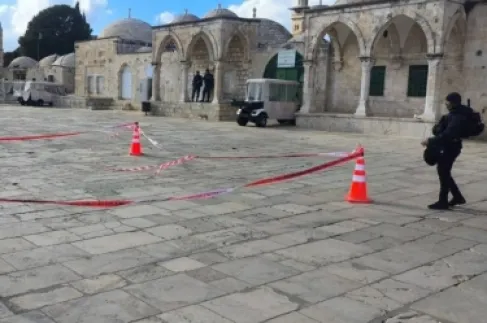
In occupied Jerusalem, the city recorded a first of its kind event since its occupation in 1967; the Israeli authorities completely prevented the Eid al-Fitr prayer at Al-Aqsa Mosque, and confined the prayer within its walls to a limited number of guards and Waqf department employees.
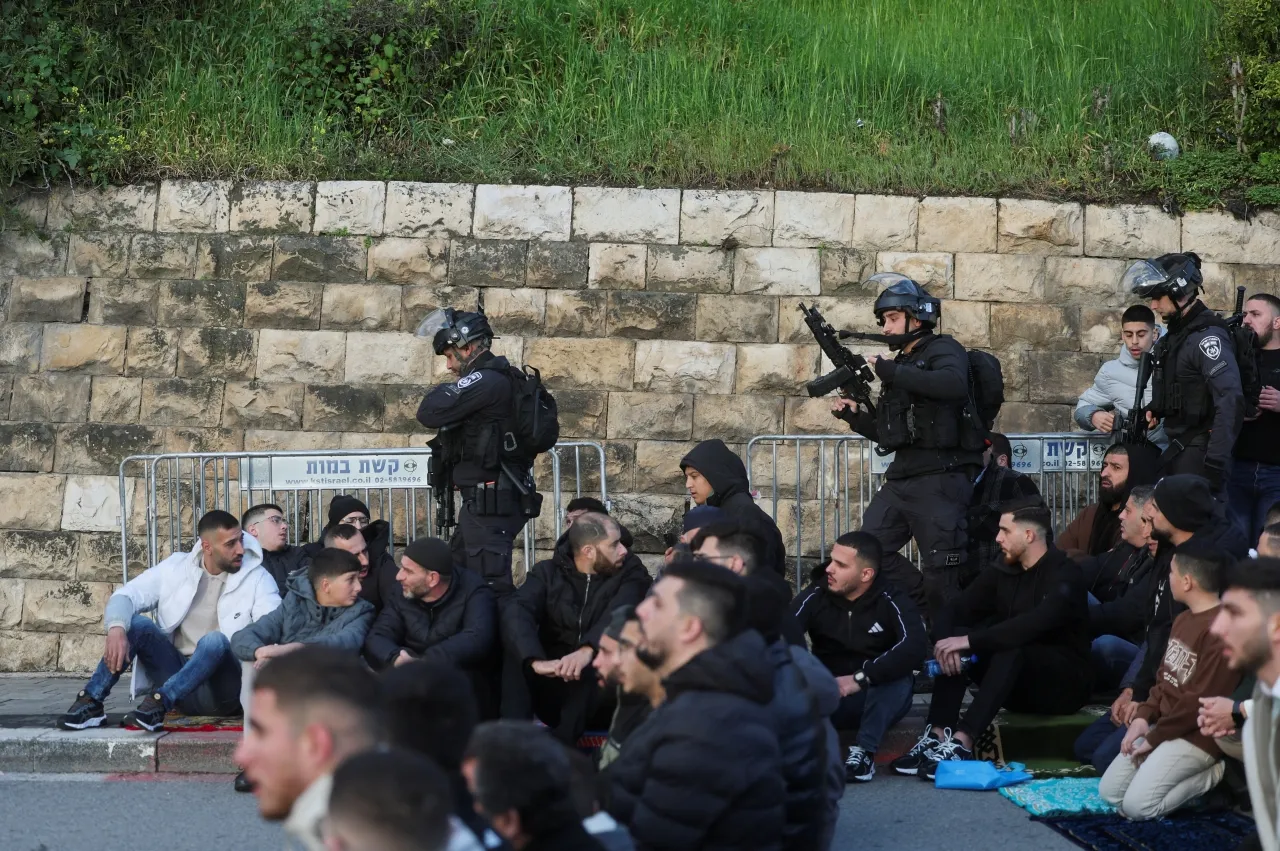
Eye witnesses reported that police forces were heavily deployed in the alleys of the Old City and erected iron barriers to prevent worshipers from reaching, as well as firing tear gas towards Palestinians who tried to pray near "Bab Al-Sahira".
Despite the ban, the Takbirat of Eid resounded from Al-Aqsa’s minarets, while dozens of worshipers performed the prayer in the streets near "Bab Al-Asbat" and "Bab Al-Amud" before the police forced them to leave by force.
These unprecedented Israeli measures, which included closing Al-Aqsa Mosque throughout the month of Ramadan, were justified by “preventing gatherings” amidst the war waged by Israel and the United States against Iran since February 28.
Harassments in Hebron ... Only 80 worshippers at the Ibrahimi Mosque
In the city of Hebron in the southern West Bank, the Eid prayer at the Ibrahimi Mosque was limited to about 80 worshipers only, amidst intensified Israeli military reinforcements.
The director of the Ibrahimi Mosque, Mu'taz Abu Sneineh, stated that the Israeli authorities "tightened their measures at the entrances of the mosque, closed most of its gates, and only allowed entry through the gate of the Old Town, subjecting worshipers to meticulous inspection."
Abu Sneineh added that the authorities allowed only a very limited number to enter the mosque, which did not exceed 80 worshipers.
He said, "The occupation insisted on preventing a large number of worshipers from entering, and despite that, we conducted the prayer with those who managed to arrive,” affirming that the mosque "is purely an Islamic place," and rejecting any attempts to impose a new religious reality in it.
It is worth mentioning that Israel divided the Ibrahimi Mosque in 1994 giving 63% to Jews and 37% to Muslims, following a massacre committed by a settler that resulted in the death of 29 worshipers.