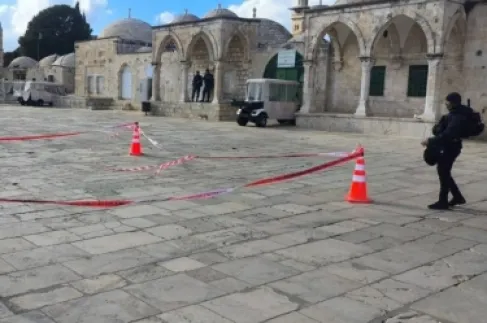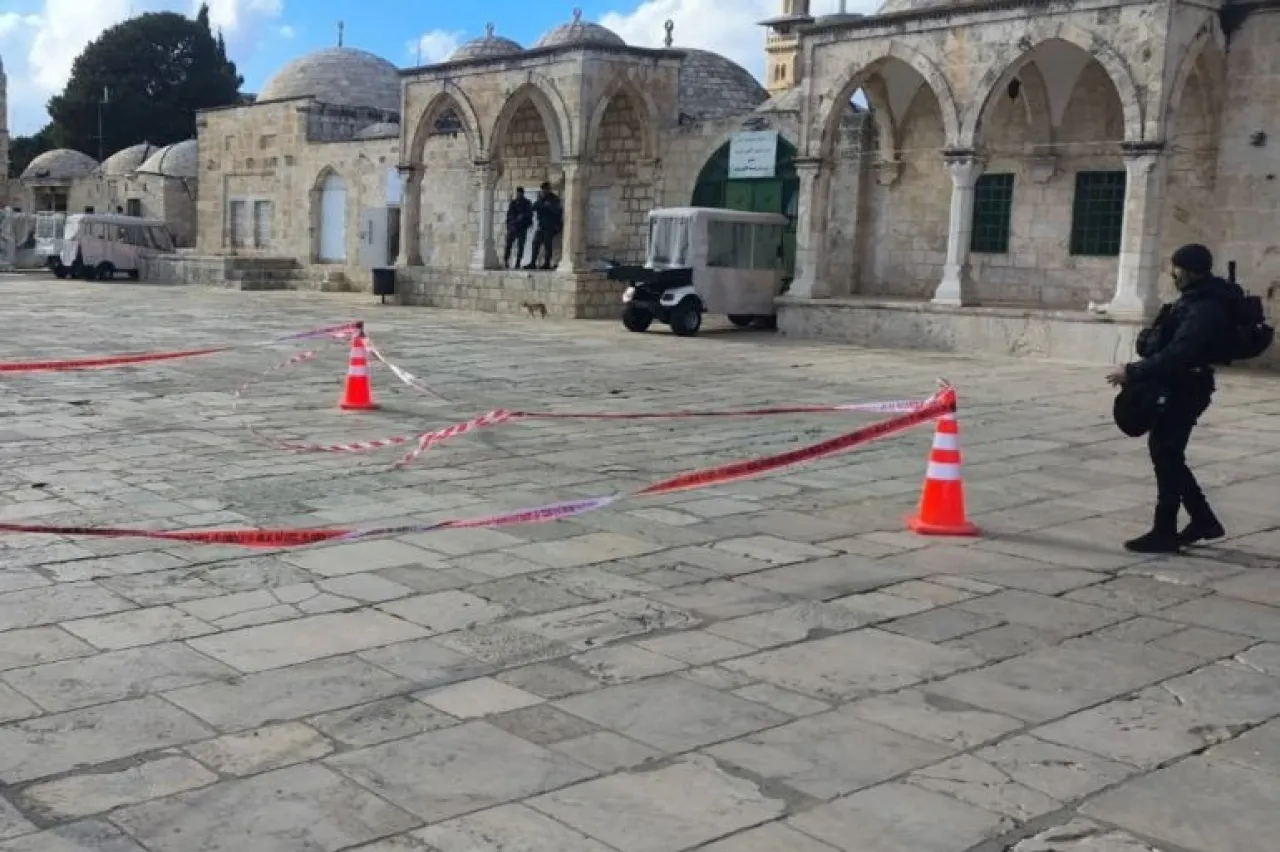
Khaberni - For the first time in 59 years, the sound of Takbir is absent from Al-Aqsa Mosque, and Eid al-Fitr prayer is prevented for the worshipers in its surroundings, leaving its courtyards empty and a heavy silence embracing its corridors which have always been a throbbing heart with worshipers and guardians, witnessing their prayers, tears, and endless stories of patience.
This year, Eid al-Fitr prayer was not allowed in Al-Aqsa after a closure that lasted for many days, including the last Friday, the Night of Decree, and the last ten days, casting an atmosphere of sadness and pain on the hearts of Palestinians, deprived of performing their rituals in the sanctity of the first Qibla of Muslims.
On February 28, the occupying authorities closed the mosque and the old city of Jerusalem on the pretext of declaring a state of emergency coinciding with the joint US-Israeli attack on Iran.
Despite this, Palestinians continue to cling to their prayers, where circulated video clips in recent days showed worshipers performing the Tarawih prayers near the Lions' Gate in occupied Jerusalem, in a scene that reflects their resilience and determination to continue their rituals, despite the occupation’s restrictions and preventing them from entering the mosque's courtyards.
Yet, the occupation forces attempted to disperse the worshipers, as dozens of Palestinians performed the Isha and Tarawih prayers in the vicinity of Al-Aqsa Mosque, while the occupation forces removed one of its guards from the place, in a step that reflects a new escalation against the guardians.
With the continued closure and prevention of Eid prayers inside Al-Aqsa, the blessed mosque's preacher, Sheikh Akrama Sabri, issued a holy call to flock to the mosque, affirming that the prayer is obligatory at the "closest possible point" from the Haram Al-Sharif.
He called on the residents of Jerusalem, the occupied interior, and the West Bank to head intensively towards the surroundings of the mosque and perform the prayer at its doors, thresholds, and in the roads leading to it, considering that a religious and national duty to break the siege imposed on the first of the two Qiblas.