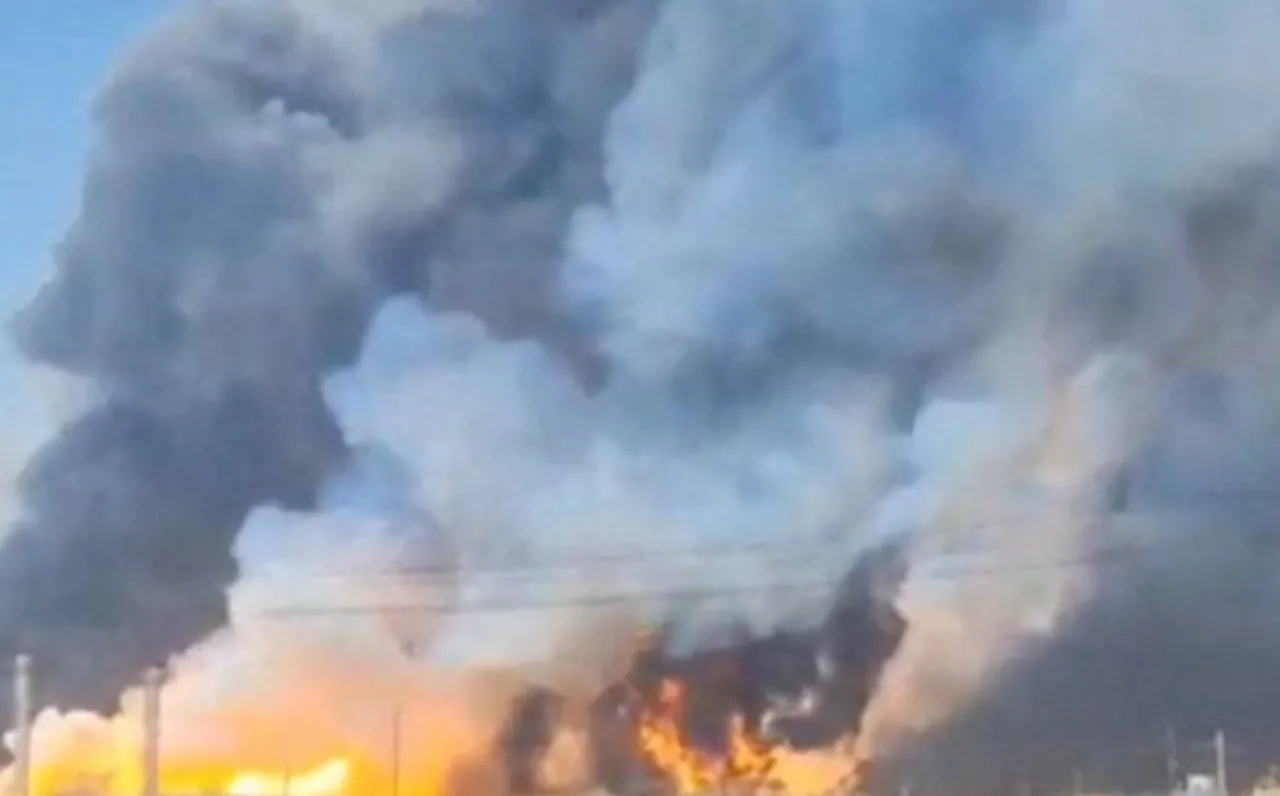
Khaberni - In a dangerous qualitative shift, the US-Israeli war on Iran has moved from targeting military installations to hitting the heart of energy production itself, after Israel targeted the South Pars Field - the largest natural gas field in the world - in what the British newspaper The Guardian described as a "major escalation with potentially long-term consequences."
So why is targeting gas fields more dangerous than hitting military sites? What prompted Israel to cross this red line? How did the Iranians respond? And what are the potential scenarios for this serious escalation?
From military to energy
The Guardian notes that "the strikes that both sides have carried out on so-called gas production facilities in recent days represent a major escalation in the war, with potentially long-term consequences."
The newspaper adds that these strikes formed a precedent in directly targeting energy production facilities in the conflict, instead of generally associated oil and gas industry sites.
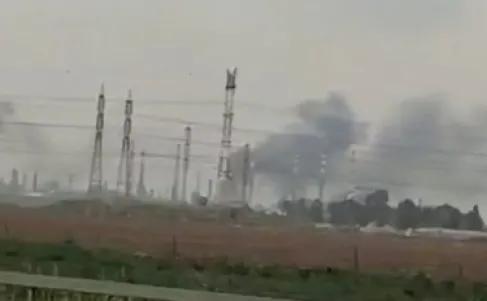
Israel targeted an Iranian production facility for the South Pars gas field yesterday, Wednesday, which is the largest natural gas field in the world shared by Iran with Qatar across the Gulf.
The field accounts for about a third of the natural gas reserves in the largest offshore gas field in the world, contributing more than 40% of total Iranian gas supplies, making it a pivotal element in supporting the country's economy.
Its recoverable reserves are estimated at about 14 trillion cubic meters, and it produces about 1.5 million cubic meters of gas daily, most of which is directed for local consumption, especially in power plants and heavy industries.
Conversely, Iran targeted - the day before yesterday, Tuesday - the Shah gas field in Abu Dhabi, which produces 1.28 billion standard cubic feet of gas daily, and contributes about 20% of the gas supplies in the UAE, and 5% of the world's needs for granulated sulfur used in phosphate fertilizers, according to Guardian.
Iran also struck the industrial city of Ras Laffan in Qatar, which processes about 20% of the global gas supplies, according to Reuters.
Qatar Energy reported "significant damage" after Iranian missiles hit the city, with "large fires" erupting in several natural gas liquefaction facilities.
Why is this escalation dangerous?
The Guardian warns that "while ceasing hostilities might lead to the resumption of suspended oil and gas shipments within months, experts believe any significant damage to production itself could have an impact that lasts for years."
The newspaper quoted Shaul Kavonic, an analyst at "MSI Financial," telling the Financial Times, "Any attack that leads to the halt of several million barrels of production is going to have a significant impact because it means the impossibility of replenishing stockpiles even after the war ends."
Kavonic added that "targeting a liquefied natural gas facility would be the worst, as it may take several years to repair."
The Guardian cites a "lesson from the fallout of the 2003 invasion of Iraq," noting that "repairing the damaged energy production infrastructure took much longer than expected."
It explains that "despite contractors reaching Iraqi factories and spending $2 billion on oil projects, production took more than two years to return to pre-war levels."
Oil prices surged sharply after the South Pars attack, with Brent crude futures prices rising more than $7 to hit $114.83 per barrel after the Kuwait Petroleum Corporation reported a drone had targeted an operational unit at the Al-Ahmadi refinery.
Gas prices in Europe increased 35% today, Thursday, with new strikes targeting energy infrastructure in the region, including the main Ras Laffan gas facility in Qatar.
Diesel prices in the United States exceeded $5 per gallon for the first time since the inflation wave of 2022, according to Guardian.
Why now?
The United States and Israel previously refrained from targeting Iranian energy production facilities in the Gulf in an attempt to avoid an Iranian response against the oil and gas industries of its neighbors, according to Guardian.
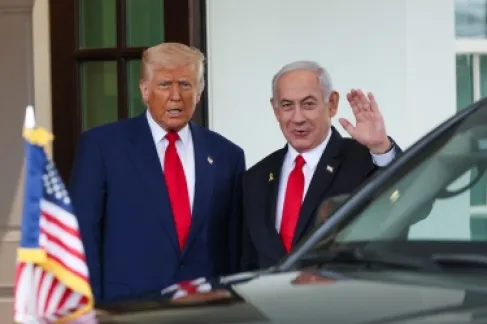
But it seems that this caution has ended, as The Wall Street Journal and Axios reported that Trump "was aware in advance of Israel's plan to target the Iranian part of the largest natural gas field in the world and supported it."
Iran announced after the South Pars attack that oil and gas sites in neighboring countries have become "direct and legitimate targets" and should be evacuated immediately.
Trump pledged that Israel would not launch any new attacks on the South Pars field unless Iran committed "another folly" by attacking the state of Qatar, adding that in this case, the United States, whether with the help or approval of Israel or without it, would blow up the entire South Pars field.
Reuters reported that the Trump administration is considering deploying thousands of US troops to bolster its operations in the Middle East, as part of the US military's preparations for possible new steps in the war against Iran.
American media reports revealed a military plan to seize strategic islands in the Gulf, using a Marine unit of 2,200 troops, as part of efforts to reopen the Strait of Hormuz, which Iran has actually closed since the war broke out three weeks ago.
The Wall Street Journal identified three main islands that might be targeted by the operation, which are Kharg Island, representing 90% of Iranian oil exports, Qeshm Island, representing the strategic gateway and located at the entrance to the strait, and Kish Island, where small Iranian attack boats that contribute to disrupting ship movement in the strait are moored.
Gulf countries: The biggest victims
Qatar accused Israel of launching a "dangerous and irresponsible" attack on the South Pars field, emphasizing that this jeopardizes global energy security, as well as Iran for what it described as a blatant violation of international law.
The UAE stated that the South Pars attack "poses a threat to global energy and to the security and stability of the region."
The Guardian pointed out that "energy production in the Gulf has long been of social, political, and diplomatic importance far beyond mere economic return."
Energy production represents the foundation of the "social contract" and stability, and striking these facilities threatens living standards and the continuity of economic diversification projects, according to Guardian.
Possible scenarios
Comprehensive regional energy war: Iran issued "evacuation warnings" before its attacks on several oil facilities in neighboring countries, indicating Iranian readiness to expand the targeting to include all Gulf energy facilities.
Unprecedented crisis: With the actual closure of the Strait of Hormuz - which accommodated 38% of the world's sea-borne crude oil trade during the week before the outbreak of the war (according to a UN-related trade agency) - and the destruction of production facilities, the world might face an unprecedented energy crisis.
U.S. ground intervention: The Trump administration is considering sending ground troops to seize Kharg Island, which represents a passage for 90% of Iranian oil exports, and other islands inside the Strait of Hormuz in order to reopen navigation in the strait and force Iran to surrender, which could turn the war into a prolonged ground conflict.
Environmental disaster: Qatar warned that targeting the (South/North Pars) field poses a threat to the environment, as destroying gas facilities might lead to massive leaks and long-term environmental disasters.
The shift from targeting military installations to hitting the core of energy production represents a dangerous turning point in the war, potentially leading to damages that could extend for years and costs that the entire world will pay through inflation and rising prices.
In the absence of any prospect to stop the escalation, it seems that the region and the world are heading - apparently - towards an energy, economic, and environmental crisis that might continue for many years, even after the war ends.