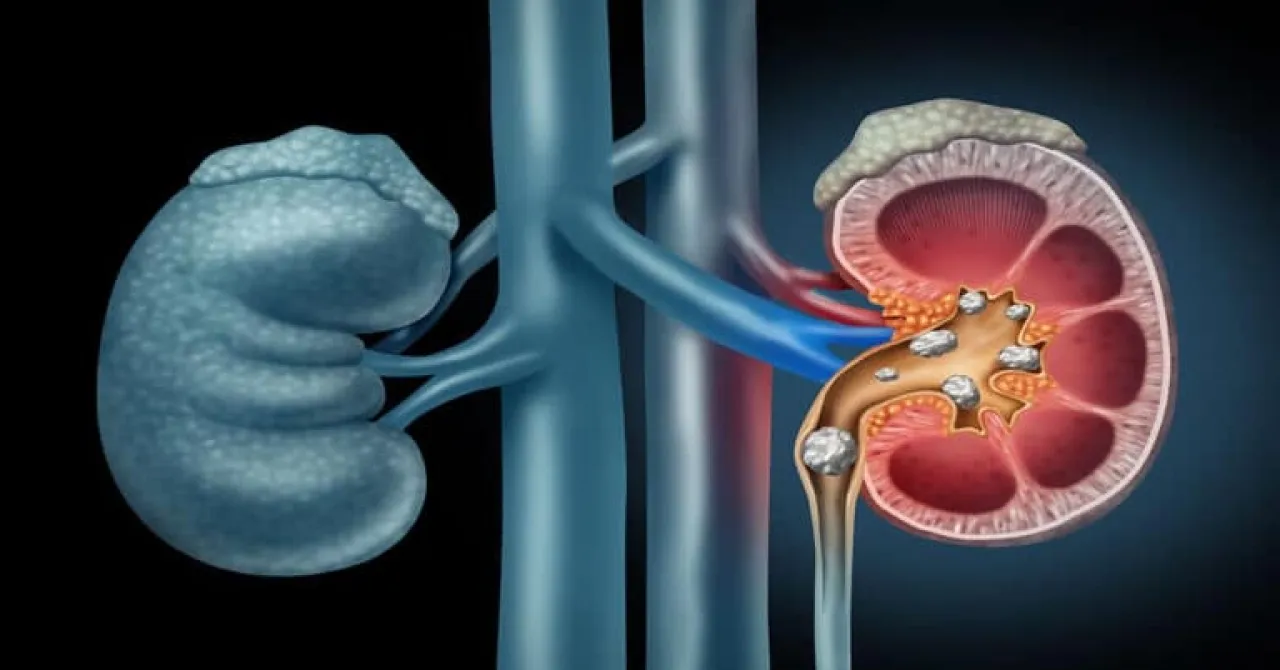
Khaberni - The institute's newsletter talks today, Saturday, about kidney stones, a common health issue that might be influenced by dehydration and dietary habits during fasting.
The institute's newsletter provides readers with important guidelines and tips to reduce the risk of complications and to fast safely, explaining how kidney stones symptoms vary from one person to another, the impact of fasting on people with kidney stones, in addition to advising who should consult a doctor before fasting and when fasting should be broken.
** What are kidney stones?
Kidney stones are hard deposits formed within the kidneys due to accumulation of certain salts and minerals in the urine, such as calcium, oxalates, uric acid, or phosphates. When these substances become highly concentrated in the urine, they can crystallize and form small or large stones that may remain in the kidneys or move to the ureter.
Kidney Stones Symptoms
Symptoms of kidney stones vary from person to person and may include:
- Severe pain in the flank or lower back.
- Pain that spreads to the abdomen or thigh.
- Burning sensation during urination.
- Blood in the urine.
- Nausea or vomiting.
- Increased need to urinate.
Some stones may be small and not cause clear symptoms, but in other cases, they can lead to severe pain or blockage in the urinary tract.
** Impact of Fasting on Kidney Stones Patients:
During fasting, a person refrains from eating and drinking for long hours that could exceed 14–16 hours in some countries. This abstention can lead to a reduction in body fluids, one of the most important factors that increases the risk of forming kidney stones.
When the amount of body fluids decreases:
- The volume of urine decreases.
- The concentration of salts and minerals in the urine increases.
- The chances of depositing crystals and forming stones increase.
However, many studies indicate that if adequate hydration and a healthy dietary regimen during the hours of breaking the fast are maintained, fasting does not significantly increase the risk of kidney stones.
** Who should consult a doctor before fasting?
Not all kidney stones patients can fast with the same level of safety. Therefore, it is advisable for some patients to check with a doctor before Ramadan, especially in the following cases:
- Frequent episodes of renal colic.
- Presence of large stones in the kidney.
- Recent history of severe pain due to stones.
- Frequent urinary tract infections.
- Chronic kidney disease.
- Having only one kidney.
In some cases, the doctor may recommend not to fast temporarily until the condition is adequately treated.
** Important tips for preventing kidney stones during fasting
1 - Increase water intake:
Drinking sufficient amounts of water is the most important step in preventing the formation of kidney stones.
Doctors usually advise drinking 2 to 3 liters of water daily, distributed between Iftar and Suhoor. It is best not to drink a large amount at once but to spread it out over intervals during the night.
It is also advised to drink:
- A cup or two of water at Iftar.
- Drink water gradually after Iftar.
- A cup or two before bedtime.
- Sufficient water at Suhoor.
This helps maintain sufficient urine output and reduces the concentration of salts in it.
2 - Reduce salt in the diet:
Consuming large amounts of salt leads to an increased secretion of calcium in the urine, which raises the likelihood of stone formation.
Therefore, it is recommended to reduce:
- Pickles.
- Fast food.
- Processed food.
- Salty potato chips.
And replace them with fresh, low-sodium foods.
3 - Moderate consumption of animal protein:
Excessive intake of red meats may increase the levels of uric acid in the urine, which may contribute to the formation of certain types of kidney stones.
Therefore, it is preferred:
- To consume meats in moderate amounts.
- Introduce plant-based protein sources like legumes.
- Diversify protein sources in meals.
4 - Avoid excessive consumption of foods rich in oxalates:
Some foods contain high levels of oxalates that may bind with calcium and form kidney stones.
These foods include:
- Spinach.
- Chocolate.
- Nuts.
- Large amounts of tea.
- Beets.
This does not mean total avoidance, but it is advisable to consume them in moderation.
5 - Consume balanced meals:
It is important that the meals for Iftar and Suhoor are balanced and contain:
- Vegetables.
- Fruits.
- Whole grains.
- Healthy proteins.
It is also preferable to avoid:
- Excessive intake of fried food.
- Large quantities of sweets.
- Sodas.
Because they can affect the salt balance in the body.
6 - Choose a healthy Suhoor:
The Suhoor meal is very important for maintaining body hydration during the fasting hours. Therefore, it is advised to include:
- Foods rich in water like cucumber and watermelon.
- Yogurt or milk.
- Whole grains.
- Sufficient amounts of water.
It is also preferable to avoid salty or spicy foods at Suhoor because they may increase the feeling of thirst.
** When should the fasting be broken?
A patient with kidney stones should be alert to certain symptoms that may indicate a health problem necessitating stopping the fast and seeking medical help, such as:
- Sudden and severe pain in the flank or lower back
- Severe vomiting
- Inability to urinate
- Clear presence of blood in the urine
- High fever with kidney pain
In these cases, it is necessary to break the fast immediately, drink fluids, and consult a doctor for assessment.
** General tips for maintaining kidney health during Ramadan
In addition to the above, some general guidelines can be followed to maintain kidney health during the month of Ramadan, such as:
- Maintaining a healthy weight.
- Engaging in moderate physical activity after Iftar.
- Avoiding exposure to severe heat for long periods.
- Limiting drinks rich in caffeine because they may increase fluid loss.
- Following doctor's instructions in case of prescribed medications.