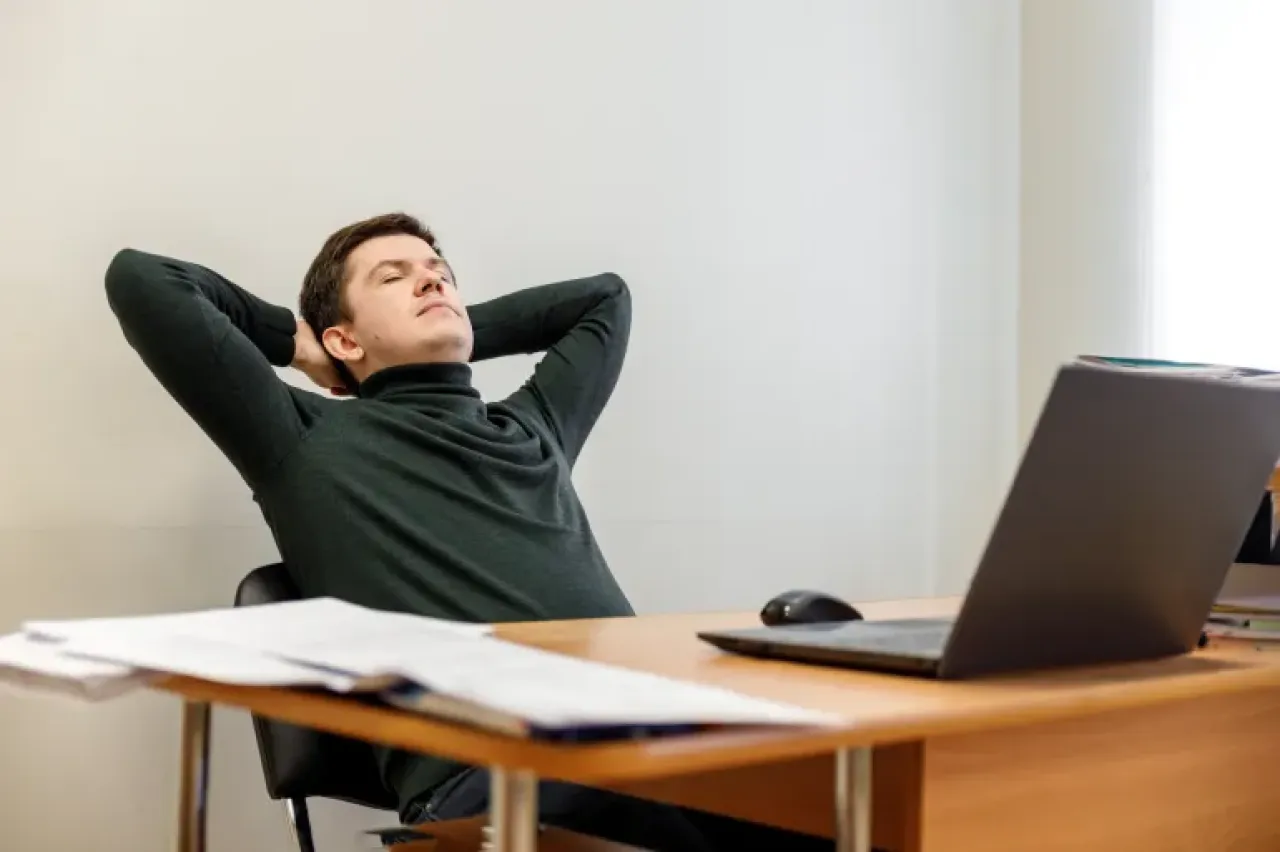
Khaberni - We don't need a new pandemic to threaten our health. The danger sits with us every day on the same chair. For long hours, in complete silence, without pain or warning.
No smoke, no smell, no cough. Yet, it leaves behind biological traces that may be as dangerous as smoking itself.
Exercise is not enough
For a long time, we believed that the solution was simple: exercise and you'll be fine. But science has begun to dismantle this comfortable idea. You can go to the gym, run, lift weights then spend ten hours sitting in front of a screen, as if you've done nothing. Here emerges the concept of "sedentary behavior," which is not just an absence of movement, but a separate physiological state, having profound effects on the body, even with regular physical activity.
When a person sits for long periods, the body enters what resembles a forced saving mode. Muscles, especially in the legs, stop working efficiently, leading to decreased glucose and fat usage. At the same time, activity of essential enzymes responsible for breaking down fats diminishes, leading to increased triglycerides and decreased beneficial cholesterol. These changes don't need years to occur; they can start within days or a few weeks of continuous sitting.
But the story doesn't stop at fats. Prolonged sitting weakens the body's insulin sensitivity, gradually pushing cells towards insulin resistance, which is the gateway to type 2 diabetes.
Studies show that just reducing sitting time, without adding significant physical effort, can improve blood sugar control. The message here is as annoying as it is clear: the problem is not only that you don't move enough, but that you sit more than you should.
What does it do to your body?
The heart also pays the price. Staying in a fixed position for long periods slows down blood flow, especially in the lower extremities, affecting vascular function. Over time, these small effects accumulate and turn into a tangible risk to heart and arterial health.
Even the brain, which we think is active while sitting, is not immune to the effects. There is an increasing link between long sitting sessions and a decline in cognitive functions and increased rates of depression, a harsh reminder that the body refuses to be reduced to just a brain over a chair.
The biggest paradox is that an hour of exercise cannot always save a full day of inactivity. You can be active by traditional definitions, yet still live a biologically sedentary life. Hence, researchers clearly distinguish between lack of physical activity and excessive sitting, both are different problems, each with its own risks.
The solution is not complex
The solution, despite all this, is not as complex as it may seem. The body does not ask for miracles, but simply requests not to be left in a prolonged state of stasis. Standing up for a few minutes every half hour, walking during phone calls, using the stairs instead of the elevator, or simply moving your legs and stretching regularly... These are simple interventions, but they can restart what sitting has turned off. Most importantly, people should start reconsidering the small details of their day.
Why take the car for a distance that can be walked? Why not turn a grocery store visit into an opportunity for movement instead of a quick car trip? And why not make taking the children to school, at least partially, a daily occasion for walking instead of sitting behind the wheel?
And even inside the home, where many think options are limited, breaking this stasis is easy: get up from time to time, move between rooms, or simply step out for a few minutes to the backyard if available, no matter how small, to regain a sense of movement. These simple everyday details, which may seem marginal, are in fact what make a long-term difference.
In a world designed to make us sit, from office work to digital entertainment, the real challenge is to reclaim our natural right to movement. Because the risk lies not in the chair itself, but in becoming prisoners of it without realizing.
However, it is important to put things in their proper context: reducing sitting time, as important as it is, is not a magic solution or a standalone treatment, but is part of a broader system called "healthy lifestyle". There's no point in movement without balanced nutrition, no benefit from physical activity with disturbed sleep, and we cannot talk about true health with chronic stress levels. Awareness of the body also requires not hesitating to consult a doctor when necessary, instead of postponing the signals it sends us.
Sitting is not an enemy... But it turns into one when it becomes a lifestyle. In a silent battle like this, it's not enough just to move, but to rebuild our complete relationship with our bodies: movement, nutrition, sleep, peace... And a balance that does not accept fragmentation.