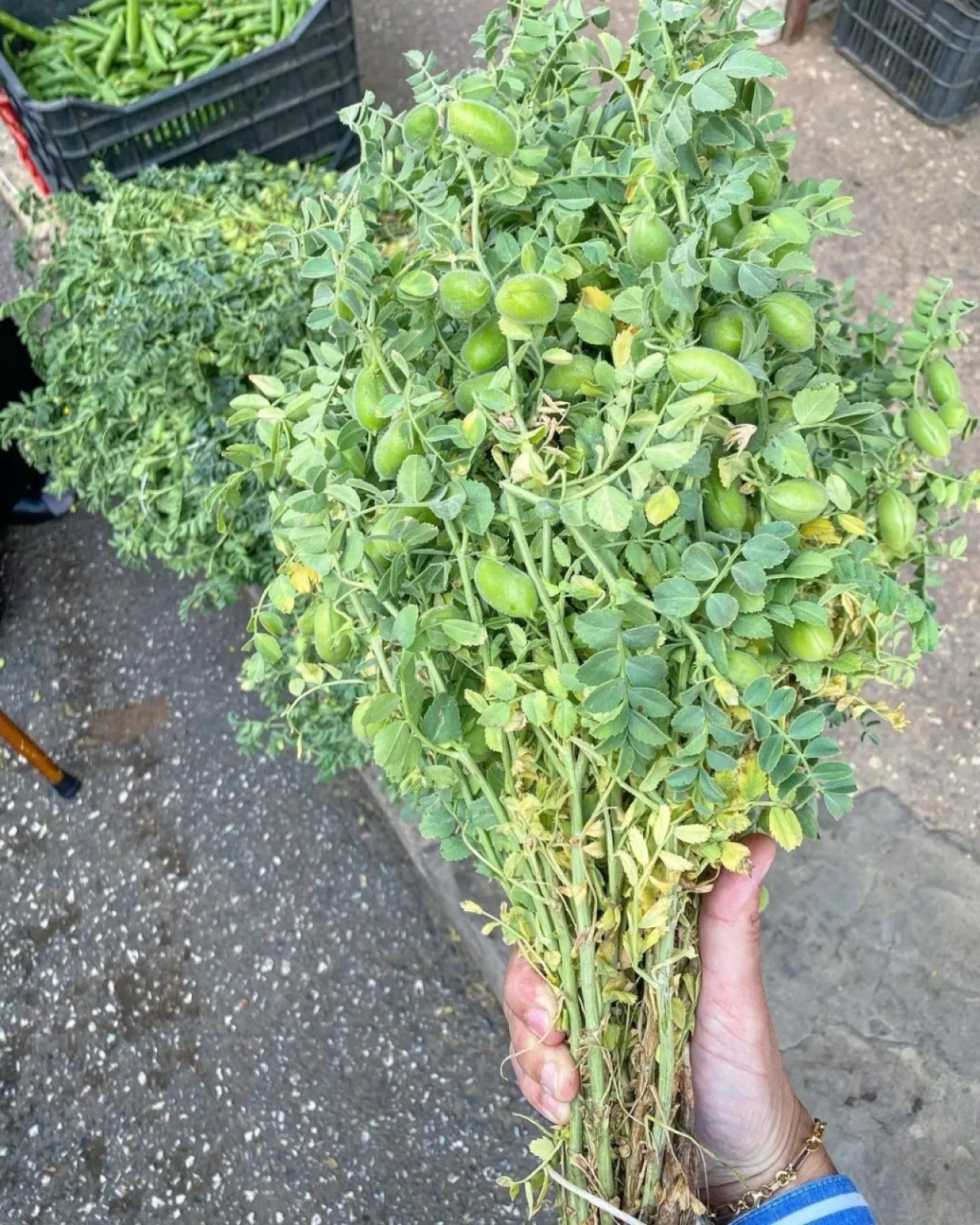
Khaberni - In a first-of-its-kind precedent, scientists succeeded in planting and harvesting chickpeas, known in Jordan as (the carrier), using soil that mimics the composition of the moon's surface, in a step that enhances hopes for reliance on space agriculture in long missions.
As the launch date for the American manned mission "Artemis 2" to the moon approaches, a fundamental question arises about the future food sources for astronauts. According to a recent study from the University of Texas at Austin, published in the journal "Scientific Reports," chickpeas might be one of the promising answers.
Sara Santos, the lead researcher on the project from the University of Texas Institute for Geophysics (UTIG), described this work as a "giant leap" in exploring the requirements for agriculture on the moon’s surface, indicating that the primary goal is to understand how to convert lunar soil into soil suitable for germination, and the natural mechanisms that can contribute to this transformation.
The moon soil, which is the technical name for lunar soil, lacks the organic matter and microorganisms necessary to support plant life. Although it contains essential minerals and nutrients, it also contains heavy metals that could be toxic to plants.
To overcome these challenges, the scientists used simulated moon soil from "Exolith Lab" that mimics the composition of real moon samples. The team added "worm compost" (Vermicompost), a nutrient- and microbe-rich product obtained by feeding worms on organic waste like food leftovers and cotton clothes, which could be available on long missions.
The chickpea seeds were also coated with a type of symbiotic fungi (Arbuscular Mycorrhizae) before planting. These fungi establish a symbiotic relationship with the plant roots, helping in the absorption of essential nutrients and at the same time reducing the absorption of harmful heavy metals.
The planting was done in mixtures of simulated moon soil and worm compost in varying ratios. The results showed that mixtures containing up to 25% worm compost and 75% moon soil at most produced harvestable chickpeas. However, when the percentage of moon soil increased beyond this, the plants showed signs of stress and early death.
Nevertheless, the stressed plants treated with the fungi lived longer than those untreated, underscoring the importance of these fungi for plant health. More optimistically for future farming, the fungi were able to colonize and survive in the simulated soil, suggesting that their addition might be necessary only once in real off-Earth agricultural environments.
Although the successful harvest represents a significant milestone, the safety and taste of these crops still need to be proven.
The team emphasizes the need to determine the nutritional value of the chickpeas and ensure they are free from heavy metals that might be absorbed during growth. The question posed is not only the possibility of cultivation but its feasibility as a safe and healthy food source for astronauts, and the number of plant generations needed to achieve this.