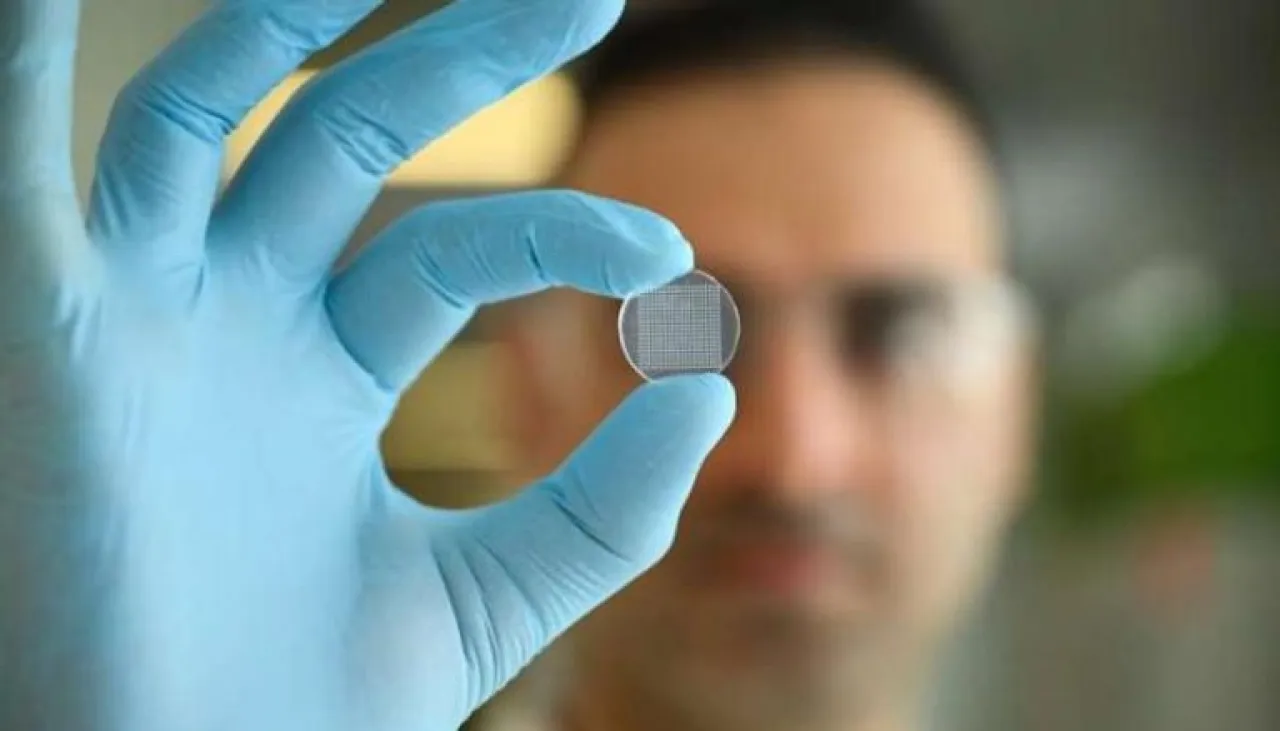
Khaberni - Researchers have developed the first small patch that resembles an adhesive equipped with microscopic needles, capable of taking samples of the body's immune responses directly from the skin.
Without the need for blood draws or surgical biopsies, the device, invented by researchers from the Jackson Laboratory in collaboration with the Massachusetts Institute of Technology, can detect inflammatory signals within minutes and collect specialized immune cells within hours. This allows researchers and doctors to study immune responses in cases of aging and autoimmune skin diseases, such as vitiligo and psoriasis.
In the future, the patch could facilitate monitoring people's response to vaccines, infections, and anti-cancer treatments, while reducing the discomfort associated with traditional examinations.
The patch works by exploiting memory T cells residing in the skin, which quickly recognize previous foreign bodies such as a virus or allergens, and emit signals that call additional immune cells from the bloodstream.
This natural process gathers immune cells in the skin, enabling direct and dynamic assessment of the immune system's strength and its response to various diseases and conditions.
Sasan Jalili, a bioengineer and immunologist, says, "Normally, studying some of the most important immune cells in the body requires biopsies or blood draws, but we have proven that they can be collected in a non-painful and non-invasive way. This is very important in sensitive or visible areas such as the face and neck, as well as for the elderly, infants, and young children."
Precise and safe design
The patch contains hundreds of microscopic needles made from an FDA-approved polymer, coated with a gel derived from seaweed that absorbs immune cells and molecules from intercellular skin fluids. The needles only reach the upper layers of the skin, causing minor irritation without damaging nerves or blood vessels.
The future of immune monitoring
The patch could become a tool for home immune monitoring, and enable patients with skin diseases to track unexpected inflammatory episodes. The technology can also be adjusted to include the mouth or nose for monitoring mucosal immune responses. Jalili confirms, "Even 15 to 30 minutes of using the patch can be enough to detect inflammatory signals and understand what is happening in the tissues."