Khaberni - Minister of Health Ibrahim Al-Badour confirmed Jordan's commitment to enhancing its strategic partnership with the World Health Organization, continuing the work towards achieving universal health coverage, in alignment with the Sustainable Development Goals 2030, especially the third goal related to good health and well-being.
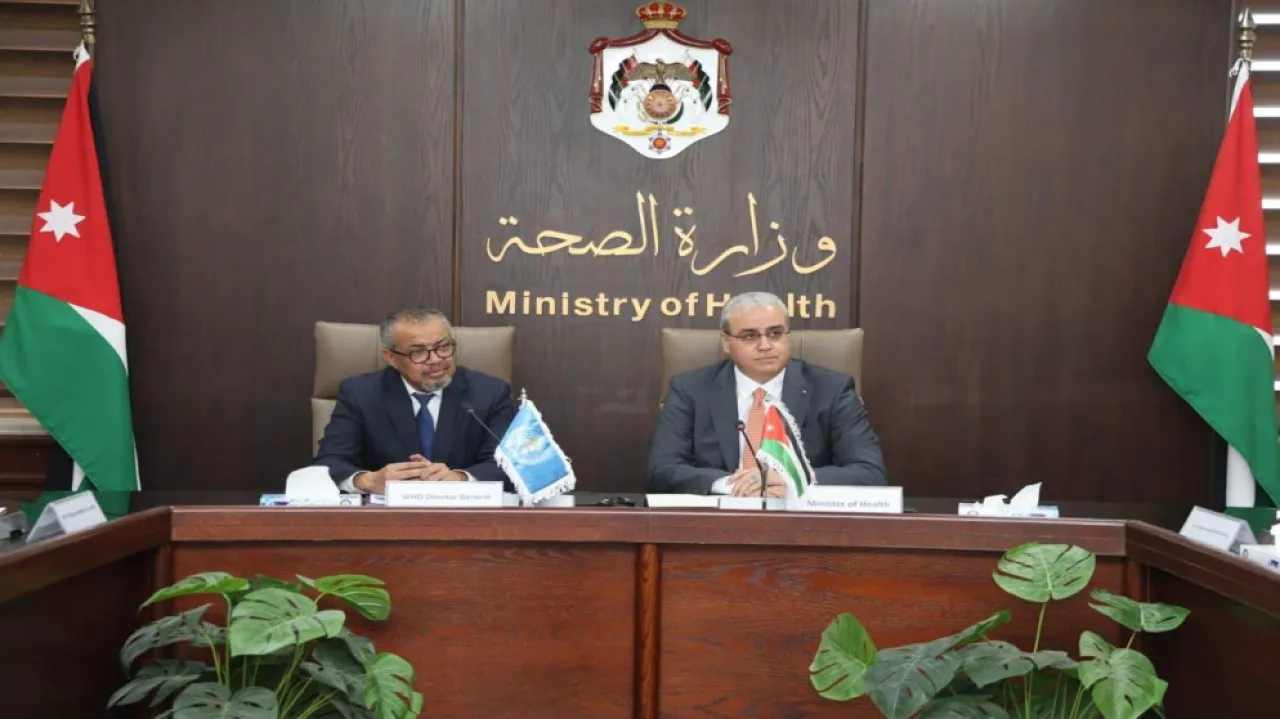
This was stated during the reception of the Minister, on Wednesday at the Ministry of Health, by the Director-General of the World Health Organization Tedros Adhanom Ghebreyesus, in the presence of the WHO representative in Jordan, Iman Shanqeeti, and several ministry officials.
Al-Badour expressed his appreciation for the ongoing support provided by the World Health Organization to Jordan, noting that Jordan believes health is a fundamental right and a pillar of sustainable development.
He confirmed that the Kingdom continues to build a resilient and inclusive health system that ensures access to services for all despite regional challenges, economic pressures, and hosting a large number of refugees.
He mentioned that Jordan, in recent years, has made significant achievements, which included the expansion and modernization of primary healthcare services, infrastructure enhancement, and supply chain strengthening.
He also pointed to the acceleration of digital transformation through the application of electronic health records, telemedicine services, digital healthcare, and national health records, which enhanced efficiency, transparency, and evidence-based decision-making.
Al-Badour clarified that the quality of healthcare and patient safety are top priorities in the reform agenda, referring to the launch of the National Strategy for Quality and Patient Safety aimed at providing standard and high-quality health services across public sector facilities.
He highlighted that the Ministry is moving forward in reforming mental health services in cooperation with the World Health Organization through specialized initiatives that enhance integrated community services and support the integration of mental health into primary healthcare.
The Minister emphasized that Jordan, through its Ministry of Health, continues its humanitarian commitment to refugees, as it is one of the world's highest refugee-hosting countries per capita, ensuring they have access to all healthcare services.
For his part, Tedros said, "I expressed my appreciation for my meeting with the Minister of Health in Jordan, which was an important opportunity to reaffirm our shared commitment to enhancing universal health coverage and strengthening primary healthcare as the foundation for building healthier and more resilient communities. I also expressed my sincere appreciation for the long-term cooperation between Jordan and the World Health Organization, especially in expanding mental health services and integrating them into the general health system."
He added, "I also extended my thanks to the Minister for the ongoing support provided by the government to refugees, including sick children evacuated from Gaza receiving critical care in Jordan. This generosity reflects the leadership and humanitarian role that Jordan plays in times of severe need."
He continued, "We discussed the ongoing challenge posed by non-communicable diseases and the urgent need to reduce population exposure to risk factors such as tobacco use. The World Health Organization affirms its readiness to continue supporting Jordan in enhancing policies and programs that protect health, save lives, and promote well-being for all."
In turn, the Director of Project Management, Planning, and International Cooperation at the Ministry of Health, Huda Ababneh, provided a brief overview of the components of the health sector in Jordan, including the Ministry of Health, key health indicators, main priorities, challenges, and national plans in the field.