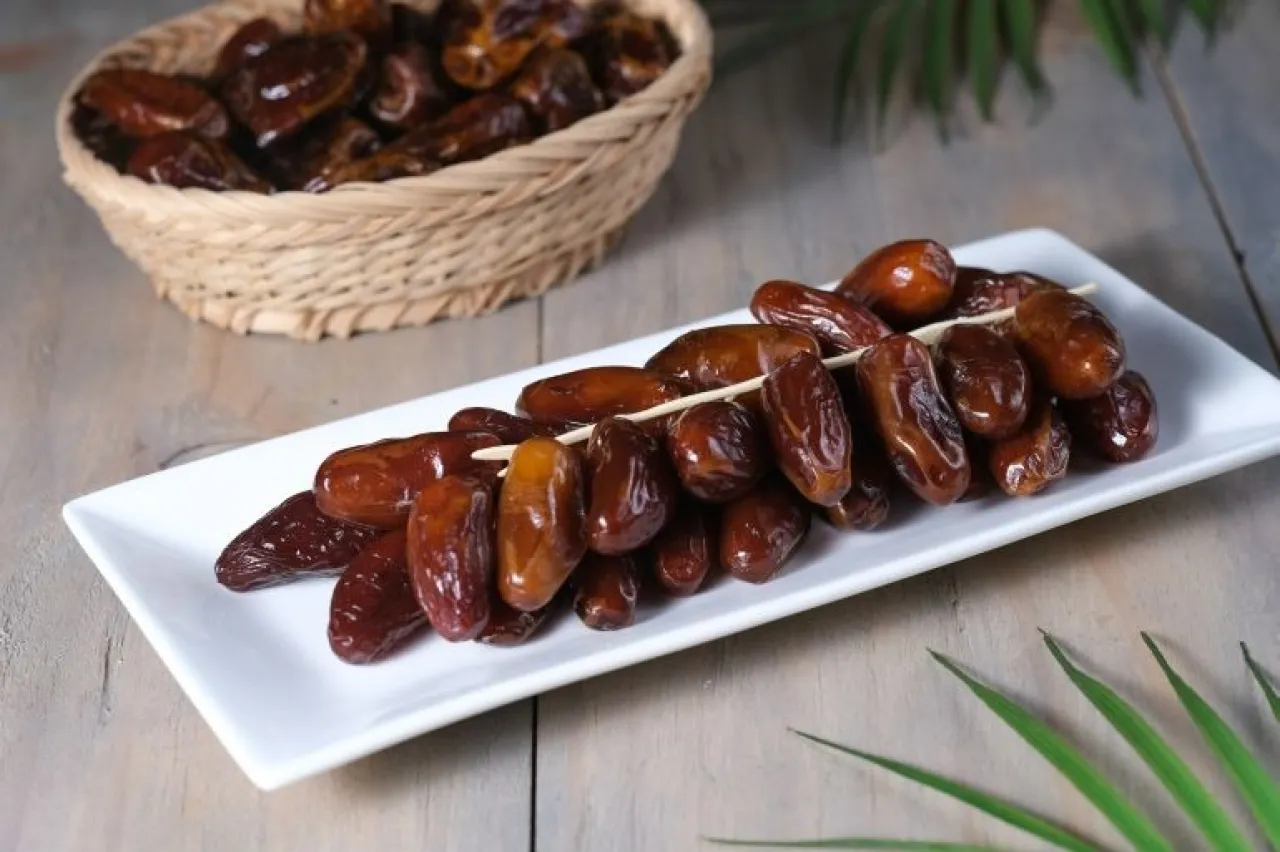
Khaberni - "A household without dates sees its members go hungry"… a prophetic wisdom confirmed by science in a few profound words, Prophet Muhammad said: "O Aisha, a household without dates sees its members go hungry", summarizing the status of dates not just as a decorative item on the table, but as a staple food capable of curbing hunger and providing quick energy.
Centuries later, modern nutritional science confirmed that choosing this fruit was not just a cultural habit, but carries a precise nutritional logic making it akin to a natural "emergency battery" for the human body.
Why do dates quickly "quell the storm of hunger"?
When consumed, dates introduce a mix of glucose and fructose into the body, simple sugars that are quickly absorbed into the bloodstream, leading to an immediate increase in energy levels.
Within a few minutes, the brain sends neural signals reducing the feeling of severe hunger and restoring a sense of vital stability, even before full satiety is reached.
Nutritional studies indicate that this response occurs within about 15 to 30 minutes after eating dates, making them an ideal choice for breaking fast or in cases of sudden energy deficiency.
How many dates are enough?
Scientific recommendations and prophetic tradition suggest that the ideal intake varies between two to three dates daily, to avoid exceeding the known Glycemic Load which affects blood sugar levels.
This corresponds with what Muslims traditionally practice at iftar, emulating the prophetic tradition by breaking the fast with dates and water before the main meal.
When do dates become a problem?
Despite their benefits, nutrition experts warn against turning dates into a frequent light meal throughout the night of Ramadan, especially when they are presented stuffed with nuts or covered with chocolate and caramel.
This type of sweets may significantly increase caloric and blood sugar levels, posing a particular risk to individuals with diabetes and heart disease.
"The deceivingly small"
Dates may look small, but they are rich in energy: a single date contains about 60 to 70 calories, and three dates provide about 180 calories, an ideal amount for quick charging without burdening the body with fat storage processes.
There are over 2000 varieties of dates in the world, each region having its own signature and special flavor, from "Medjool" in Palestine and Morocco to "Sukkari" in the Gulf and "Deglet Noor" in Tunisia and Algeria.