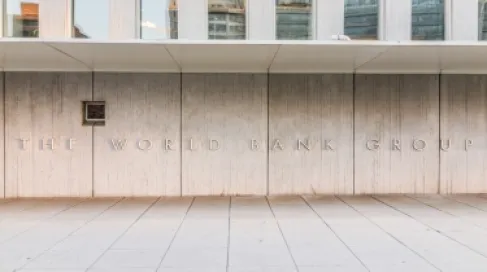
Khaberni - The "Enhancing Reform Management in Jordan" project, implemented by the government in cooperation with the World Bank, has made satisfactory progress in achieving its development goals in enhancing and implementing government reforms, according to the updated reform matrix, after the project supported the implementation of 148 reforms out of 265 since its inception.
According to an evaluative report of the program issued by the World Bank and translated by "Al-Mamlaka", the program, which started in 2029, has recorded "steady progress" in terms of project management, procurement, financial management, monitoring, and evaluation, with the aim of implementing reforms focusing on the updated reform matrix, supporting public investment management, public-private partnerships, and the public procurement framework.
The report indicated that the project supported the implementation of 148 reforms across multiple sectors including investment, business environment, trade facilitation, tourism, agriculture, and energy, within the government's comprehensive approach to economic modernization, 74 of which directly contributed to improving outcomes related to women.
In terms of stakeholder engagement, the project saw the implementation of 220 consultation sessions covering 68 reform areas, with the participation of more than 28 ministries, departments, and governmental institutions, while the outputs of these consultations were integrated into a large number of implemented reforms.
The report also showed the achievement of 3 out of 4 main indicators at the project's goals level, including the number of reforms accomplished with the support of the reform secretariat, the number of reforms that integrated stakeholder feedback, in addition to adopting a sustainable procurement policy that considers green procurement and supports small and medium-sized enterprises, including companies led by women.
However, the indicator related to public investment management is still under completion, targeting the inclusion of 70% of new public investment projects exceeding $15 million in value within the public budget and registering them in the national register of public investment projects, where the achieved rate until February 2026 was about 60%, with the target expected to be reached before the project's closure.
* Expenditure and Financing
According to the World Bank data, the total approved funding for the project is $23.3 million, while the total cumulative expenditure as of February 10th reached $16.46 million, which is 70.64% of the total financing, with the project continuing its implementation until the amended closure date on June 30, 2028.
At the level of interim results of the program, the report showed significant progress, as 128 government employees were trained in areas including monitoring and evaluation, procurement, environmental and social aspects, and stakeholder engagement, while 28 government entities benefited from the reform support fund. The expenditure rate from the reform support fund reached 64.36% until February 2026.
In the context of public-private partnerships and public investment management, 430 government employees were trained on the public investment management framework and partnerships, and projects of this type were registered in the national register of public investment projects, alongside the complete operation of the national register.
In the field of public procurement, the usage rate of the governmental departments for the electronic procurement system (JONEPS) was about 58%, while the number of companies registered in the system reached 4,756. Additionally, a sustainable procurement policy was adopted, while some regulatory tools, such as a professionalization strategy for procurement personnel, are still under completion.
The project is implemented within a multi-donor trust fund aimed at enhancing coordination and implementation of reforms in Jordan, improving public investment management, public-private partnerships and the public procurement framework.
The reform secretariat in the Ministry of Planning and International Cooperation is the implementing entity for the project, responsible for coordinating between ministries and governmental institutions, and for monitoring the implementation of project components, within the government's commitment to the reform matrix launched to support growth and investment and improve the business environment.
The government announced at the London conference in February 2019, its commitment to its economic reform and growth plan within a reform matrix over a 5-year period (2018-2022) which was later extended to 2024, based on a set of political and structural reforms related to the most important economic policy issues facing Jordan.