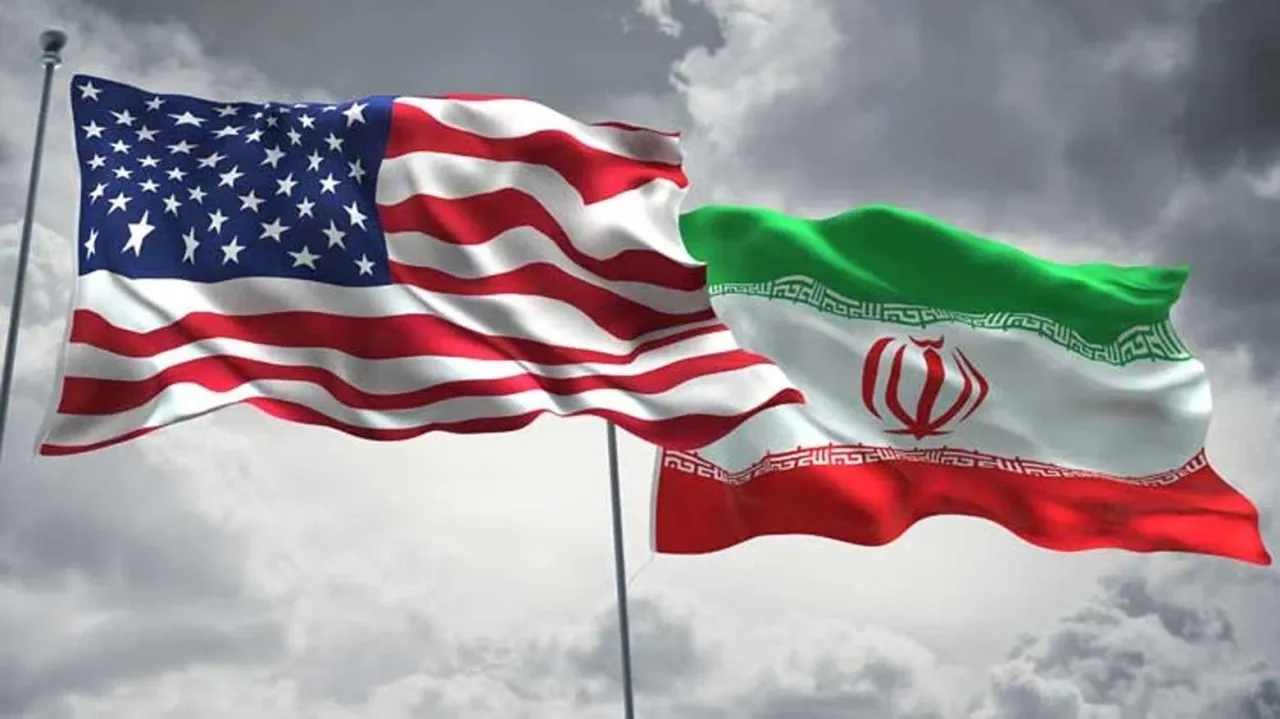
The United States and Iran are holding a second round of talks in Geneva on Tuesday, which began in February amid a threat of American military action against Iran, while Tehran spoke about a more "realistic" stance from Washington regarding its nuclear dossier.
For weeks, US President Donald Trump has been threatening Tehran with a military strike on the backdrop of a crackdown on protests that erupted in late December, resulting in thousands of deaths.
In parallel with bolstering its military presence in the Middle East, Tehran waved an immediate response to any aggression. The Revolutionary Guard started maneuvers in the Strait of Hormuz on Monday.
After intense regional diplomatic efforts, Tehran and Washington resumed their negotiations in Muscat on February 6. The discussions on Tuesday will be held in Geneva but hosted by Omani diplomacy.
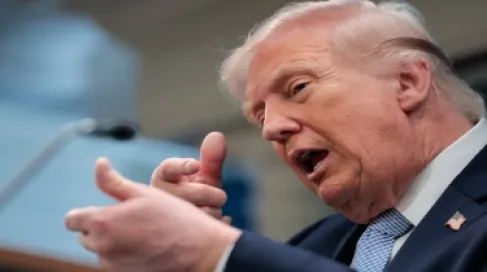
On Monday evening, Trump continued to exert pressure on Tehran, stating that he would participate "indirectly" in the negotiations, adding, "I do not believe they want to bear the consequences of not reaching an agreement."
Iranian Foreign Minister Abbas Araghchi, who leads his country's delegation, met with his Omani counterpart Badr bin Hamad Al Busaidi on Monday.
The Iranian Foreign Ministry confirmed that Araghchi presented "Iran's perspective and considerations on the nuclear file and lifting the American and international sanctions."
The statement emphasized Tehran's "determination" to adopt a "results-based diplomacy to ensure the interests and rights of the Iranian people, and peace and stability in the region."
The US delegation is expected to be led by Trump's envoy to the Middle East Steve Witkoff and his son-in-law Jared Kushner, according to the White House.
On Monday, Foreign Minister Marco Rubio said, "We hope to reach an agreement."
The current discussions, conducted indirectly with the Omanis mediating between the Iranian and American teams, are the first between the two sides since last year's talks collapsed following an Israeli war on Iran in June.
The United States participated in that war by bombing Iranian nuclear facilities.
Iran insists that the talks be limited to the nuclear file, which Western countries suspect is aimed at developing a nuclear weapon—a claim consistently denied by Tehran. Conversely, US and Western officials call for any deal with Iran to include scrutiny of its ballistic program and its support for armed groups in the region.
Iranian Foreign Ministry spokesperson Esmaeil Baqaei said on Monday, "With regard to the talks (in Muscat), we can cautiously infer that the American stance on the Iranian nuclear issue has become more realistic."
He emphasized that "Iran's inalienable rights under the Nuclear Non-Proliferation Treaty have been recognized," including "peaceful uses of nuclear energy, including enrichment."
Revolutionary Guards maneuvers
The Iranian Foreign Minister met in Geneva with the Director-General of the International Atomic Energy Agency, Rafael Grossi.
A great deal of uncertainty surrounds the fate of Iran's stockpile of over 400 kilograms of 60%-enriched uranium, as monitored by the International Agency's inspectors during their last visit in June before the Israeli and American strikes.
While Trump and US officials have expressed a preference for a diplomatic option, Washington has continued to bolster its military presence in the region by deploying the "USS Abraham Lincoln" carrier and its strike group. Satellite images showed that the carrier was sailing 700 km south of the Iranian coasts.
Trump also announced on Friday that another aircraft carrier, the Gerald Ford, would soon sail to the Middle East.
In a related context, the Revolutionary Guard began maneuvers in the Strait of Hormuz on Monday, according to Iranian state television.
It noted that these maneuvers, whose duration was not specified, aim to prepare the Guard for "potential security and military threats" in the strategic strait, particularly for the transit of oil and liquefied natural gas.
Iranian officials have previously threatened to close it in case of an attack on Tehran.
American and Western pressures on Iran increased following the protests that erupted in late December due to living conditions, and evolved into a movement opposing Iran's leadership, including Supreme Leader Ali Khamenei.
The momentum of the protests significantly subsided after the authorities confronted them with a severe crackdown that resulted in thousands of deaths.
Last week, Trump considered that a "regime change" in Iran, i.e., the ruling regime since the 1979 Islamic Revolution, would be "the best thing that could happen."
He confirmed that "we need to reach an agreement, otherwise it will be very painful," adding, "I do not want that (military strike) to happen, but we need to reach an agreement."
Israeli Prime Minister Benjamin Netanyahu stated on Sunday that any agreement must ensure the complete transfer of Iran's enriched uranium stockpile out of the country, and "dismantle" any enrichment capability, in addition to addressing the missile program.
Tehran holds onto its right to a civilian nuclear program and emphasizes that the country's "defense capabilities" are not up for negotiation.