Khaberni - The Roads and Transport Authority in Dubai announced that the number of users of mass transit and shared mobility in Dubai, which includes the Dubai Metro, Dubai Tram, and public buses, and marine transport: (abras, ferries, and water taxis), and shared mobility: (vehicles of smart application companies, hourly rental vehicles, and buses on demand), in addition to taxi vehicles (Dubai Taxi and franchise companies), reached 802.1 million passengers in 2025, compared to about 747.1 million passengers in 2024, recording a growth of 7.4%.
The average daily number of passengers was approximately (2.2) million passengers, compared to about (2) million passengers in 2024, while the number of users of luxury transport: (limousines), «not counted in the number of mass transit passengers», was 23.6 million passengers, compared to about 19.2 million passengers in 2024.
The total number of trips of mass transit, shared mobility, and taxi vehicles last year was 167.3 million trips, including about 120 million trips for taxis, and more than 41 million trips for shared mobility. October and November saw the highest number of trips, with 15.1 million trips each, and October 2025 recorded the highest rate of passengers, with nearly 72.8 million passengers. November was second, with about 72.6 million passengers, followed by December with about 71.4 million passengers, with the number of passengers in the remaining months ranging between 61 and 69 million travelers.
The high demand levels during the last quarter of the year affirm the stability of the usage rates within the mass transit system during the peak demand periods, reflecting the system's capacity to absorb increased demand within stable operational conditions, with December recording a lower level compared with October and November, amid changing movement patterns associated with the holiday season and year-end.
Success of the strategic vision
Matar Al Tayer, the Director-General and Chairman of the Board of Executive Directors at the Roads and Transport Authority, affirmed that the steady and sustainable growth in the number of users of mass transit and shared mobility in Dubai, which recorded 7.4% last year, as well as the increase in shared mobility users by 30% compared to 2024, represents a structural transformation in mobility patterns and confirms the success of the strategic vision adopted by the Authority, in building an integrated transport system, which constitutes a fundamental pillar for quality of life and economic development in the emirate.
Al Tayer said: «These indicators represent the culmination of long-term investments in infrastructure, smart technologies, and the integration of various transport modes, where mass transit has become a central element in sustainable urban planning, supporting the efficiency of cities and their capacity to accommodate rapid population and economic growth».
High operational efficiency
He added: «The continuous high demand for various modes of the mass transit system in Dubai confirms the system's capability to operate with high operational efficiency, thanks to the integration of metro, tram, bus services, marine transport, and shared mobility, and the variety of options that meet the daily mobility needs, providing flexible and safe alternatives that meet the needs of various user demographics».
Al Tayer confirmed that the Roads and Transport Authority continues to work on developing an intelligent, sustainable, and integrated mass transport system, through the expansion of metro, tram, and bus networks, enhancing the efficiency of marine transport, and supporting shared mobility solutions, alongside employing artificial intelligence technologies in data management and designing customer experience journey, in line with Dubai's future aspirations as a leading global city, enhancing its status among the best cities to live, work, and visit.
He mentioned that the authority plans to expand the dedicated pathways for buses and taxis during the years 2025 and 2026, which include implementing six pathways with a total of 13 kilometers, thereby increasing the total length of dedicated pathways for buses and taxis to 20 kilometers, hence increasing the number of passengers by 10%, improving the arrival rate of buses by 42%, and reducing the bus journey time by 41%. The authority also studies implementing a project: (trackless tram), at eight locations in Dubai, which is an advanced self-driving system, environment-friendly, powered by electricity, and uses a virtual track that operates with camera tracking system for paint lines on the path, characterized by lower cost and shorter implementation duration compared to traditional tram projects.
He said: «Our strategic goal is to establish mass transit as the first choice for mobility in Dubai, through the continuous enhancement of service quality, expanding the geographical coverage, enhancing the integration between modes, and improving user service, providing a flexible, safe, and sustainable transport system that keeps pace with the rapid population and economic growth, and supports Dubai's journey towards smoother mobility, higher quality of life for all.»
Use rates
Dubai Metro is the backbone of the public transport system in the emirate, where it accounted for the largest share of users of mass transit, shared mobility, and taxi vehicles in 2025, with 37%, while the share of taxis was 26%, compared to about 27% in 2024, marking a decline for the third consecutive year, which is a good indicator of the shift of passengers towards using mass transit.
The share of public transport buses was 25%, and shared mobility consistently rose over the past three years, increasing from 6.2% in 2023 to 7.5% in 2024, reaching 9% in 2025. Marine transport and Dubai Tram maintained their shares approximately at 2% for marine transport and 1% for Dubai Tram, and this shift is a positive indicator of the continuous growth in the use of mass transit, supported by improving service reliability and network integration between the metro, buses, and shared mobility, consolidating the role of the mass transit system in meeting the mobility needs of residents and visitors, and confirming the sustainable growth in the number of passengers, continually aligning the service with the demand, especially in managing demand rates and improving mobility service across various transport modes.
Dubai Metro
The number of users of the Dubai Metro on its Red and Green lines was 294.7 million passengers in 2025, which is an increase of 7% compared to 2024. BurJuman Station (a joint station on the Red and Green lines) and Al Rigga Station took the largest share of passengers during the past year, with BurJuman Station having 17.8 million passengers, recording an increase of more than 1.5 million passengers over the previous year, while Al Rigga Station had 13.8 million passengers. On the Red Line, Union Station recorded the highest number of passengers with a total of 13.6 million passengers, followed by Mall of the Emirates Station with about 11.2 million passengers, then Burj Khalifa / Dubai Mall Station with about 10.9 million passengers.
On the Green Line, Sharaf DG Station was first in terms of the number of passengers with 10.5 million passengers, followed by Baniyas Station with about 8.4 million passengers, and Al Stadium Station third with about 7.5 million passengers.
The high demand at these stations is linked to their roles within the metro network, where some of them serve as primary interchange stations between the lines, others serve urban, commercial, and touristic centers, along with the integration of several of them with bus stations, and the wider mass transit network, enhancing accessibility, and supporting daily mobility service for residents and visitors.
Users of transportation options
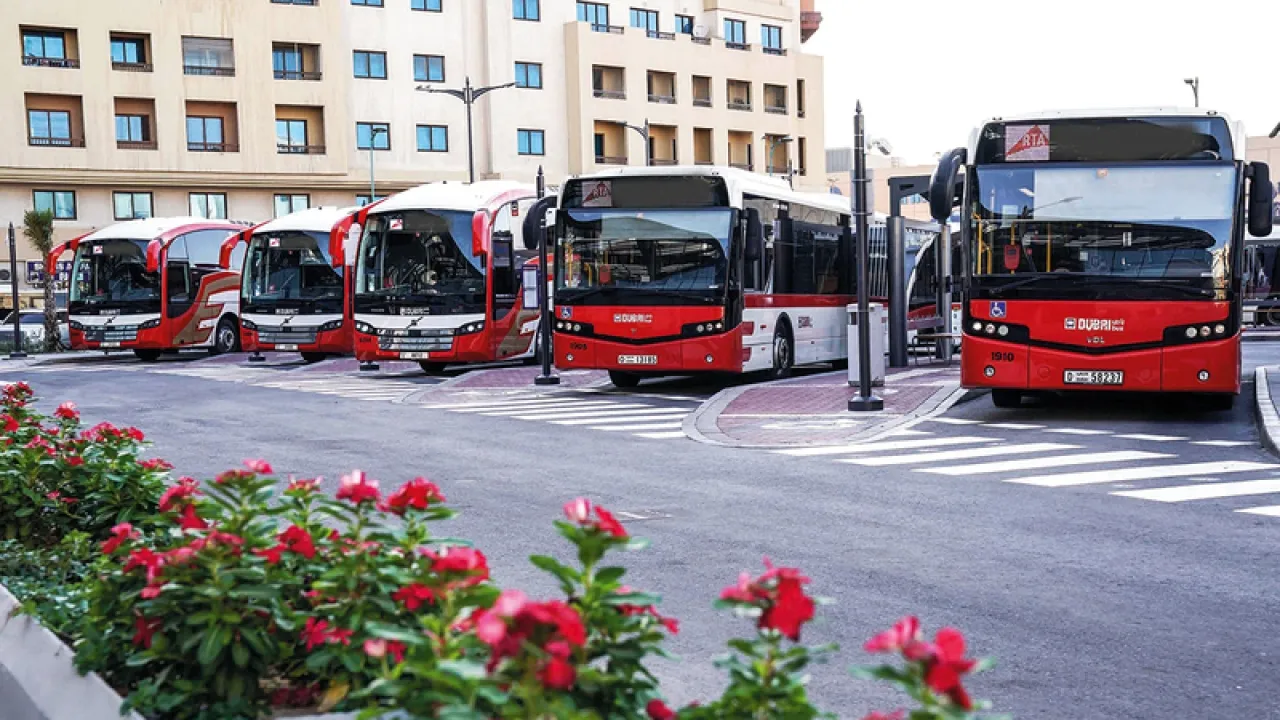
Public transport buses transferred 197.2 million passengers last year, an increase of 5% compared to 2024, and the number of users of marine transport, including abras, water taxis, and Dubai Ferry, last year was 18.4 million passengers with an increase of 3%. Dubai Tram moved 9.9 million passengers with an increase of 5% compared to 2024, while shared mobility, which includes vehicles of smart application companies, hourly rental vehicles, and on-demand buses, moved 72.9 million passengers last year, an increase of 30%. Dubai taxis last year moved 209 million passengers, an increase of 4% compared to 2024, and the number of users of luxury transport: (limousines) was about 23.6 million passengers during 2025, an increase of 22% compared to 2024.
This distribution across different transport modes shows the integration of the mass transit system, through providing multiple alternatives that serve different daily trip patterns for users, where public transport buses and Dubai Metro serve daily trips with high volumes, and on-demand and luxury transport cover short-term or special trips, enhancing mobility flexibility within a connected transport network.
It also highlights the mass transit system's capability to absorb growing demand efficiently within a cohesive operational framework at the network level, supporting the continuous direction of the Emirate of Dubai towards smoother mobility, higher quality of life for residents and visitors.