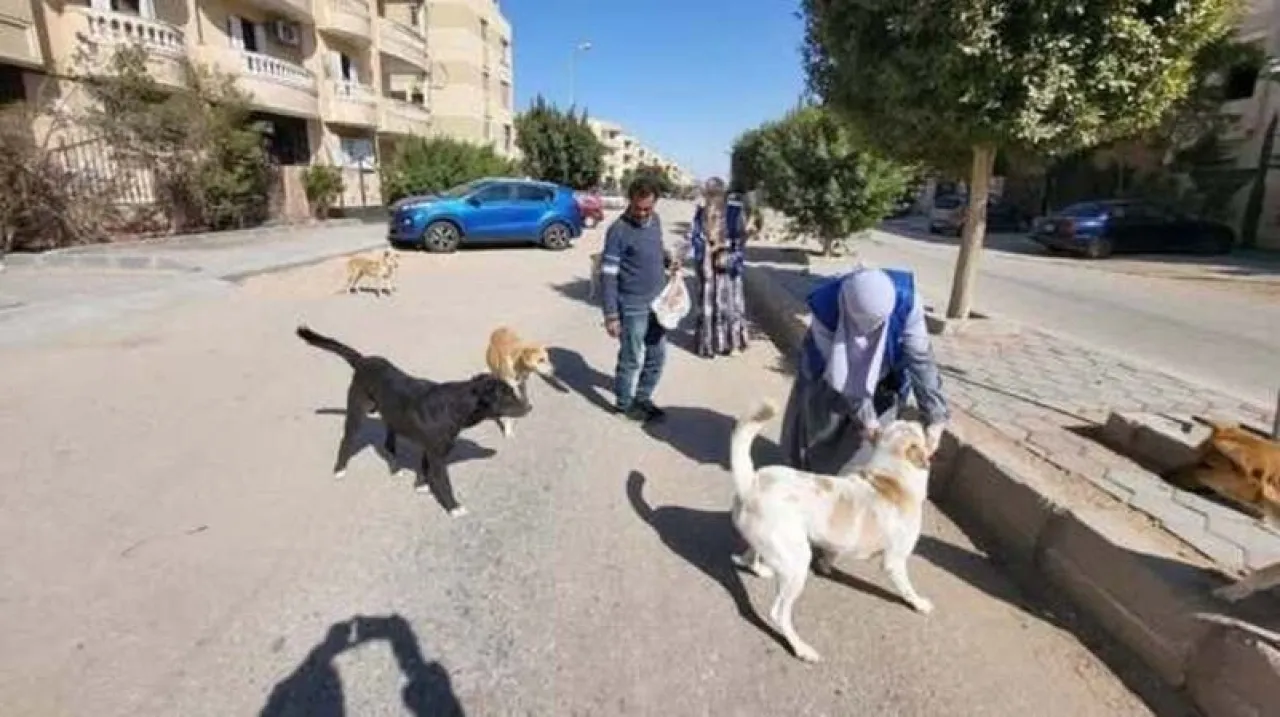
Khaberni - With the spread and continuation of the dog-biting phenomenon in Egypt, the Egyptian government announced the vaccination of thousands of stray dogs and the sterilization of large numbers during last January, as part of the national campaign for combating rabies and reducing the phenomenon of dog bites to citizens.
The Ministry of Agriculture announced in a statement yesterday, Tuesday, the continuation of the efforts of the General Authority for Veterinary Services in implementing vaccination and sterilization campaigns for street dogs in several provinces, within the framework of the national strategy to combat rabies, support the public health system, and apply the principles of Animal Welfare.
The ministry stated that the total number of street dogs vaccinated since the beginning of last January until now reached about 8,254 dogs, in addition to sterilizing 1,122 dogs, with the participation of civil society organizations and through collaboration and coordination with the Animal Welfare Union.
Participation of civil society organizations
Minister of Agriculture and Land Reclamation, Alaa Farouk, appreciated the vital role played by civil society organizations in supporting the state's efforts to implement vaccination and sterilization campaigns for street dogs, affirming that this cooperation reflects a successful model of partnership between state institutions and civil society in protecting public health, establishing the principles of animal welfare, and enhancing community awareness.
For his part, the head of the General Authority for Veterinary Services, Hamed El-Agns, asserted that these efforts are in implementation of the directives of the Minister of Agriculture and Land Reclamation to intensify vaccination campaigns for street dogs, considering rabies one of the most dangerous communicable diseases posing a direct threat to public health.
The head of the authority explained that the veterinary field teams are carrying out the vaccination and sterilization work according to the scientific controls and standards adopted, which ensures the safety of citizens, control of the disease, reduction of its risks, and achieving sustainable management of street dog populations in a humane and safe manner.
He added that the veterinary guidance teams represent a fundamental axis in the success of the campaigns, where they play an effective role in changing community behavior through the implementation of organized awareness programs aimed at raising citizens' awareness about the dangers of rabies, prevention methods, correcting misconceptions associated with dealing with street dogs, enhancing a culture of safe and humane treatment, reducing the chances of dangerous contact, decreasing the rates of infection, and supporting prevention efforts before the occurrence of the disease.
Mass biting
It is worth noting that one day earlier, the Kafr El-Sheikh Governorate in the north of the country witnessed a mass biting incident, where a rabid dog bit 13 people from the village of West Tira belonging to Al Hamool Center, most of them children, in a ferocious attack near the village mosque, which prompted a medical mobilization to transport the injured and save their lives at Baltim Specialist Hospital.
The hospital received the injured, whose injuries varied from severe wounds to the body, ears, legs, and arms, while necessary medical procedures are being undertaken toward them.
This incident occurred hours after another brutal attack witnessed in the city of Ras Sudr in South Sinai, where stray dogs devoured parts of a child's body, prompting the governor of South Sinai, General Khaled Mubarak, to make an urgent visit to the Al Fayrouz Medical Complex in Al Tour to check on the stability of the child's condition.