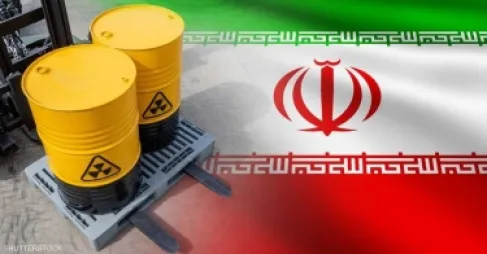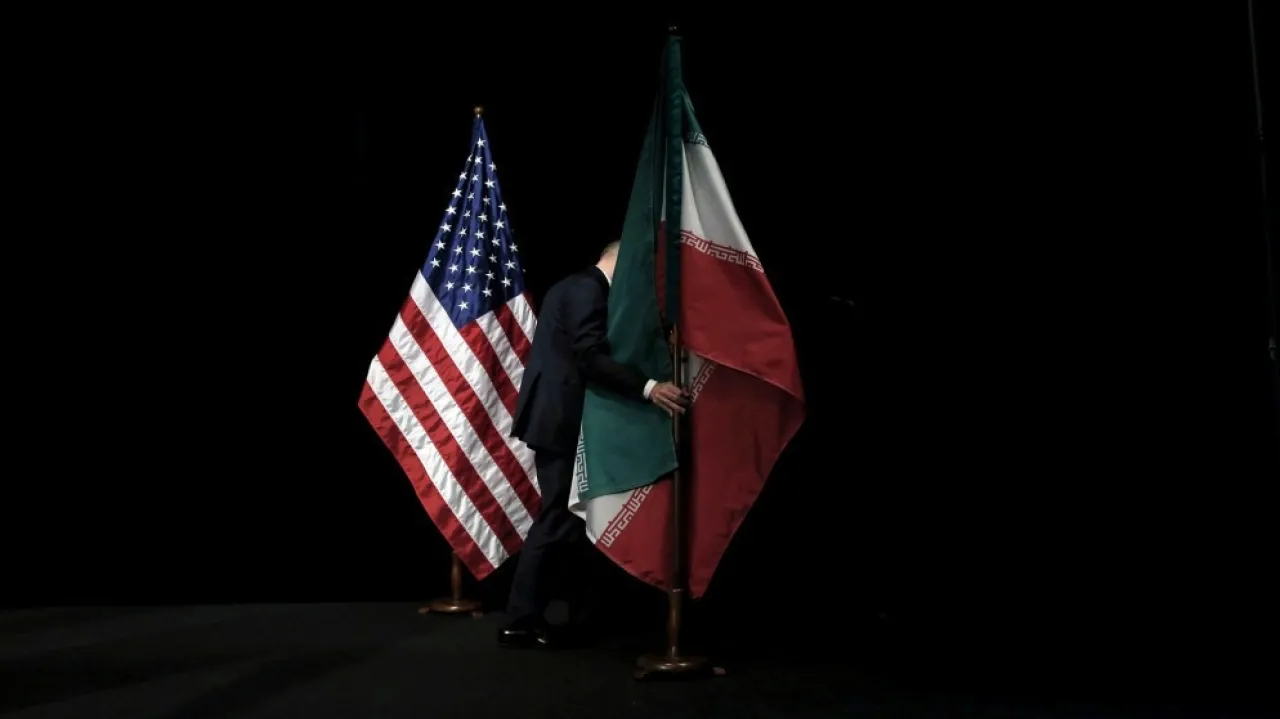
Khaberni - Iran and the United States will start negotiations in Oman on Friday, focusing on Tehran's desire to limit the discussions to its nuclear program, while Washington continues to hint at military action if the negotiations fail.
The talks, which Tehran expects to commence in the morning in Muscat, are the first since the United States launched strikes on Iranian nuclear sites in June during the 12-day war that broke out following an Israeli attack on Iran.
The US delegation is headed by President Donald Trump’s envoy to the Middle East, Steve Witkoff, and the Iranian delegation by Foreign Minister Abbas Araghchi.
Araghchi arrived in the Omani capital on Thursday evening, according to the official news agency IRNA.
This meeting follows less than a month after the bloody repression campaign that the Iranian regime waged against a widespread protest movement, resulting in thousands of deaths according to human rights organizations.
The Iranian Foreign Ministry expressed hope that Washington would show "responsibility, realism, and seriousness" in the talks.
Trump said, "They are negotiating," adding, "They don’t want us to strike them, as we have a large fleet heading there," referring to the aircraft carrier Abraham Lincoln and its strike group.
The American President initially threatened military action against Tehran over its suppression of protesters, telling the protesters that "help is on the way."
However, his rhetoric in recent days has focused on curtailing the Iranian nuclear program, which the West fears aims at building a nuclear bomb.
White House spokesperson Carolaine Levitt said Thursday that Trump is looking forward to the talks to determine whether an agreement with Tehran can be reached.
Levitt told reporters, "During these negotiations, I would like to remind the Iranian regime that the President has many options available, in addition to diplomacy, as the commander-in-chief of the strongest military in history."
His deputy, J.D. Vance, in an interview with the media outlet "Sirius XM" broadcast on Wednesday, said "Trump will keep his options open, will talk to everyone, and will try to achieve what he can through non-military means, and if he feels that military is the only option, he would ultimately adopt this option."
Vance also expressed frustration over the lack of direct communication between Trump and Iran’s Supreme Leader Ali Khamenei, saying, "It’s a very strange country to deal with diplomatically, you can’t even talk to the person in charge of the country."
"Concerns of Escalation"
Iran and the United States had negotiations in the spring, particularly in the Sultanate of Oman, but they froze due to the 12-day war. Those talks particularly stumbled due to the issue of uranium enrichment by Iran.
Iran insisted on only discussing the nuclear file with the goal of lifting international sanctions that are impeding its economy, refusing any negotiations about its ballistic missile program which it considers a self-defense tool.
The official Iranian television emphasized on Thursday that "the talks are limited to the nuclear file," quoting an official from the Iranian delegation.
However, American Secretary of State Marco Rubio noted that "for the talks to yield concrete results, they must include specific terms, including the range of their ballistic missiles, their support for organizations in the region, their nuclear program, and their treatment of their people."
From the Qatari capital Doha, German Chancellor Friedrich Merz urged the Iranian leadership to "seriously enter negotiations" with the United States, saying there were "major concerns about a military escalation in the region."
The United States Institute for the Study of War said, "Iran continues to show stubbornness towards meeting the demands of the United States, which reduces the likelihood of Iran and the United States reaching a diplomatic solution."
Amid continuing military threats, the United States sent the aircraft carrier Abraham Lincoln and its naval strike group to the region, while Iran threatened to target American bases in the region if attacked.
The official Iranian television on Thursday quoted army spokesman Brigadier General Mohammad Akrami Nia saying, "We are ready to defend, and the American president has to choose between settlement or war," warning that Iran can "easily" reach American bases.
As an indication of tensions, the Iranian Revolutionary Guards detained two oil tankers with their foreign crews in the Persian Gulf on charges of "fuel smuggling," according to Tasnim news agency on Thursday.
It was not immediately clear which flag the tankers were flying nor the nationalities of their crews.
The Iranian Student News Agency (ISNA) quoted former Foreign Minister Ali Akbar Velayati, now an advisor to Khamenei, saying, "Iran is fully prepared to counter any threat or foreign enemy."