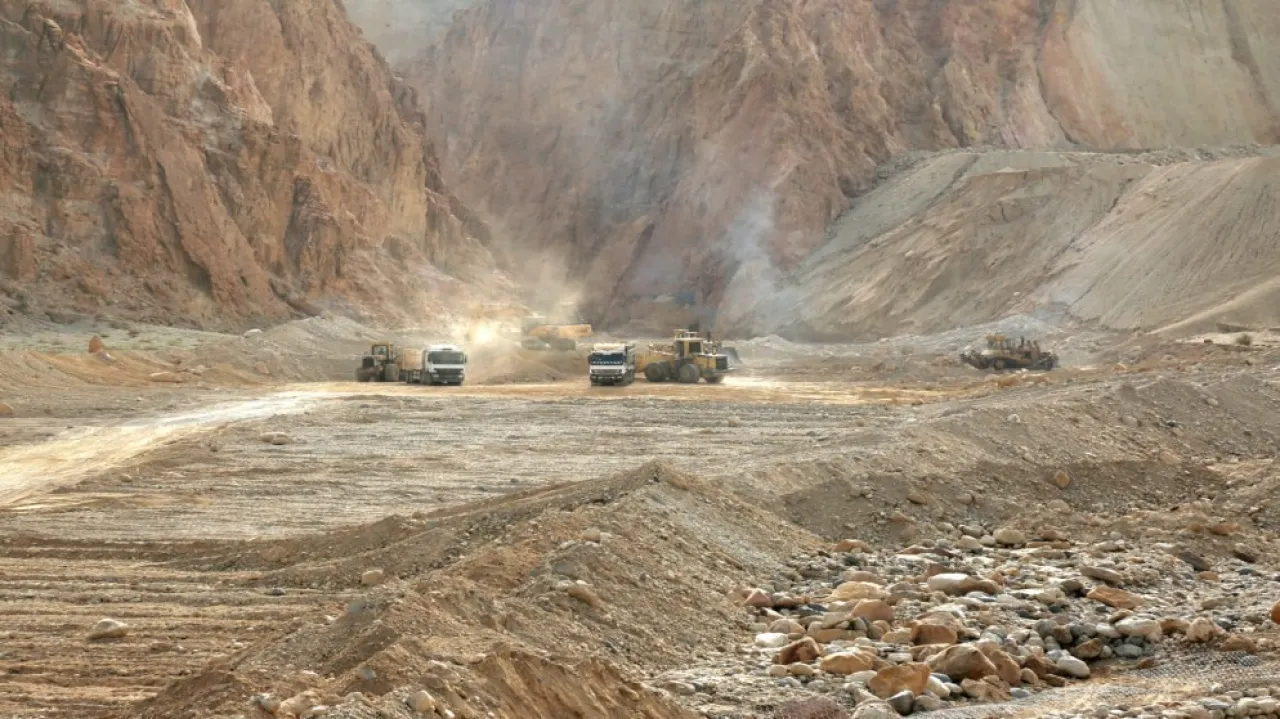
Khaberni - The Ministry of Public Works and Housing announced the completion of a comprehensive package of engineering interventions and technical treatments for 52 vital sites damaged by landslides and floods in various regions of the kingdom, with a total cost of about 9 million dinars.
The ministry confirmed that these efforts are part of an urgent response plan it has established to ensure the safety of users of international and main roads, to reinforce hot spots that have faced structural and geotechnical challenges due to recent weather conditions, emphasizing that the work targeted the rehabilitation of the damaged infrastructure according to the highest technical standards to ensure its sustainability in the face of climate changes.
The technical treatments varied between reconstructing massive retaining walls hundreds of meters long as happened on the Aqaba rear road and Bardini Bridge, and implementing "gabion" protections and additional box culverts in the area of the Rice Factory Tunnel and Wadi Shuaib Road, in addition to addressing scour at the exits of the main bridges on the Dead Sea road, which are engineering interventions aimed at enhancing the infrastructure's capacity to absorb large water flows and prevent the recurrence of soil erosion.
In the Karak Governorate, the works included treating the collapse of a retaining wall on the Al-Kharza Road (Karak - South Jordan Valley) and extending the existing box culvert at an estimated cost of 260,000 dinar. The ministry also dealt with severe damages in Wadi Namira on the Wadi Araba Road, where the flood swept away about 100 meters of the road, and the ministry began building a box culvert with (10) openings as a precautionary measure at a cost of 2 million dinar.
In terms of protecting water structures and bridges, the ministry carried out "rubble and concrete" works and treated the scour at the exits of the main bridges on the Dead Sea road and the bridges of the South Jordan Valley, including Wadi Atoun, Al-Mujib, and Wadi Shaqiq bridges.
The quality interventions also included protecting the historic wall adjacent to the "Al-Burka" site in Karak by installing more than 1760 precast concrete units to form a temporary supporting wall.
In the "Iraq" area in Karak, the ministry recommended the removal of any encroachments on the paths of natural valleys after technical studies revealed that the presence of structures within the valley domain hindered water drainage efficiency.
The ministry has also launched advanced hydrological and hydraulic studies to assess all rainwater drainage facilities and bridges at the level of the kingdom's three regions.
This step comes to cope with the consequences of climate change and urban expansion, which has led to the alteration of natural valley paths, requiring a comprehensive update of rainfall data and the development of water structures designs to be more resilient against future floods.
These studies confirm the ministry's commitment to implementing sustainable solutions that ensure the stability of the lateral slopes of mountain roads and protect national assets from the risks of torrential floods.
On the institutional and technical development front, the ministry is moving this year towards the digitization of field monitoring through the establishment of a central control center equipped with advanced camera systems to monitor the status of roads and bridges instantly, especially in hotspots prone to collapses.
Future plans also include purchasing dozens of new machines to support maintenance and emergency workshops in the provinces, and activating road asset management systems and using modern modeling software for verifying structural plans, reflecting a radical shift towards proactive management of weather crises and updating the infrastructure in accordance with the vision of the economic modernization of the kingdom.