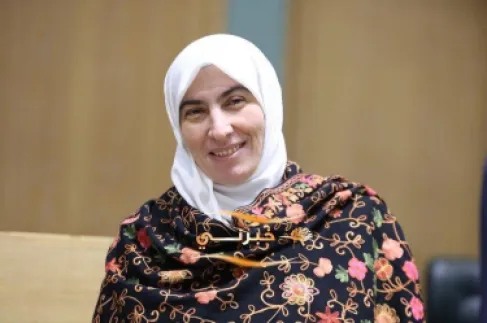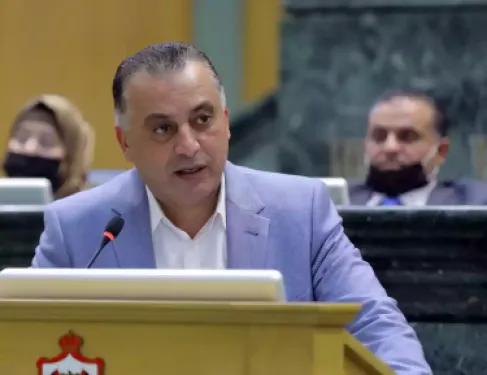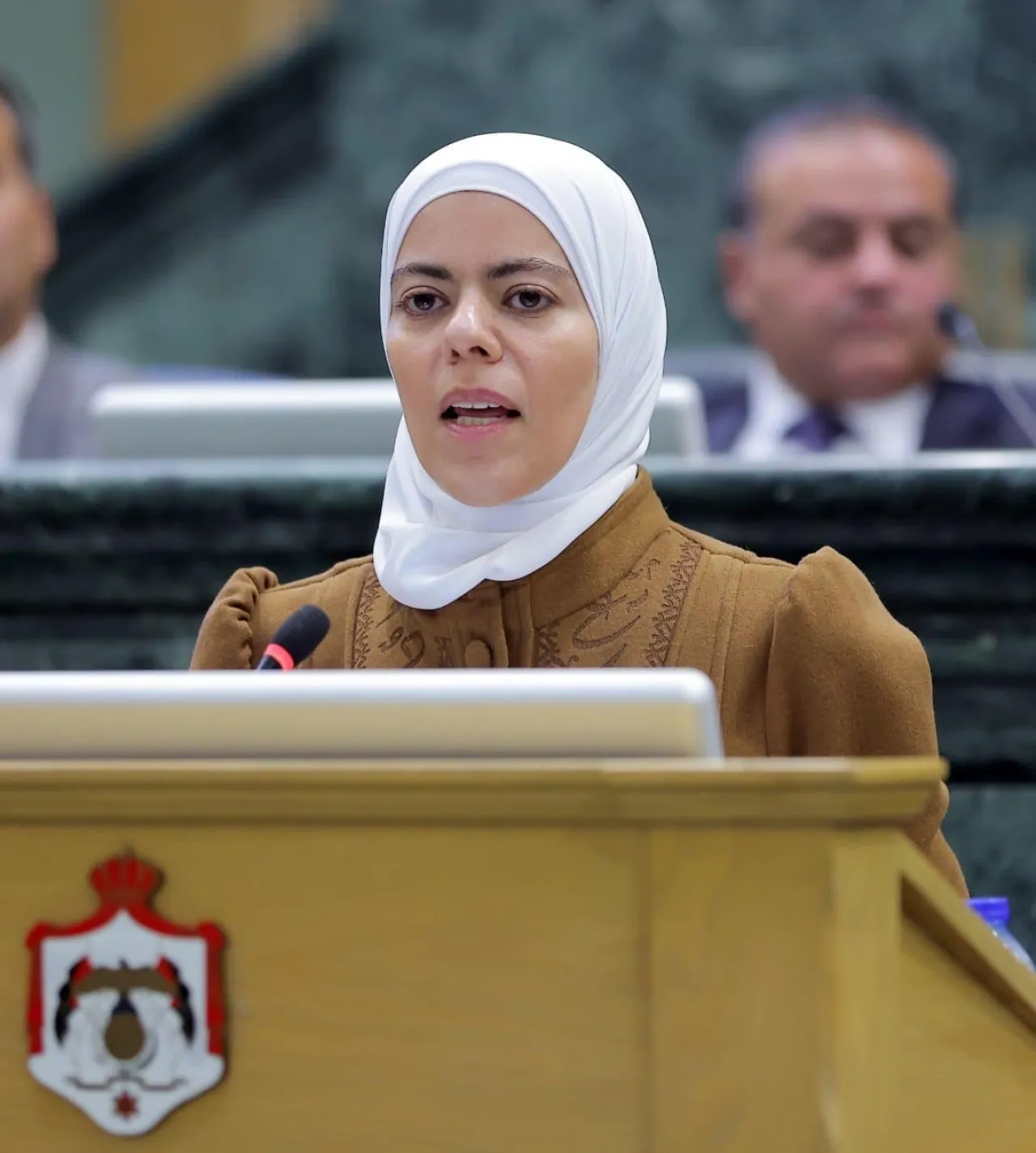
Khaberni - Today, Representative Noor Abu Ghoush presented 10 parliamentary questions including altogether 111 items directed to several ministries, discussing various topics. The first of these questions involved two primary ones, one related to dams and the other to rainwater.
The text of the questions follows:
1. What estimate did the government base its decision to join the treaty for the protection and use of transboundary watercourses, and how significant is the expected service to the national interest of Jordan in light of water scarcity and multiple parties sharing these resources with Jordan?
2. How will the government employ this membership to enhance Jordanian water rights existing in the Yarmouk and Jordan rivers, and what are the executive mechanisms that will be followed to practically translate this?
3. What are the institutional and technical obligations arising for the ministries and relevant authorities, whether in data exchange, report preparation, or participation in international frameworks, and how will efforts be coordinated among them to avoid overlap or duplication?
4. What are the legal and political controls set by the government to ensure that the membership remains in the realm of environmental and scientific cooperation only, without being exploited politically or regionally in a manner that affects the management of the water resources file?
5. Has a comprehensive national environmental and social impact assessment been conducted for the implementation of the treaty's provisions on shared basins and groundwater, what were the results of this study, and how does the government intend to integrate its findings into national water sector policies and strategies?
6. What opportunities does the ministry see for exploiting through the membership in terms of transferring modern technology and building national capacities in monitoring and scientifically and technically analyzing water resources?
7. What are the resources and water basins on which Jordan's membership to the Helsinki Water Convention will be practically applied, and what are the size and quantities of water estimated within these basins (surface or groundwater), and does the agreement include shared resources with neighboring countries like the Yarmouk and Jordan basins or the Disi, or is it limited to technical cooperation frameworks without specifying spaces or specific water quantities?
8. How will the government handle the file of shared waters with the Zionist entity after joining the treaty, given the presence of shared basins, what are the guarantees that ensure this membership does not affect bilateral understandings or open the field to any international intervention in its technical or political details, and what arrangements or plans does the government intend to adopt to ensure the full protection of Jordanian rights in these resources, and not turn the treaty into a new legal reference through which existing water commitments are reformulated?
1. How many operational dams are in the kingdom by the end of 2025, what is the year of construction of each dam, what is its design storage capacity, and what is the actual remaining storage capacity after accounting for silt?
2. How were the quantities of water entering each dam distributed during the rainy seasons of the years
2020–2021, 2021–2022, 2022–2023, 2023–2024, 2024–2025, and what are the filling rates achieved in each season?
3. How were the waters of the dams used during the years 2020–2025 (for agriculture, drinking, groundwater recharge), and what quantities of water were not used during that period?
4. What is the magnitude of water loss from the dams during the years 2020–2025 due to evaporation, leakage, or emergency discharge, and on what technical basis is this loss calculated?
5. When were the last technical studies related to sediment (silt) in the dams conducted, what are the main results in terms of their impact on storage capacity, and what are the adopted plans to deal with them?
6. What is the nature of the maintenance work carried out on the dams during the years 2020–2025, what is its cost, and who are the entities that carried it out?
7. Have any dams had their operational capacity reduced or been partially or completely stopped during the years 2020–2025, what are the reasons for this, and what is the duration of the stoppage in each case?
8. When were the last structural safety checks of the dams conducted, who conducted these checks, and what are the main results?
9. How do the number of dams and their storage capacities distribute among the provinces and regions, and what is the total capacity in each region compared to the average rainfall recorded in it during the years 2020–2025?
10. What are the criteria adopted in choosing dam sites, and how do they ensure a balance in the distribution of water projects across different areas of the kingdom?
11. What dams does the ministry plan to construct or complete during the years 2026–2030, where are their locations, what are their expected storage capacities, and what are their estimated costs?
12. On what technical and economic studies did the ministry base its planning for the dams to be constructed during the period 2026–2030, and what are the main outputs of these studies in terms of water feasibility?
13. How have the design standards for dams been developed over the past five years to accommodate climate changes and variable rainfall?
14. What is the adopted plan for the years 2026–2030 to enhance the efficiency of managing existing dams, reduce water loss, and improve the utilization of rainwater?
15. What systems or tools are currently approved for monitoring dam performance in terms of filling, safety, and operational efficiency, and to what extent is their data available to regulatory bodies and decision-makers?
1. How is rainwater included in the national water policy, and how does it fit among other water sources in the approved plans until 2030?
2. What were the recorded rainfall amounts in the kingdom during the years 2020–2025, how were they geographically distributed, and what are the available estimates at the ministry for the proportion of these quantities that were utilized?
3. Where does the rainwater that is not stored or utilized annually go, and what are the ministry's estimates for the amounts of surface runoff and flash floods during the past five years?
4. What tools and criteria does the ministry adopt for measuring the efficiency of utilizing rainwater, and how was this efficiency evaluated during the years 2020–2025?
5. What are the main rainwater harvesting projects carried out by the ministry during the years 2020–2025 outside the scope of the dams, and what is their actual impact on increasing water quantities utilized?
6. How is institutional coordination managed between the Ministry of Water and Irrigation, municipalities, and the Greater Amman Municipality in rainwater management, and transforming it from a drainage burden to a water resource?
7. What is the legislative and regulatory framework governing rainwater harvesting at the individual and institutional levels, and has it undergone any revision or update during the years 2020–2025?
8. How does the ministry take into account climate change and variability in rainfall patterns when planning for the utilization of rainwater, compared to previous practices?
9. What were the quantities of rainwater that have been dealt with or utilized to date from the current rainy season 2025–2026, and how do these quantities compare to the same period in previous seasons?
10. What is the approved plan for the years 2026–2030 to strengthen the institutionalization of utilizing rainwater, expand its harvesting scope, and enhance its management within the national water system?
11. What is the amount of rainwater that was not utilized due to the limited capacity of the dams and its percentage, for the years from 2022 until today?