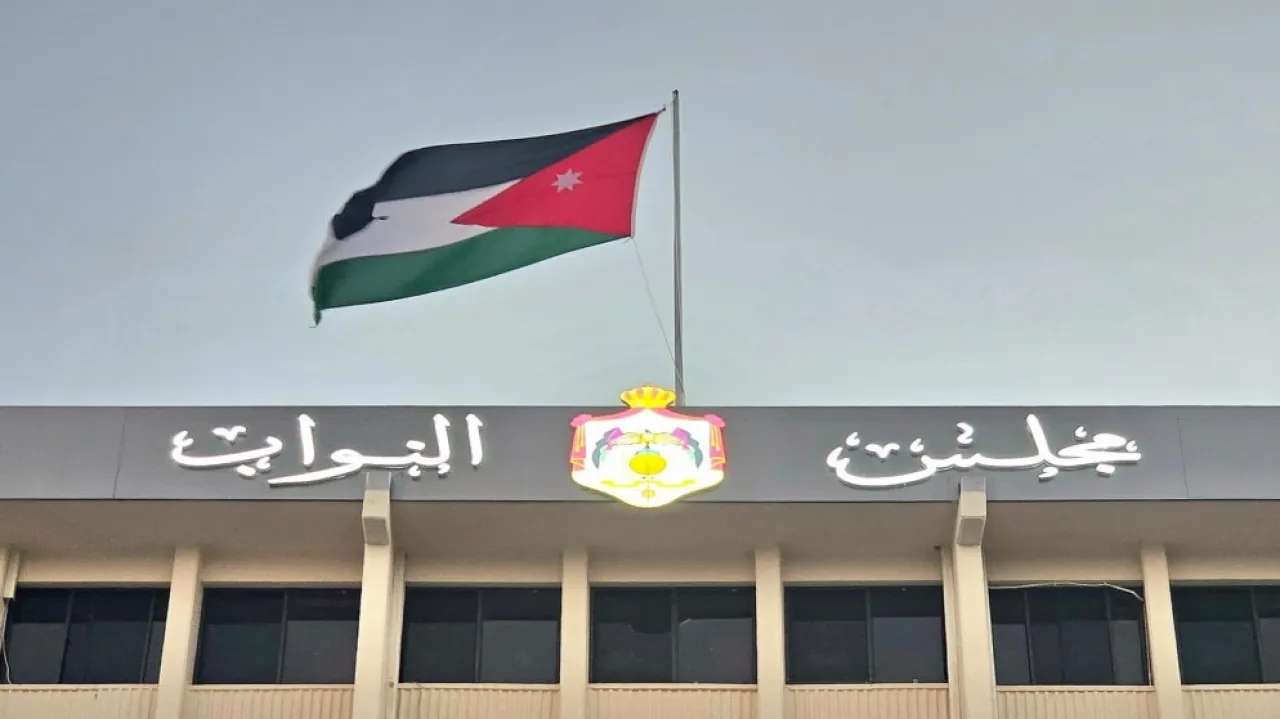
Khaberni - The House of Representatives, with a majority, approved projects of laws for the ratification of agreements on the extradition of persons between Jordan and Spain, and the extradition of persons between the governments of Jordan and Uzbekistan, and the mutual legal and judicial assistance in criminal matters between the governments of Jordan and Morocco, and the transfer of persons serving custodial sentences between the governments of Jordan and Morocco for the year 2025.
The House of Representatives transferred the draft law amending the Jordan Valley Development Law for the year 2025 to the joint parliamentary committee (legal, agriculture, and water), and the draft law on education and human resources development for the year 2026, to the parliamentary education committee.
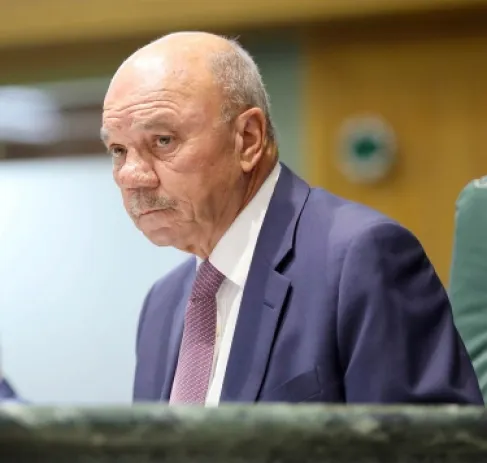
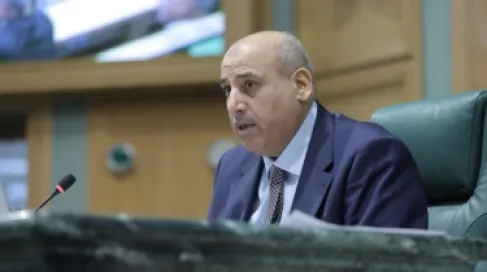
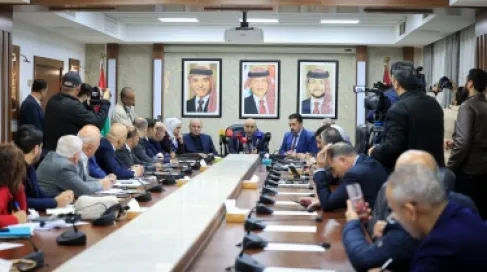
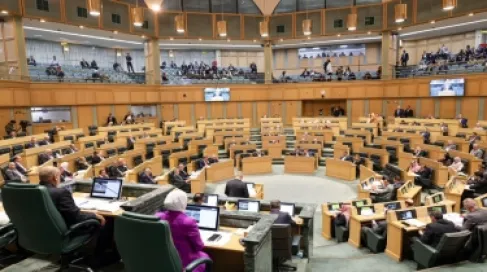
This took place during a session held by the House of Representatives today, Sunday, chaired by the Speaker of the House Mazen Al-Qadi, with the attendance of the Prime Minister Dr. Jaafar Hassan, members of the government team, and chaired partly by the First Deputy Speaker of the House Khamees Atiyah.
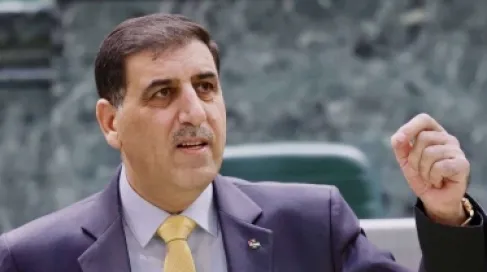
Regarding the draft law on the ratification of the extradition agreement between Jordan and Spain, the chairman of the legal parliamentary committee, Aref Al-Saaydeh, said that the two agreements of extradition between Jordan and Spain, and Uzbekistan, "do not imply the extradition of Jordanians to the mentioned countries", adding "that the Jordanian constitution prohibits the extradition of any Jordanian to any other country".
He explained "that the essence of the two agreements lies in the extradition of non-Jordanians wanted in these countries", pointing out "that studies indicate that Jordan is the party that benefits most from these agreements, due to the presence of individuals from Uzbekistan and Spain within the kingdom.
For their part, deputies said that the legal parliamentary committee, when studying the agreement, set a number of criteria, at the forefront of which is the impact of the agreement on the Jordanian citizen".
They pointed out that the agreement "prevents the extradition of the Jordanian citizen in all cases and without any exception", explaining "that the second criterion relating to the extradition of non-Jordanians was dealt with based on human rights agreements".
They continued "that the discussion of the extradition agreement between Jordan and Spain and Uzbekistan, comes at a critical time when cross-border crimes are clearly escalating, which requires effective legal tools to prevent criminals from escaping justice".
The deputies added "that such an agreement is not only about security cooperation, but establishes a judicial framework that respects the rule of law, and balances the requirements of combating crime and ensuring human rights and fair trial, in accordance with the Jordanian Constitution and the international obligations of the kingdom".
They confirmed "that the agreement contributes to updating the system of extradition of wanted persons, complements the effective national legislation, and reaffirms the pivotal role of the Jordanian judiciary as the competent authority and judge in all extradition requests, away from any non-legal considerations".
They noted that the approval of this agreement enhances Jordan's position as a reliable international partner, and confirms that the Jordanian state combats crime by law, with justice, and by the sovereignty of the judiciary.
The House of Representatives had agreed, during a session held on the 24th of November last year, to refer the draft law to the legal parliamentary committee, which in turn approved it on the 26th of January last year.
It should be noted that the Cabinet approved, during a session held on the 7th of August last year, the draft law on the ratification of the extradition agreement between Jordan and Spain for the year 2025.
The draft law comes as part of enhancing cooperation between Jordan and Spain, in the field of combating crime, reducing it, ensuring that criminals do not escape justice, and facilitating the extradition of persons in a manner that is consistent with constitutional principles.
Regarding the draft law on the ratification of the extradition agreement between the governments of Jordan and Uzbekistan, the Minister of Political and Parliamentary Affairs, Abdulmunem Al-Oudat, stressed the need to distinguish between the words "deportation" and "extradition", emphasizing that "extradition is practiced between all countries".
Al-Oudat said "that this agreement, like other agreements (extradition of criminals or legal or judicial assistance), brought nothing new", adding "that Jordan is a country that respects the constitution, follows the method of the constitution, and what came is what Article 33 of the constitution stipulates, that we refer the agreements to the House of Representatives and then to the Senate for ratification".
He continued "that this agreement is not the first, nor will it be the last. As Jordan's relations with any other country advance, we go towards enhancing legal and judicial cooperation".
For his part, the Minister of Justice, Bassam Talhouni, said "that the agreements signed with Jordan, always take into account through the committees between the two states, the public interest of both sides", adding "that Jordan deals with three types of agreements, as they enhance the status of the state in judicial cooperation, as well as enhance the rule of law".
Talhouni elaborated "that extradition agreements are bilateral agreements, and they translate the provisions of the law of extradition of criminals, which stipulates that persons are not extradited to another country unless judicial sentences are issued against them", pointing out "that there are treaties and international agreements that allow for the extradition of persons".
He continued "in cases a person might voluntarily surrender themselves. Here, there is no harm in proceeding to respect this person's wish", explaining "that the Ministry of Justice is responsible for receiving documents and papers from the requesting party and sends them in turn to the judiciary and the concerned authority".
Regarding the adopted language in the agreements, Talhouni said "that English is a neutral language, and it is applied if there is a disagreement", reiterating that the agreements "achieve higher interests for the Jordanian state".
Talhouni added "that the judiciary and the courts play a large and important role in implementing the agreements on the extradition of persons between Jordan and countries", noting that "the court and the specialized judges work on that through requests submitted to them, and they study the availability or non-availability of extradition conditions".
He stressed that this falls within the standards of the agreements, and when the court reviews that, it refers to the text of the agreement and the relevant laws and the constitution, indicating "that decisions on extradition requests are subject to appeal".
It should be mentioned that the House of Representatives had agreed, during a session held on the 24th of November last year, to refer the draft law to the legal parliamentary committee, which in turn approved it on the 26th of January last year.
The Cabinet had agreed, on the first of October last year, on the reasons necessitating the draft law on the ratification of the extradition agreement between the government of the Kingdom and the government of the Republic of Uzbekistan for the year 2025, paving the way for its submission to the Legislation and Opinion Bureau to complete the necessary procedures for its issuance in accordance with the rules.
The draft law comes as a continuation of the legislative procedures to implement the agreement on the extradition of persons between the two countries, which was signed recently during the visit of His Majesty King Abdullah II to the Republic of Uzbekistan.
The agreement aims to enhance cooperation between the two countries in the field of combating crime and ensuring the rule of law and achieving justice on the basis of mutual respect for the sovereignty of each of them, and in accordance with the constitutional principles specific to each country, taking into account the principles of human rights.
Regarding the mutual legal and judicial assistance agreement in criminal matters with Morocco, it comes from the solid relations between the two brotherly countries and as a documentation of the ties of cooperation between the two parties, recognizing the importance of cooperation in accordance with the laws in force for both parties, respecting the rules of international law, and committing to the directives of the leaderships in both Jordan and Morocco.
The Cabinet had agreed, on the 22nd of October last year, on the reasons necessitating the draft law on the ratification of the agreement of mutual legal and judicial assistance in criminal matters between the government of the Hashemite Kingdom of Jordan and the government of the Kingdom of Morocco, paving the way for its submission to the Legislation and Opinion Bureau to complete the necessary procedures.
Regarding the agreement on the transfer of persons serving custodial sentences between Jordan and Morocco, it comes from the solid relations between the two brotherly countries and as a documentation of the ties of cooperation between the two parties, recognizing the importance of cooperation in accordance with the laws in force for both parties, respecting the rules of international law, and committing to the directives of the leaderships in both Jordan and Morocco.
The Cabinet had agreed, on the 22nd of October last year, on the reasons necessitating the draft law on the ratification of the agreement, paving the way for its submission to the Legislation and Opinion Bureau to complete the necessary procedures.
On the other hand, by a majority, the House of Representatives decided to refer the draft law amending the Jordan Valley Development Law for the year 2025, to the joint parliamentary committee (legal, agriculture, and water).
It should be noted that the Cabinet had approved on the 23rd of November last year, "the amended Jordan Valley Development", paving the way for its referral to the House of Representatives to proceed with its ratification according to constitutional procedures.
The draft law aims to enhance the capabilities of the Jordan Valley Authority in protecting water resources within its jurisdiction, and expanding its powers through studying, designing, constructing, implementing, operating, maintaining, and managing dam projects of all kinds throughout the kingdom.
It also aims to enhance work efficiency in the Jordan Valley areas, expedite services, protect rights, speed up investment decisions and land leasing for development and facilitation purposes, simplify procedures, enhance monitoring, and activate partnerships with the private sector.
The amendments open the field for wider participation by the private sector in development and investment, contributing to new job opportunities and improving the level of services provided to citizens in the Jordan Valley, through accessing services and leasing land, protecting it from breaches, improving infrastructure and services in agricultural projects, and thus supporting farmers and investors through clarity of powers, and stimulating investment through engaging the private sector, in addition to reducing the burden and speeding up procedures using electronic means.
The amendments contribute to encouraging investment in major agricultural projects that use modern technologies in agriculture, and contribute to solving marketing problems and the agricultural pattern.
Under the amendments, authorized employees of the Jordan Valley Authority from the minister or the secretary-general will be granted the status of judicial officers, enabling them to perform inspection and seizure operations, which contribute to protecting water sources and the authority's resources and affiliated companies, as they are considered public funds to be collected in accordance with the law on the collection of public funds.
The amendments also grant the Jordan Valley Authority the exemptions and facilities enjoyed by ministries and government departments.
Regarding the draft law on education and human resources development for the year 2026, the "deputies" decided to refer it to the parliamentary education committee.
The Cabinet had approved, on the 12th of January last year, "education, teaching, and human resources development", paving the way for its referral to the House of Representatives to proceed with its ratification according to constitutional procedures.
The draft law comes as a continuation of efforts to restructure and update the education sector in the Kingdom, as part of the government's commitment to implementing the economic update vision and the public sector update roadmap and the associated initiatives, which include the establishment of the Ministry of Education and Human Resources Development, as a legal successor to the Ministries of Education and Higher Education and Scientific Research.
The draft law reflects the results of scientific efforts during the past period, involving comprehensive and methodical evaluation of the state of the education sector according to the best practices, with the participation of many experts, academics, and specialists.
The draft law resulted from the need to unify the references responsible for the education and human resources development system for all educational stages, to support the education path and its development, and to establish a new structure for the education system.
The draft law aims to raise the quality of education at all stages, according to national and international standards, to improve its outputs, quality, and competitiveness, within priorities, standards, and basic pillars that enhance scientific research and innovation, and ensure sustainability in development and updating, in addition to continuing to ensure the right to free education at basic stages.
The draft law also aims to develop the skills of graduates, enhancing their competitiveness in the labor market through the alignment between education outputs and labor market and development needs, and enhancing the independence of Jordanian universities.
Among the most prominent features of the new education system and legislative amendments, establishing a national council concerned with the adoption of national policies for human resources development chaired by the prime minister, and entrusting the new Ministry of Education and Human Resources Development with the responsibility of policy-making for all educational stages, including early childhood education, basic and secondary education, higher education, and vocational and technical training.
The new system also aims to ensure advanced quality standards and restrict them to the Accreditation and Quality Assurance Commission, expanding that scope to include all education and training institutions for all educational stages, including public and private ones, in addition to enhancing efficiency and effectiveness through the design of a new administrative organizational structure for the Ministry of Education and Human Resources Development, consisting of nine general administrations with extensive delegation of executive powers to the education directorates, which will be reduced in number to match the number of students and geographic areas.
The draft law also includes enhancing the independence of universities and reducing the role of the ministry in higher education to be limited to setting policies and technical standards, licensing establishments, verifying the alignment of higher education and vocational and technical training outputs with labor market requirements, and adopting strategies.