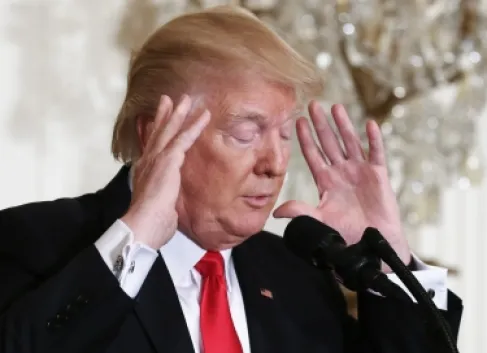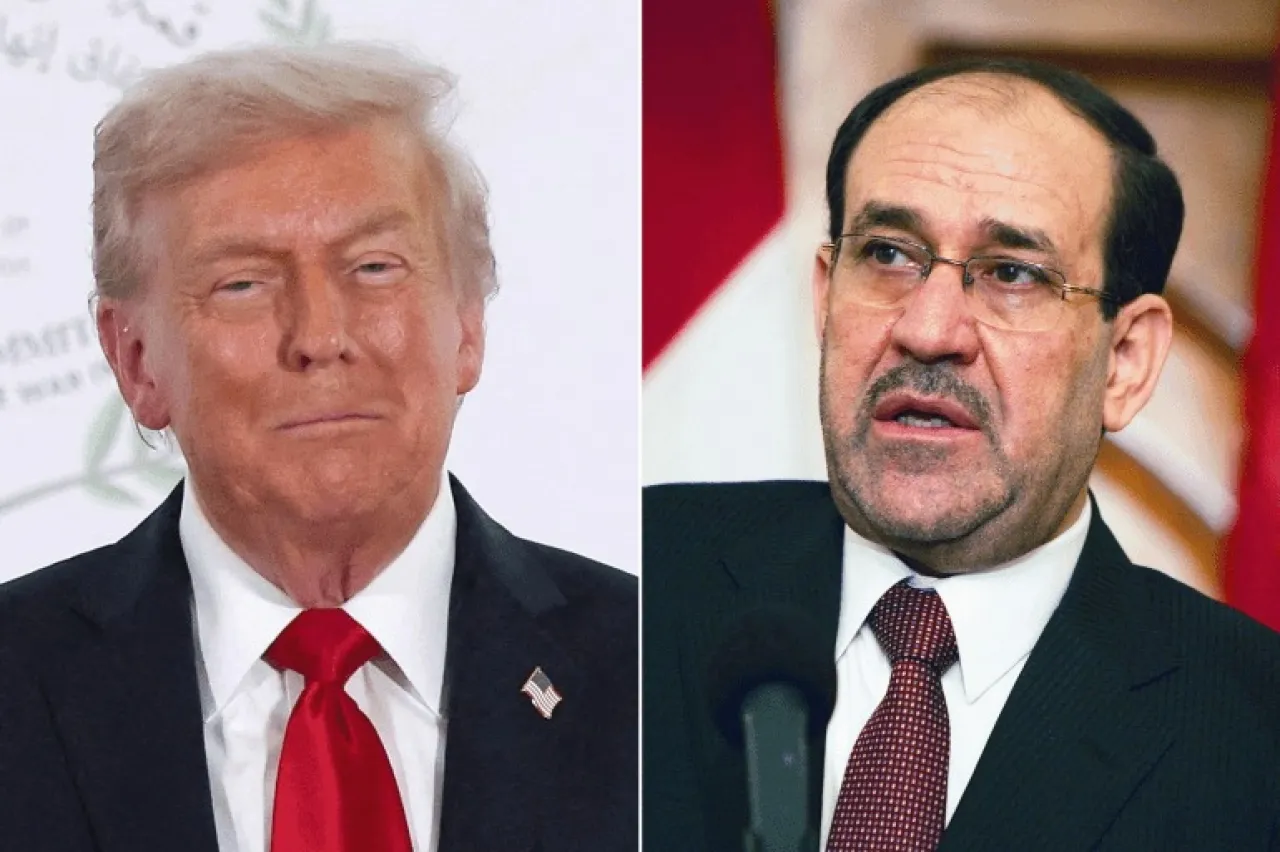
Khaberni - The US President Donald Trump’s threat to cut off support for Iraq if Nouri al-Maliki is reappointed as the head of government has reopened the file on foreign interventions and their limits, placing the Iraqi political scene in front of a complex test where internal calculations intersect with escalating regional and international pressures.
In Baghdad, the "Coordination Framework" alliance held a private meeting at the home of former Prime Minister Nouri al-Maliki to discuss recent American statements, amidst anticipation for an official statement that determines the coalition's stance on continuing his nomination or searching for an alternative from within.
The meeting, held away from the media, focused on Trump’s statements that specifically targeted al-Maliki, as he is the only announced candidate of the Coordination Framework for the upcoming government leadership, according to Al Jazeera.
Responses rejecting Trump’s statements were individually issued by the components of the Framework, including the Badr Organization, Asa'ib Ahl al-Haq, Kata'ib Hezbollah of Iraq, and Kata'ib Sayyid al-Shuhada, all of which described the American stance as blatant interference in Iraqi affairs.
Kurdish and Sunni Silence
On the other hand, other political blocs, whether Kurdish or Sunni, have maintained silence so far, waiting to see what the Coordination Framework's decisions will yield, and whether it will insist on al-Maliki or move to propose an alternative name to avoid American escalation.
On the ground, there were indications of limited popular mobilization, as supporters of the Coordination Framework organized a demonstration near the Suspension Bridge inside the Green Zone, denouncing Trump’s statements and declaring their support for al-Maliki’s nomination, in a parallel pressure message to the political process.
In Washington, Trump's stance is seen as an extension of an ongoing policy, albeit this time with unprecedented clarity, with a public escalation targeting a specific individual instead of just diplomatic messages.
Despite limited criticism from opposing Democratic voices, the Trump administration justifies its stance as an attempt to prevent a recurrence of what it describes as al-Maliki’s previous policies, which it believes contributed to chaos, poverty, and weakened stability in Iraq.
Iranian Influence
Trump's statements are part of a broader series of American pressures, including diplomatic and security communications and actions, among them, a call by Secretary of State Marco Rubio to the Iraqi Prime Minister, and visits by American military officials and envoys to Baghdad.
These moves, according to Hashem, reflect a central objective of the Trump administration aimed at diminishing Iranian influence in Iraq, and rejecting any political formula that enshrines the role of militias close to Tehran in decision-making.
In this context, Republican Representative Joe Wilson called for the disarmament of Iran-aligned militias within one year, stating that the era of imposing prime ministers from abroad has ended, directly referring to Tehran.
With escalating American pressure and an incomplete domestic alignment, Iraq stands at a sensitive political crossroads, where the upcoming decision of the Coordination Framework will determine whether the country is headed for an open confrontation with Washington or a settlement that balances domestic needs and foreign requirements.