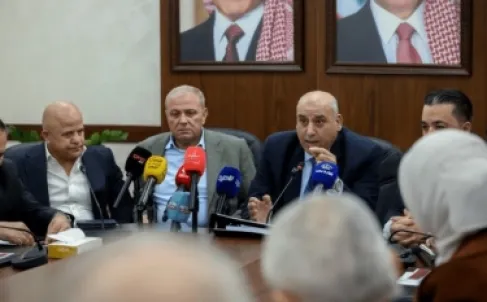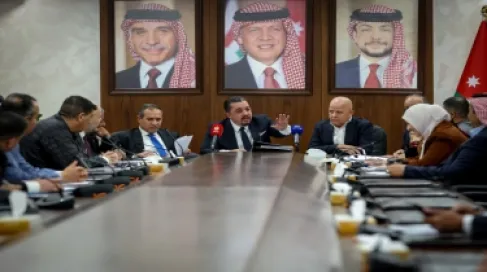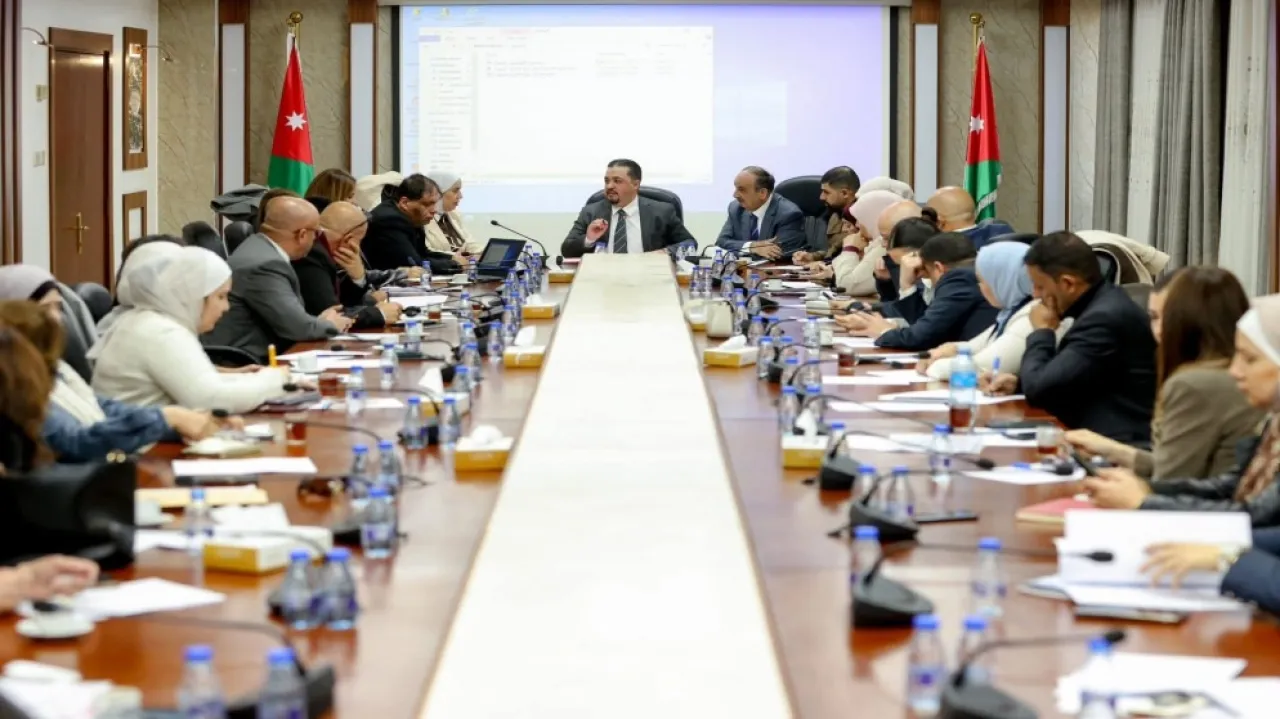
Khaberni - The Parliamentary Committee on Labor, Social Development and Population convened on Sunday under the chairmanship of MP Andre Hawari, to discuss the national strategy for shelter alternatives.
Hawari emphasized, in the presence of the Minister of Social Development Wafaa Bani Mustafa, the Secretary-General of the Higher Council for the Rights of Persons with Disabilities Mohannad Al-Azza, and several stakeholders, that discussing the strategy stems from the supervisory and legislative roles of the House of Representatives, with a commitment to support policies prioritizing the interests of persons with disabilities and the most needy groups. He stressed the importance of focusing on shelter alternatives due to their direct impact on psychological and social stability, contributing to the formation of a more cohesive and just society.
He added that transitioning to sustainable family and community alternatives for persons with disabilities requires the concerted efforts of various official and non-official entities, in addition to providing the necessary legislative and financial support to ensure the effective implementation of the strategy, emphasizing the importance of continuous monitoring and evaluation to measure impact and achieve desired goals.
Hawari pointed out that the existing challenges in this area necessitate a spirit of partnership and coordination, and building the capacities of staff in social care and protection, to improve service quality and ensure sustainability.
On their part, committee members MPs Issa Nassar, Shifaa Issa Muqablah, Wissam Rabihat, Lubna Namour, Bayan Fahri, Mohammad Kataw, Abdurrahman Al-Awaishah, Rand Kazouz, Yousef Rawadiah, Ibrahim Tarawneh, and Hail Ayash confirmed their continued follow-up on the strategy implementation, consultation with all concerned partners, and support for any legislation or policies that enhance the alternative care system and protect the rights of beneficiaries.
They requested clarification on the criteria used for selecting shelter alternatives, the financial support mechanisms for families, and the guarantees set by the ministry to ensure fairness and efficiency in implementation, as well as clarifying the mechanism followed in case of challenges in integrating persons with disabilities with families to ensure continued safe and effective care offering alternatives that preserve their rights and dignity.
Meanwhile, the committee and attending members praised the efforts of the Ministry of Social Development and the Supreme Council for the Rights of Persons with Disabilities in implementing the Disability Act and the national strategy concerning shelter alternatives, emphasizing the necessity to consider the interests of persons with disabilities.
For her part, Bani Mustafa outlined the national strategy for alternative shelters in Jordan, highlighting its basis on a gradual shift from institutional care based on segregation to inclusive care and independent living, ensuring the dignity of persons with disabilities and their integration into society, by transforming shelters into daytime service centers, and providing humane alternatives grounded in human rights.
She noted that these alternatives include supporting independent living, personal attendant service, short-term respite services, and individual assessment involving the family, stressing that shelter alternatives represent a human and ethical responsibility, aligned with international standards for a more inclusive and fair care system.
Bani Mustafa confirmed that the strategy was a response to the implementation of the Disability Rights Law of 2017, in line with recent constitutional amendments, supporting the shift towards a rights-based approach in service delivery, stating that the move towards shelter alternatives was not sudden, as the licensing of new shelters was halted immediately upon approval of the law, and no increase in the capacity of existing shelters will occur, contributing to the development of the care system and creating job opportunities within the models of inclusive and alternative services.
She said that around 1,407 persons with disabilities are enrolled in shelter institutions in Jordan, including 800 non-Jordanians in private profit centers, 130 Jordanians in private and voluntary centers, and 476 Jordanians in institutions affiliated with the ministry.
She added that the number of persons with disabilities in the Kingdom is estimated at about 1.2 million, accounting for 11.2% of the total population, with severely mentally disabled individuals making up 6.7%, or about 80,400 people, of whom only 607 reside in shelter institutions, while the rest live with their families.
For his part, the Secretary-General of the Higher Council for the Rights of Persons with Disabilities, Mohannad Al-Azza, said that the ministry has rehabilitated Al-Manar centers as inclusive daytime centers and established early intervention units in several provinces.
Al-Azza emphasized that integrating persons with disabilities into their families and the community serves the individuals and pushes them towards independence and self-reliance instead of depending on others in shelters.
He also stressed that families should prioritize the interests of the person with disabilities and their development opportunities, asserting that there is no such thing as a "lost cause."
For her part, the Chair of the National Center for Human Rights Trustee Board, Samar Haj Hassan, affirmed the center's significant focus on the rights of care home residents and preserving their human dignity, through conducting periodic and surprise field visits to monitor the conditions of the residents, ensuring a safe and humane environment that meets their basic needs.
She pointed out that the center works on monitoring any practices that may constitute a violation of the rights of persons with disabilities, noting the existence of a specialized unit to monitor their conditions, equipped with tools to detect any violations and ensure no breaches occur, guaranteeing the protection of this group's rights and providing a fair and safe care environment.
On their part, representatives of civil society institutions expressed their support for the shelter alternatives program, pointing to its importance in serving persons with disabilities, by enhancing their integration into their families and the community, and reducing the impacts of disabilities, rather than isolating them which could exacerbate their health and social conditions.