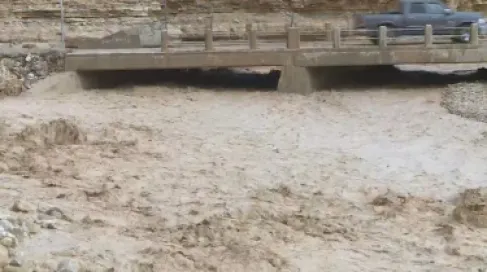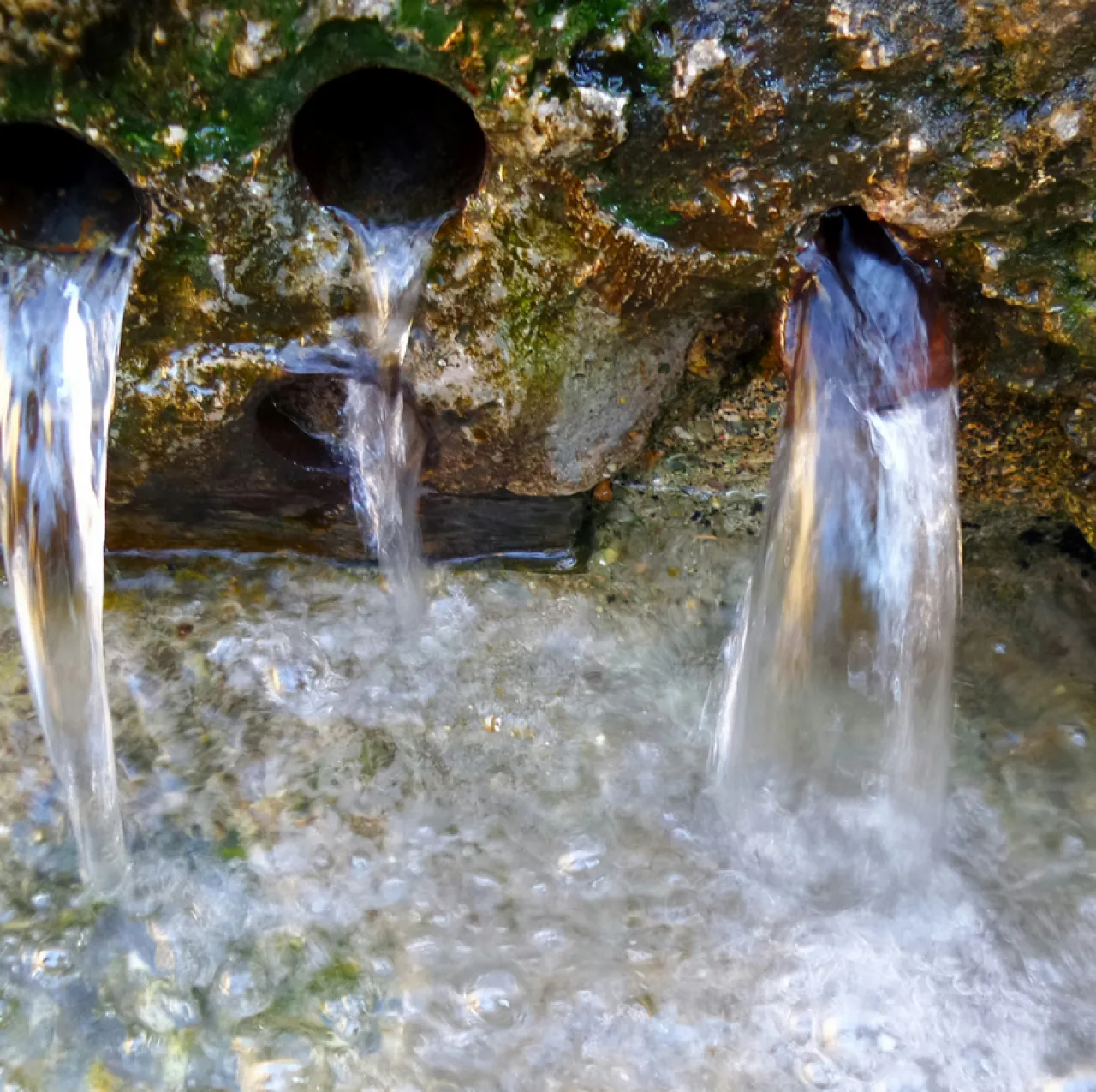
Khaberni - The recent rains associated with weather depressions affecting the Kingdom during the past weeks have contributed to a significant environmental and water transformation, represented in the return of the flow of dozens of springs, and the rise in the levels of surface and groundwater levels in various provinces, as a positive indication of the ecosystem's ability to recover.
The Jordan News Agency (Petra), through its field monitoring of the effects of recent weather depressions, has noted a remarkable improvement in the water and environmental reality across the Kingdom’s provinces, characterized by the return of the flow of many springs and the rise in levels of surface and groundwater, and the reactivation of streams and waterfalls after years of decline and drought. This improvement comes at a time when Jordan faces chronic water challenges, making these recent rains a relief and an important opportunity to enhance water security, necessitating wise management of resources and maximizing the benefits of rainwater to ensure its sustainability for agricultural, environmental purposes, and drinking water.
In Irbid Governorate, the beneficial rainfall observed in regions and rural areas of the governorate positively affected local springs and surface water reserves, contributing to improved natural environments, rejuvenating agriculture and tourism seasons, and boosting water reserves.
Dr. Ahmad Al-Sharida, head of the Association for Human and Environmental Development, said that the abundant rains have revived many springs that had dried up, bringing life back to water sources that suffered from water scarcity last year, notably: Wadi Al-Rayyan, Ain Al-Bayda, Ain Abdul Aziz, Ain Al-Laymouna, Ain Al-Tine, and Abu Shari'a in Wadi Zqlab, Koura District, in addition to springs in Bani Kinana, especially Ain Ghazal and Qweilbeh.
He also referred to the revival of many waterfalls that the governorate is famous for, such as "Al-Shallaleh Falls in Ramtha, Kharja, Hareema in Bani Kinana, Jdeita, Abu Shuqair and Al-Rashrash in Koura District," which formed natural scenes that attracted visitors and picnickers.
Al-Sharida confirmed that this improvement supports local biodiversity and enhances opportunities for eco-tourism with the flourishing of vegetation, wild, aromatic, medicinal herbs, heralding a distinctive spring season that reflects economically on local communities.
Eng. Saleh Al-Momani, the water director of Irbid, explained that rainfall quantities have exceeded 60% of the general annual average, significantly contributing to feeding shallow groundwater reservoirs and reactivating springs, reducing reliance on irrigation in rainfed agriculture within the efforts of the Ministry of Water and Irrigation to enhance water sustainability.
In Madaba Governorate, Eng. Bassam Abu Al-Ghanam, the director of agriculture of the governorate, said that the rainy season began early this year and exceeded annual averages, which encouraged farmers to plant wheat, barley, and lentils.
He added that the rainfall improved the quality and flow of springs such as Ain Al-Dhaib, Al-Kanisa, Ain Musa, and springs of Wadi Al-Wala and Al-Hidan in Theban District, and contributed to the revival of springs that had dried up in the past years.
He noted that water collection wells benefited significantly, as the ministry implemented 270 collection wells at a cost of 411,000 Jordanian dinars, to support home gardening, along with the distribution of about 40,000 olive seedlings.
In Karak Governorate, the recent rainfall brought life back to dozens of water sources that had disappeared during years of drought, where senior citizens confirmed that the current season has been unmatched for more than 30 years.
Petra News Agency recorded the return of the flow of historical springs such as Ain Al-Defali and Ain Sara adjacent to Karak Castle, which feed the Wadi Karak until the outskirts of the Dead Sea, in addition to Ain Al-Far'a in Hadib area, whose flow increased several times after the recent rains.
The governor of Karak, Qabalan Al-Sharif, emphasized the importance of supporting farmers and encouraging them to use modern irrigation systems to ensure sustainable use of water resources.
In Tafila, the cumulative total of rainfall reached about 253 mm, exceeding the general annual average of 250 mm by 101% compared to only 35 mm in the same period last year.
Arifat Al-Marrayat, head of the farmers’ union, said that the current season is one of the best in years, contributing to the resurgence of numerous springs in the valleys of Tafila and Buseira, and springs such as Al-Juheir, Al-Ansar, Shalha, Al-Zarqa, Hasadah, Umm Sarab, Sheyzhem, and Umm Kais, after a prolonged period of dryness.
He confirmed that the continued rainfall at the current rate would contribute to longer stream flows, ensuring sufficient water supplies for rainfed crops during the summer, contributing to a good agricultural and water season, green pastures, and providing natural pastures for livestock owners.
Farm owner Mohammed Al-Saud mentioned that the abundance of rain will positively reflect on improving the agricultural season, revitalizing summer crops and fruit and forest trees, enhancing the water reserves of valleys and springs, sustaining the greenery of pastures, and increasing soil moisture levels.
Eng. Rabie Al-Amayreh, the director of the Water Administration in Tafila, pointed out that the rainfall in the governorate contributed to increasing stream flows and raising the level of spring water flow in several regions, enhancing surface and groundwater reserves, reflecting in increased stored drinking water quantities in dams.
In Ma'an Governorate, Dr. Omar Al-Khashman, dean of the Technical College at Al-Hussein Bin Talal University, stated that the recent rains and floods have contributed to increasing the hydraulic pressure inside groundwater reservoirs, leading to the resurgence of several small springs, especially in western regions.
He noted a noticeable improvement in the flow of springs such as Ain Al-Oud and Ain Shamakh, along with springs in Wadi Musa and Al-Shobak, boosting local agricultural activity.
Dr. Khaldoun Al-Qudah, professor of hydrology at Yarmouk University, stated that despite the positivity of the current rainy season, it could not compensate for the accumulated deficit in groundwater reserves, given the annual withdrawal rate ranging between 400 and 600 million cubic meters, compared to a safe rate not exceeding 275 million cubic meters.
On his part, water and geology expert Dr. Mohammad Al-Farajat described the recent rainfall wave as a "turning point" for the agricultural sector, due to its role in washing salts from the soil, raising soil moisture, revitalizing pastures, reducing production and energy costs, and stabilizing food prices.
Despite the recent rains not constituting a radical solution to Jordan’s water crisis, they have revived springs and provided an important environmental, agricultural, and economic breath of fresh air, affirming that wise investment in rainwater and its protection from wastage is the fundamental pillar for enhancing national water security in the face of climate change.