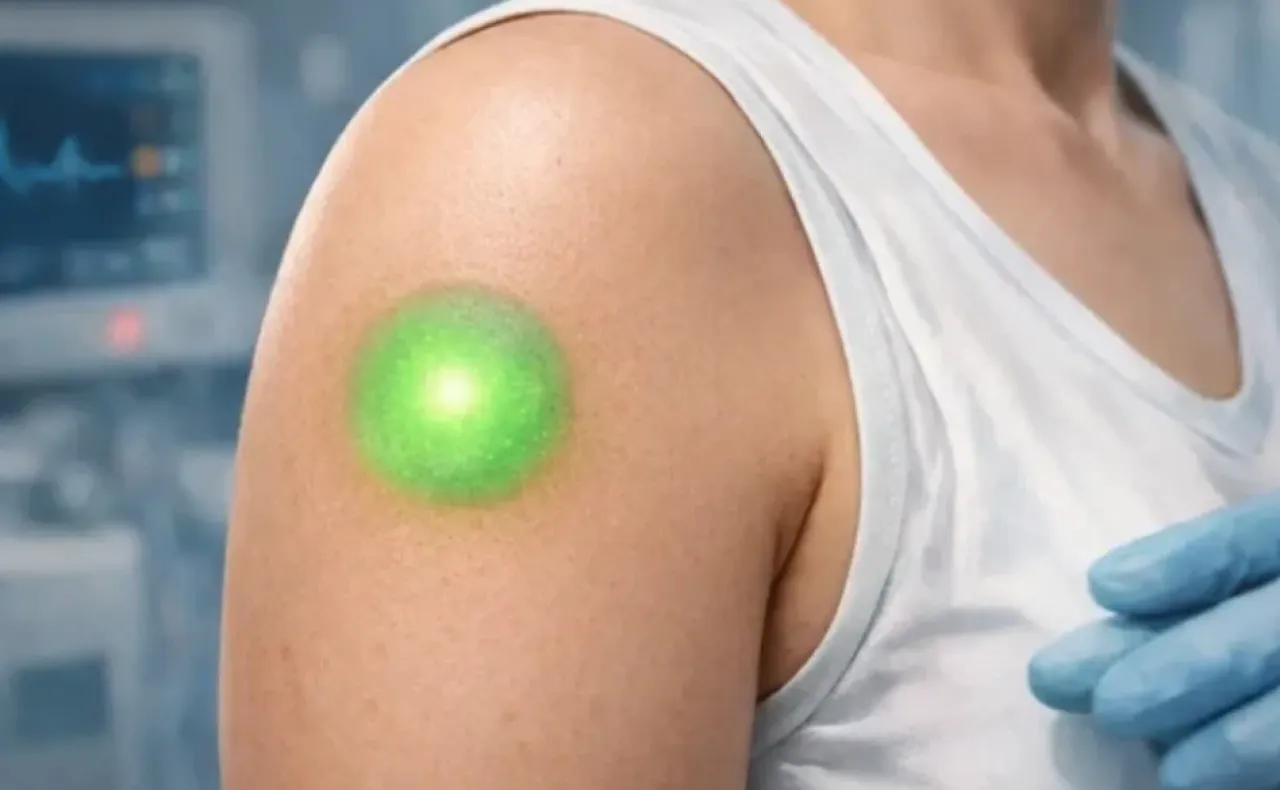
Khaberni - Scientists have developed living skin that glows green when it detects inflammation in the body, establishing an early biological alarm system for diseases.
In an experiment with this innovation, the skin patch, which was implanted on mice, worked for over 200 days without batteries or maintenance, as stem cells naturally renewed themselves and maintained sensor function.
The tissue repeatedly responded to inflammation, lighting up within 24 hours each time researchers triggered immune responses, then dimming as the inflammation subsided.
According to "Study Finds", although human applications of this innovation are still years away, this technology could mark a transformative shift in medicine, moving the focus from treating diseases after symptoms appear to detecting problems at treatable early stages.
The glow according to the level of inflammation
According to the research team from the Tokyo City University, the skin glows bright green when the level of inflammation inside the body rises.
This engineered tissue, the size of a small coin, acts like a biological smoke detector, designed for long-term monitoring of inflammation signals that often silently accumulate before symptoms appear.
To develop this innovation, the Japanese research team genetically engineered human skin stem cells to glow upon exposure to increasing inflammatory molecules during immune responses.
The research team implanted patches of this engineered skin onto mice, where they successfully integrated and continued to function for more than 6 months, and each time researchers stimulated inflammation, the patch's glow intensified.
The secret of this innovation
The secret lies in choosing the right type of cells.
Skin stem cells naturally exist in the deepest layers of the skin, where they produce new skin cells throughout a person's life.
The scientists modified these cells so that they produce a fluorescent protein whenever inflammatory signals reach their surface.
Genetic composition adjustments required some trial and error. After testing 5 different designs, the researchers found a composition that produced the strongest glow.
In the lab, the modified cells began to glow within 12 hours of exposure to inflammatory molecules, and the more inflammation, the brighter the glow, demonstrating the system's ability to monitor different levels of inflammatory activity.
The team built real skin tissue by combining the modified cells with other skin components.
Within days, the tissues grown in the lab developed into multiple layers that mimic the appearance and function of real skin.